

Govt today is not just a consumer of technology, but a co-creator: Dr Manjula N, Govt of Karnataka

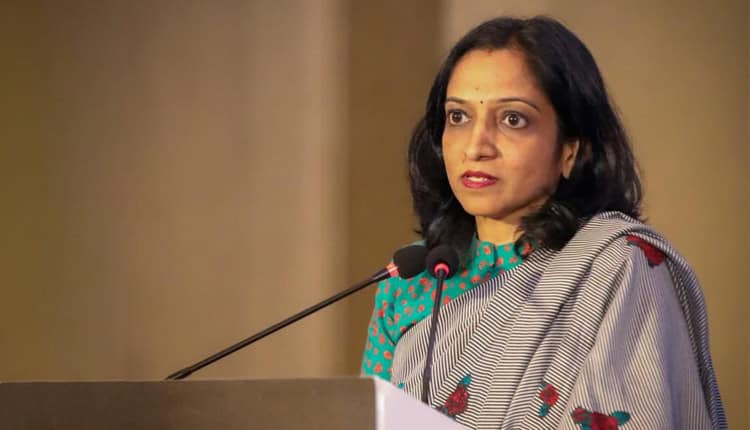

As India debates how to regulate AI without slowing innovation, Karnataka positions itself as a state where policy is designed to enable deployment, not just experimentation. During an interaction at the India Digital Summit 2026 in Bengaluru, Dr Manjula N, Secretary to the Government, Department of Electronics, IT, Biotechnology, and Science & Technology, Government of Karnataka, outlines how the state is strengthening itself as an active innovation enabler as technology paradigms rapidly evolve.
Dr Manjula says Karnataka’s policies are consistently designed to be “output-oriented,” with an emphasis on moving ideas from pilots to production rather than relying on short-term incentives. The state is currently working on the third version of its startup policy, reflecting the maturity of an ecosystem that evolves steadily over nearly two decades.
“Our policies are forward-looking and focused on outcomes,” she says. “The emphasis is not just on announcing policies, but on ensuring they translate into measurable impact on the ground.”
“Karnataka consciously focuses on policy continuity,” she notes, adding that more than 1,200 startups are supported through structured programmes, incubators, and public–private partnerships. “We have been building this ecosystem for almost two decades now, and the maturity is beginning to show.”
At the early-stage level, programmes such as Elevate focus on funding and scale-up support for startups. In parallel, the state has built a distributed network of Centres of Excellence (CoEs) to strengthen deep-tech capabilities across the ecosystem. Karnataka currently hosts around 20 CoEs aligned to strategic domains such as cybersecurity, agriculture, healthcare, and emerging technology areas. These centres are intended to close the gap between industry demand and academic research, giving startups access to infrastructure, mentorship, and domain expertise.
“The idea is to ensure industry can directly connect with institutions and centres of excellence,” Dr Manjula says. “These platforms allow startups and enterprises to access specialised capabilities without having to build everything from scratch.”
Beyond Bengaluru, the state pushes to decentralise innovation and talent creation. Initiatives such as the Centre for Applied AI for Tech Solutions and the Beyond Bengaluru programme aim to extend AI capability-building, startup support, and digital skills development to tier-2 and tier-3 cities, ensuring that technology-led growth is more geographically inclusive and not confined to Bengaluru alone.
As a part of the Elevate program, the government extends early-stage financial support and structured recognition to startups working on deployable and socially relevant solutions. According to Dr Manjula, the intent is to ensure that innovation benefits society at large, not just a narrow segment of the ecosystem.
Dr Manjula emphasises that Karnataka’s engagement with Global Capability Centres (GCCs) is also evolving from scale-driven growth to equal emphasis on capability-led expansion. While infrastructure and ease of operations remain important, the state increasingly focuses on helping GCCs transition from execution-oriented delivery centres to global hubs for AI innovation, product engineering, and intellectual property creation.
“GCCs in Karnataka are no longer just execution centres,” she says. “They are increasingly working on core platforms, AI use cases, and IP-led innovation.”
This shift, she explains, requires policy levers beyond fiscal incentives, including deeper academia–industry collaboration and access to advanced talent pools. Karnataka’s GCC ecosystem, already the largest in the country, is being integrated more closely with the state’s broader innovation and skilling frameworks to support this evolution.
On talent, the state aligns higher education and skill development more closely with industry needs through multiple, distinct interventions. Academic incubation programmes and student innovation initiatives are driven through mechanisms such as Technology Business Incubators (TBIs) and the New Age Incubation Network (NAIN), while industry-backed projects enable students to work on real-world problem statements in collaboration with enterprises. Separately, the Nipuna initiative focuses on skill development and employability, operating on a cost-sharing model with industry participation. Together, these efforts aim to expose students to applied problem-solving early in their careers.
“Students today need exposure to applied innovation much earlier,” Dr Manjula says. “Academic incubation and industry-backed projects help bridge that gap.”
Deeptech emerges as another policy priority. Dr Manjula points to Karnataka’s liberalised spacetech policy, which enables the state to position itself as a hub for space-tech development, alongside focused interventions in quantum computing, cybersecurity, and AI infrastructure.
“These are sectors that will define the next phase of technology-led growth,” she says, adding that Karnataka wants to create an enabling environment for deeptech companies to scale from the state.
Within the government, AI adoption moves beyond pilots into operational use. “The government has deployed AI-driven systems for disease control and prediction, agricultural and horticultural advisory services, disaster management, and monitoring of public service delivery…,” Dr Manjula says.
She adds that a key objective now is to create a unified platform where government departments can directly discover and engage with startups offering ready-to-deploy solutions. “Departments own the data and the problem statements, while startups bring innovation to the table,” she explains.
“Government today is not just a consumer of technology, but a co-creator,” she says, pointing to Karnataka’s fully digital governance backbone – from e-office systems to frontline health and welfare workers such as ASHA and Anganwadi staff – as evidence of sustained political will and change management.
Change management, she adds, remains as critical as technology itself. “Five years ago, even basic digital adoption was a challenge for many. Today, we mostly operate on e-office systems. The transition simplifies governance and builds confidence across the system.”
As AI continues to reshape job roles globally, Karnataka’s long-term focus remains on building a resilient and adaptable talent pipeline that serves startups, GCCs, and global enterprises alike.
If there is one defining theme in the state’s technology strategy, Dr Manjula suggests, it is the belief that policy must move at the speed of innovation, without losing sight of societal impact.
