

How Tata Realty & Infrastructure is rewiring real estate through AI, Digital Twins, and data-led sustainability


India’s real estate sector is in the middle of a structural technology reset. Cloud-native ERP, AI-led customer journeys, IoT-driven energy optimization, and digital twins are no longer experimental ideas — they are fast becoming operating necessities. At Tata Realty & Infrastructure Ltd. (TRIL), that shift began with a deliberate decision in 2020 to rebuild the enterprise from the core outward.
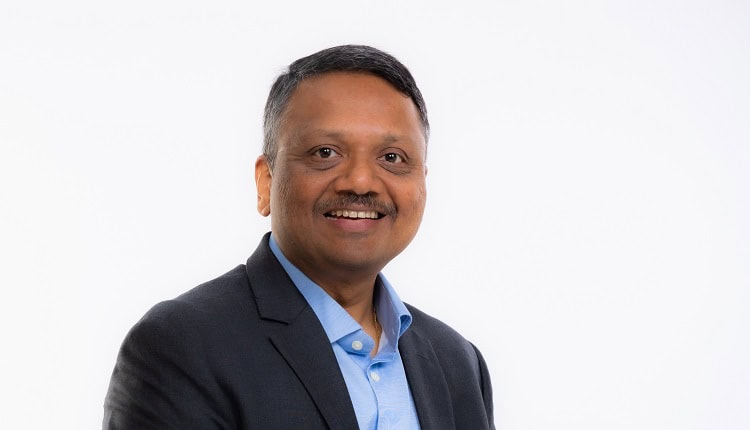
“Our true digital transformation journey started in 2020,” says Girish Hadkar, Chief Information and Digital Officer, Tata Realty & Infrastructure solutions with a clear aim of transforming the way we work — driving efficiency, transparency, and better customer outcomes.”
What distinguishes TRIL’s approach is not isolated pilots, but a tightly integrated digital ecosystem that connects ERP, CRM, analytics, AI, IoT, construction systems, and sustainability platforms into a unified architecture.
Building the Digital Core: ERP, CRM and a Unified Data Backbone
For TRIL, transformation began with the fundamentals. The company implemented SAP S/4HANA as its enterprise backbone, integrated with Salesforce for sales and customer management, and built an enterprise analytics layer on Microsoft Azure.
“We began by strengthening our core,” Girish explains. “SAP S/4HANA, Salesforce CRM, and our Azure analytics platform form the digital backbone of the company. Without that foundation, you can’t scale AI, IoT, or advanced analytics meaningfully.”
A middleware integration layer using Magic XPI ties these systems together, enabling seamless API-driven data exchange. This open architecture allows TRIL to plug in emerging proptech solutions — from drone analytics to low-code platforms like OutSystems — without reengineering its core.
This bimodal IT approach — stabilizing the core while innovating at the edge — has allowed TRIL to move faster than many sector peers.
“One track keeps our core rock-solid and up-to-date, and another aggressively explores emerging technologies,” Girish notes. “That agility has made us early movers in areas like integrated construction cloud platforms and IoT-enabled campuses.”
Digitizing Commercial Leasing: From Lead to Lease in Real Time
One of the most visible business impacts has been in commercial leasing. TRIL digitized its end-to-end leasing lifecycle using Salesforce for tenant management, integrated with SAP Real Estate modules for billing and financial reporting.
“The immediate impact is a much faster lead-to-lease cycle and real-time pipeline visibility,” Girish notes. “Our teams now have live dashboards tracking leasing performance, billing status, and utility revenues.”
Manual MIS reports have been replaced by dynamic dashboards powered by Azure Data Lake, Microsoft Fabric, and Microsoft Power BI. “Employees have self-service access to unified data,” he says. “We’ve reduced time spent gathering information and increased time spent analyzing it. Leadership now operates with real-time visibility rather than retrospective reports.” The result is greater financial transparency, faster decision-making, and improved revenue predictability.
AI at the Frontline: From Email Summaries to Predictive Targeting
TRIL’s AI deployment spans both internal productivity and customer engagement.
Using Salesforce Agentforce AI, the company developed a virtual assistant for relationship managers.
“It can summarize 50–70 inbound emails per day, retrieve booking or payment information through natural language queries, and even draft responses,” Girish explains. “Our RMs resolve queries faster, and we’ve already seen an improvement in NPS feedback.”
On the marketing front, Salesforce Marketing Cloud and Einstein AI power micro-segmentation, predictive scoring, and journey orchestration.
Instead of mass campaigns, TRIL now deploys AI-curated property recommendations based on behavioral signals.
“We’ve implemented AI-powered segmentation and journey orchestration,” says Girish. “If a prospect browses premium residential properties but doesn’t inquire, our system automatically triggers personalized follow-ups with curated listings.”
Dynamic content personalization ensures that images and project highlights differ by recipient — residential buyers see homes, commercial investors see office or retail assets — within the same campaign framework.
“Visitors who engaged with AI-driven recommendations showed noticeably higher conversion rates than those receiving generic property lists,” he adds.
The impact is tangible: lower digital cost per lead, faster sales cycles, and improved occupancy velocity in leasing campaigns.
Construction Goes Digital: From Paper Checklists to ₹1.6 Crore in Savings
Digital transformation at TRIL extends deep into project execution.
Through EffiGO — its vendor management and contract platform — contractors manage bidding, RA bills, and payment tracking online.
“All our contractors and suppliers now use the portal,” Girish says. “It has built greater trust because they have full visibility into order status and payments. It has significantly reduced paperwork and procurement cycle times.”
On project sites, quality inspections and EHS audits have moved to mobile applications integrated with Autodesk Construction Cloud dashboards.
“Digitizing quality checklists alone has saved around ₹1.6 crore annually between printing costs and data entry overheads,” he notes. “Beyond cost savings, issue resolution is faster because data is instantly available.”
The shift from paper-based documentation to cloud-integrated construction workflows marks a structural improvement in execution discipline.
IoT and Digital Twins: Intelligent Campuses in Action
TRIL’s Grade-A commercial assets — including its Intellion office parks — are embedded with IoT sensors that monitor HVAC systems, power consumption, air quality, lighting, and occupancy.
“If occupancy sensors detect fewer people on a floor, HVAC and lighting are dialed down,” Girish explains. “We’re seeing strong double-digit energy gains, which supports both our cost objectives and sustainability goals.”
Security systems are similarly digitized. IP-enabled CCTV cameras feed into AI-powered analytics that flag anomalies in real time, while IoT-based access control systems detect unusual entry patterns.
The next frontier is digital twin technology. In partnership with Smplrspace, TRIL has deployed a digital twin pilot at Intellion Park, Gurugram.
“It’s a living 3D model of the building integrated with real-time IoT data,” Girish says. “Leasing teams can conduct immersive virtual walkthroughs, and facilities teams can proactively monitor equipment performance.”
Following the pilot’s completion, TRIL is advancing toward a portfolio-wide rollout, targeting early 2026 for full deployment.
“The digital twin will serve as a single source of truth for asset information,” he notes. “It aligns operational efficiency, leasing effectiveness, and sustainability monitoring in one integrated view.”
Embedding Sustainability into the IT Operating Model
Sustainability at TRIL is not an add-on — it is embedded into the IT strategy. The company adopted Acasia as its enterprise ESG platform to centralize tracking of energy, carbon emissions, water use, and waste metrics across assets.
“Acasia gives us a unified dashboard, integrating real-time feeds from our smart building systems and CAFM platforms,” Girish says. “Sustainability KPIs now sit alongside financial and operational metrics in our management cockpit.”
TRIL is aligned with the Tata Group’s Aalingana climate initiative and has committed to achieving net carbon zero across its operational portfolio by 2045.
“About 55% of our commercial energy consumption currently comes from renewable sources,” he states. “Digital monitoring ensures we maximize solar utilization and optimize green power procurement.”
The company’s Ramanujan Intellion Park in Chennai achieved EDGE Zero Carbon certification — a milestone supported by automated ESG data reporting and performance tracking.
A cloud-first IT strategy also supports environmental goals. By moving workloads to energy-efficient hyperscale data centers such as Microsoft Azure, TRIL reduces its reliance on on-premises infrastructure.
Responsible AI: Governance at the Core
With AI embedded across customer engagement and operations, governance has become central.
“We institutionalized AI in assistive mode,” Girish emphasizes. “Automated decisions are always tempered by professional judgment.”
An internal AI Council chaired by the CEO sets policies on explainability, privacy compliance, and fairness.
“Any AI that affects customers must be explainable,” he says. “Any use of personal data must respect consent. Ethics is not optional — it’s foundational.”
This governance layer ensures that personalization and predictive modeling do not compromise trust.
The Road Ahead: Scaling Intelligence
Over the next 6–12 months, TRIL plans to scale its digital twin deployment, expand IoT integration across assets, enhance CAFM systems to ingest sensor data, and extend AI copilots into procurement and finance.
“Our vision is simple,” Girish says. “A Commercial Asset Head in Bengaluru should be able to virtually enter a Chennai building’s digital twin and monitor systems in real time.” The company is also preparing immersive metaverse-based property showcases and augmented reality tools for site visits, aiming to redefine customer experience in high-value projects.
A Digital Maturity Model for Real Estate
Five years ago, real estate in India was not widely recognized for technology leadership. TRIL chose to change that narrative. “We made a conscious decision in 2020 to leapfrog and become a digital leader,” Girish reflects. “Our people are as digital-ready as our systems. Each success builds confidence to push further.”