

How GMDC is building a digital operating model through disciplined, ROI-led transformation


Two megabits per second. That was the bandwidth connecting most of Gujarat Mineral Development Corporation’s remote mining sites to the rest of the business not long ago — barely enough to run email, let alone the AI dashboards and IoT sensors the company now relies on.
Today that number stands at 30 Mbps, a fifteenfold jump, and it’s just one data point in a broader transformation story with the numbers to back it up: a ₹140-per-tonne cost reduction from sensor-driven equipment monitoring, a refund backlog cut from ₹132 crore to ₹27 crore in a single year, truck turnaround times slashed from up to eight hours to three or four, and tender documentation time collapsed from 80 hours to under five.
Behind these figures is a board-level mandate that left little room for half-measures: grow the business fourfold by 2030.
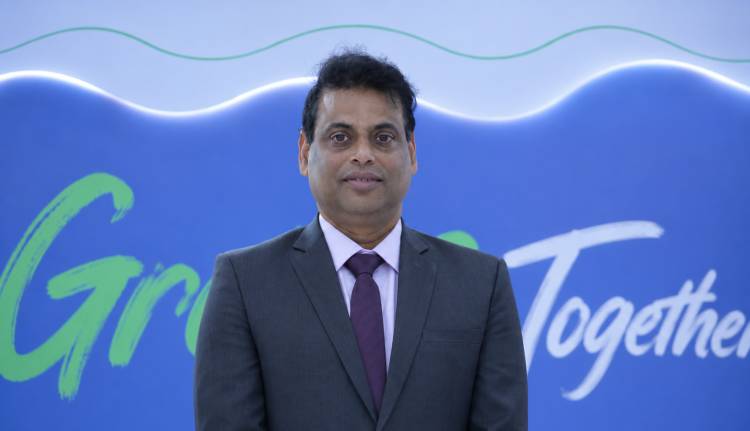
For Rajat Kumar Dash, GM IT at GMDC, the math was simple. “No transformation, no strategic transformation, and getting a growth of 4x would be possible without the support of IT transformation or digital transformation,” he says. What follows is the story of a state-run mining company proving that digital transformation in the public sector doesn’t require dramatic leaps — just disciplined, data-backed bets that compound.
Starting With the Basics: Bandwidth Before Bots
Before GMDC could dream about AI dashboards and predictive models, it had to solve a far more mundane problem: connectivity. Most of its mining sites are in remote locations, and the networks connecting them to the rest of the business were, in Dash’s words, “ridiculously low” — operating at around 2 Mbps per project. Today, that figure stands at roughly 30 Mbps, a fifteenfold increase, with further upgrades underway as more connected devices come online.
This is an important and often overlooked lesson for any organisation eyeing digital transformation: infrastructure modernization is not a footnote to the technology story — it is the precondition for it. You cannot run IoT sensors, AI-powered dashboards, or real-time monitoring systems over a network built for email and spreadsheets.
Sensors on Steel: The Economics of Industrial IoT
With better connectivity in place, GMDC turned its attention to its most capital-intensive assets: heavy mining machinery. Rather than attempting a sweeping digitization of every process, the company targeted a small number of high-value equipment items and instrumented them with IoT sensors.
The results were striking. By tracking efficiency parameters in real time and benchmarking performance against them, GMDC estimates it has reduced production costs by around ₹140 per metric ton — translating into roughly a 10% reduction in total costs, achieved through what Dash describes as “a low-cost intervention.”
That single number captures something important about GMDC’s broader philosophy: technology adoption need not be expensive to be transformative. The company’s mineral asset base has grown enormously — from roughly ₹49,000–50,000 crore to an estimated ₹6.5–7 lakh crore in national mineral assets under its purview — and the efficient, technology-enabled exploitation of that asset base is now central to the company’s growth math.
Defending the Public Interest, One Algorithm at a Time
Perhaps the most quietly impressive use case in GMDC’s portfolio has nothing to do with machinery at all — it concerns land.
Mining operations frequently require the acquisition of land, including private and agricultural land, ahead of project execution. GMDC’s response was a land management system. The system allowed the company to systematically identify which structures existed before the notification deadline and which appeared after, giving GMDC verifiable evidence to present at tribunals and in court.
The financial impact has been significant relative to the investment. Of roughly ₹500 crore disbursed in land compensation to date, GMDC estimates the system has helped save approximately ₹2.7–3 crore — and with a planned disbursement of around ₹5,000 crore going forward, the cumulative savings are expected to scale substantially. Just as importantly, Dash notes that once people understand the company has the technological means to detect such practices, the incentive to attempt them in the first place diminishes.
It’s a powerful illustration of a point too often missed in technology strategy conversations: sometimes the highest-leverage digital investment isn’t about speed or efficiency, but about integrity and the defensibility of decisions in a public institution that answers to courts, regulators, and citizens alike.
Unlocking Liquidity
GMDC’s commercial operations surfaced another opportunity hiding in plain sight. Customers making advance payments to the company often found their unused balances sitting untouched, refunded only in periodic batches — at one point, cumulative annual refunds reached around ₹132 crore.
Recognizing that this represented locked-up customer liquidity rather than company revenue, GMDC deployed what Dash calls a “digital vault” — a smart refund solution costing roughly ₹12–13 lakh. The very next year, the refund backlog dropped from ₹132 crore to ₹27 crore, and Dash expects it to approach zero within another year or two.
The downstream commercial effect was immediate: booking volumes in the first seven days of each subsequent cycle rose from roughly ₹80 crore to ₹200 crore, as customers were able to redeploy freed-up capital into new bookings rather than waiting for manual refund cycles.
It is a textbook example of how a small, targeted digital intervention — costing a fraction of a percent of the value it unlocked — can meaningfully shift customer behavior and commercial velocity.
Cutting Truck Turnaround Time in Half
At the operational frontline, GMDC tackled a logistics bottleneck that will be instantly recognizable to anyone who has visited an active mine: trucks queuing for hours to load and exit. With roughly 500 trucks reporting to a single mine daily, the full loading cycle — from arrival to departure — was taking six to eight hours per vehicle.
A slot booking system, built by GMDC’s technology partners essentially as a free add-on, cut that turnaround time to three to four hours — a 50% reduction in vehicle detention time. For customers, this means more trips and better logistics efficiency; for GMDC, it means a meaningfully more productive mine gate, achieved at negligible cost.
What ties together the IoT sensors, the land management system, the digital vault, and the slot booking tool is a consistent investment philosophy. As Dash puts it, GMDC is “very mindful of the fact that we would be deploying… cases which would be having direct impact on our business and which would be having instant ROI.” This is not technology adoption for its own sake, or because a consultant recommended it — it is technology adoption anchored tightly to measurable business outcomes.
Entering the AI Era — Carefully
If GMDC’s IoT and digitization story is about operational discipline, its emerging AI story is about strategic patience.
Dash is refreshingly candid about the hype surrounding artificial intelligence. “Some people say that it is the era of an AI bubble and someday it would rust, and some people are telling that AI has become a reality and you need to adapt,” he says. Rather than picking a side in that debate, GMDC chose to research the question for itself before committing capital.
That research yielded several conclusions that now shape the company’s AI roadmap:
– AI is real, but it is not a template: A solution that works for another giant PSU will not necessarily translate to working for GMDC. “It would be differing on case to case basis,” Dash notes — every organisation must design its own AI interventions rather than copying a peer’s playbook.
– AI moves fast — and adoption must account for that. Solutions need to remain relevant for at least a couple of years, not become obsolete shortly after deployment.
– Capability must precede ambition. Without a team that combines domain expertise with AI expertise, an organisation cannot reliably discover the right use cases, design appropriate solutions, or validate them before scaling.
Acting on these conclusions, GMDC built a roadmap of ten potential AI solutions, deliberately starting with low-cost, reversible pilots — interventions that could be rolled back without material financial damage if they didn’t work. The company has also established a dedicated AI task force, structured with senior and junior members and a band of operators, tasked with identifying where large datasets and efficiency gaps exist across the organisation and matching them with the right AI interventions.
Three pilot solutions have already been deployed and are maturing:
1. AI-Assisted Tender Documentation :As a government-owned entity, GMDC must run formal tender processes for most significant procurement — but each project and department historically created its own documentation from scratch, with no standardization, taking around 80 hours per tender document. After standardizing formats and training an AI platform on five to seven years of GMDC’s own tender documents, the company can now generate a first draft in about 30 minutes, cutting the overall documentation effort to roughly four to five hours. Beyond the time savings, Dash highlights a second benefit: the system is helping new employees who are unfamiliar with GMDC’s processes operate efficiently from day one.
2. Institutional Knowledge as a Searchable Asset: Like most large organisations, GMDC had accumulated years of board presentations, management decks, partner pitches from firms like McKinsey, BCG, and Deloitte, and creative assets such as logos and branding materials — all scattered across departments rather than centrally accessible. GMDC built a digital library in the cloud, uploading this institutional knowledge, and layered an AI tool on top that can generate new content drafts from a few input headings, drawing on six to seven years of accumulated material. Work that once took 50 to 60 hours now takes one to two hours. Dash is careful to frame this as a maturing capability rather than a finished product: “It would be maturing over the period of time because that would be an engine which would be learning by itself.”
3. Automated Bank Guarantee Verification: Large tenders require partners to submit bank guarantees (BGs), often in the range of ₹80–100 crore, but GMDC previously had no systematic way to verify their validity or track their expiry. Partnering with ICICI Bank, GMDC deployed an AI-based verification engine that checks document validity and issues alerts ahead of expiry dates — closing a gap that had previously allowed guarantees to lapse before GMDC could invoke them against underperforming tenders.
Dash is clear-eyed about where these three solutions sit in GMDC’s broader ambitions. “These are very low-value AI tools,” he says, “but building on that, we will be preparing to have a journey of high-value AI solutions.”
The Next Frontier: A Central Command and Control Center
Looking ahead, GMDC’s most ambitious technology initiative is a central command and control center, currently under development with EY as project partner, expected to be commissioned within six to eight months.
The vision is one of convergence. CCTV feeds from across GMDC’s projects will flow into the center, with AI flagging safety violations in real time. IoT data from power plant operations will populate live performance dashboards. Predictive mine-planning software — capable of forecasting subsurface risks such as faults, water pressure accumulation, or slope failure tens of meters ahead of current operations — will feed its outputs into the same system, with AI filtering the flood of data down to the specific alerts that matter to the people responsible for governance and safety.
“Every AI solution would be having a plug-and-play kind of arrangement,” Dash explains — a design philosophy that should resonate with any technology leader trying to avoid a brittle, single-purpose system in favor of an extensible platform.
A Vision Anchored in Scale
GMDC’s appetite for technology is ultimately driven by the scale it expects to reach. The company currently produces around 80 lakh metric tons of coal and lignite annually, alongside roughly 30 lakh metric tons of minor minerals — a combined volume Dash expects to grow to around 400 lakh metric tons within five to six years.
Meeting that growth will require IoT deployment “right from the word go” in new mines, rather than retrofitting it after the fact, alongside the kind of central command infrastructure now under construction. GMDC is also targeting AI-driven forecasting for power production and grid evacuation from its thermal, solar, and wind assets — an area where the company currently relies on experience and “crude models” to estimate output and avoid regulatory penalties for forecasting errors. A parallel investment in cybersecurity posture is planned to ensure this expanding digital footprint remains resilient.
The company’s next major operational challenge looms on the horizon: underground copper mining, a method considered significantly more hazardous and less efficient than the surface mining GMDC has historically relied on. Here too, technology is expected to play a defining role in managing both safety and efficiency.
The Real Lesson From GMDC
What makes GMDC’s story compelling is not any single technology deployment — IoT sensors, a digital vault, an AI tender generator. It is the underlying discipline that connects them: a willingness to start small, demand measurable ROI, resist one-size-fits-all solutions, and build internal capability before scaling ambition.
For other public sector organisations watching from the sidelines, wondering whether digital and AI transformation is realistic given budget constraints and legacy systems, GMDC offers a different narrative — one where transformation isn’t a single dramatic leap, but a sequence of disciplined, low-cost, high-conviction bets that compound over time into genuine strategic advantage.
As Dash frames the company’s broader philosophy toward emerging technology: GMDC isn’t simply following the recommendations of “a number of consultants” or “a number of partners” who tell them what’s possible.
The company is “very mindful” about what it adopts, ensuring that whatever it deploys is “successful in our ecosystem.” It’s a deceptively simple principle — but one that, mine by mine and rupee by rupee, is helping a state-owned mining company write a markedly different chapter for what digital transformation in India’s public sector can look like.