

Treat AI agents like junior colleagues: Rajkumar Ayyella, CIO, RPG Group (KEC International Limited)

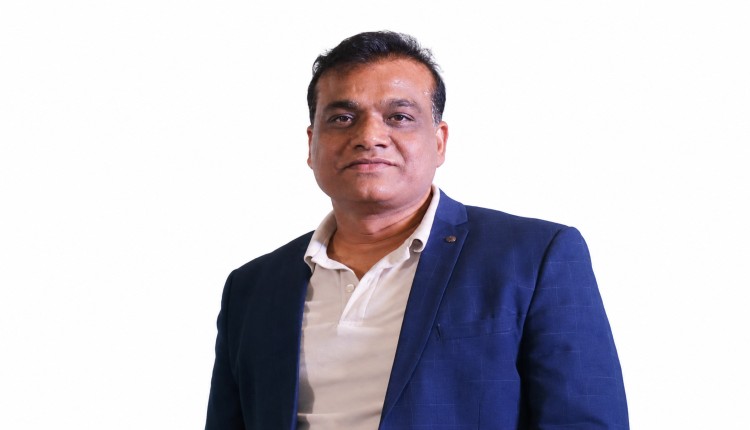

Future Factory is a Express Computer series that spotlights the technology leaders reshaping Indian manufacturing — how they are modernising shop floors, rethinking IT-OT boundaries, and preparing their organisations for an AI-driven industrial future. In this conversation, we speak with Rajkumar Ayyella, CIO, RPG Group (KEC International Limited).
Indian manufacturing is at an inflection point. Decades-old plants, some over 70 years old, are being asked to absorb AI, digital twins, and agentic automation without missing a beat on the shop floor. For CIOs, the pressure isn’t just to adopt new technology — it’s to do so without disrupting operations that customers, workers and boards depend on every single day.
Few people are better placed to speak on this shift than Rajkumar Ayyella. Over a 27-year career, he has built IT and digital functions across some of the most demanding industrial environments in the world — from Nike’s global supply chain rollouts and defense projects in the UK, to airport and smart-mine builds, Volvo’s aftermarket and manufacturing operations, and Adani Enterprises’ rapid scale-up from roughly ₹30,000–40,000 crore to ₹2.5 lakh crore in turnover.
In a conversation for Express Computer’s Future Factory series, Ayyella laid out a clear, almost contrarian view of how manufacturers should approach AI: master the fundamentals first, treat AI agents as colleagues who need training and trust, and accept that entire job roles will be rewritten in the years ahead.
The core has to be intact before technology can help
Rajkumar Ayyella’s starting point isn’t AI — it’s the business itself. Having worked across manufacturing and aftermarket operations at companies like Volvo, he stresses that IT and digital initiatives must move in lockstep with the core business, not ahead of it or apart from it.
One area he singles out as chronically overlooked: operational technology. “OT is one neglected area,” he said, arguing that as IT and digital push deeper into plants, the convergence of IT and OT — along with cybersecurity and scalability — needs far more boardroom attention than it typically gets.
This isn’t caution for its own sake. It reflects the reality of running technology transformation inside organisations with decades of embedded investment. “The investments needs to be secured. We should not allow the business to suffer,” he said — a principle that shapes how he sequences every rollout.
Digital twins as a safe rehearsal space
Given that manufacturing environments can’t tolerate downtime, Ayyella is particularly drawn to digital twins as a way to innovate without risk. A digital twin, he explained, is essentially a replica of a running system — one where teams can train people, test changes, and validate outcomes before anything touches the live environment.
“It can be easily deployable back into the main ecosystem without even disturbing the existing ecosystem,” he said. For an industry where every hour of unplanned downtime carries a direct cost, that ability to experiment safely is what makes the technology exciting to him — not the novelty of it, but the risk it removes from innovation.
He extends the same logic to AI broadly: when data is clean, the right models are in place, and people are trained to use them, AI can support predictive maintenance, shop-floor operations, and Industry 4.0 use cases at scale — from maintenance and asset management to paperless operations.
The FOMO trap: why clean data comes before AI
Ayyella is direct about the biggest obstacle he sees industry-wide, and it isn’t technology maturity — it’s discipline. “A lot of people have this FOMO — fear of missing out — and they expect that we should capitalize on technology,” he said. “Technology can only work if we have people trained, process, and the data. If all these three things are synchronized, we can use this in any place.”
His diagnosis of where AI initiatives commonly go wrong is blunt: if processes aren’t in place and data isn’t clean, AI simply won’t deliver — no matter how sophisticated the model. For CIOs feeling pressure to show quick AI wins, it’s a reminder that the unglamorous work of process and data hygiene isn’t a prerequisite to skip, but the actual foundation of ROI.
Agentic AI: “treat it like a junior colleague”
Asked whether agentic AI will move the needle in manufacturing, Ayyella offered one of the conversation’s most memorable framings: an AI agent should be managed the way you’d manage a new junior employee — not as a magic black box.
“You cannot distinguish between a bot or an agent from a human,” he said. “Unless and until you nourish this guy, train him in all the processes, put the processes in place — because if you put some garbage into it, then it throws out the garbage to you.”
For agentic AI to reach what he calls a “nirvana stage,” the underlying processes have to be sound and the agent has to be trained deliberately, with the same investment an organisation would put into onboarding a person. It’s a practical rebuttal to the idea that agentic AI is a plug-and-play capability — in Ayyella’s view, it inherits an organisation’s process discipline (or lack of it) just as a new hire would.
Three fundamentals CIOs shouldn’t skip
When asked what gap he’d most like to see the technology industry close, Ayyella returned to fundamentals rather than pointing to a specific product or feature gap. He described three things that have to be locked in before technology can bridge anything:
– Core and outcome clarity — organisations chase quick wins and use cases before establishing whether people are genuinely trained and clear on what outcome the technology is meant to deliver.
– End-to-end process redesign — introducing AI doesn’t automatically fix broken processes. Processes need to be re-examined and revisited continuously as technology changes what’s possible.
– Trust in the data and the decision-maker — whether that decision-maker is a person or an AI agent. Trust, he said, only comes from clean processes, clean data, and — increasingly — well-governed synthetic data.
“The fundamental still remains the same,” he said. “You should look at core, then processes has to be really cleaned, then data has to be cleaned, then people have to be trained. As long as we are able to do all these things, we need to bring in the technologies to start bridging that gap.”
Roles will be rewritten, not just automated
Looking two to three years out, Ayyella doesn’t see incremental change — he sees disruption on the scale of how cybersecurity itself evolved. “Cybersecurity was not ever discussed as a boardroom topic,” he noted, “but the risk has increased a lot.” He expects a similar trajectory for AI: capabilities that seem niche today will become unavoidable boardroom concerns.
His central prediction is stark: existing roles will get scrapped, and new roles will evolve in their place. Organisations and individuals that fail to adapt, he warned, risk “a huge disruption for both business as well as the human souls” — deliberately framing this as more than an operational challenge.
What won’t move to machines, in his view, is accountability. Machines, he argued, don’t tire, don’t get emotional, and can process data at a scale humans can’t match — but decision-making and accountability “will still fall back onto the humans.” The winning organisations, he believes, will be the ones that carve out clear human-AI interfaces rather than trying to compete head-to-head with automation on tasks machines are simply better suited for.
The one skill AI can’t replace: context
Asked what skills the next generation of technology professionals should prioritize, Ayyella didn’t point to a specific programming language or certification. He pointed to context.
“The context remains with us,” he said. While professionals absolutely need to keep pace with how AI itself is evolving, he argues that context-building — understanding why a decision matters, not just what the data recommends — will remain a distinctly human capability “even in near future.” AI can deliver predictive outcomes once use cases are well defined, but it can’t originate the business context behind a decision, or weigh the outcome against factors a system was never trained to see.
He tied this back to something deeply human: decades of lived experience. “As humans, we have been collecting terabytes and terabytes of data from our childhood,” he said. “We take decisions based on emotions, and that emotions will only come through humans.” For Ayyella, that combination of business context and human judgment isn’t a stopgap until AI catches up — it’s the permanent, non-negotiable role humans play in an increasingly automated enterprise.
The takeaway for CIOs
Ayyella’s message across manufacturing, aftermarket, and infrastructure businesses has been remarkably consistent: technology adoption succeeds or fails on fundamentals, not features. Before chasing the next AI use case, CIOs need to ask whether the core business is intact, whether processes have been re-examined for the AI era, whether data can be trusted, and whether people — and increasingly, agents — have actually been trained rather than simply switched on.
It’s a disciplined, almost old-school approach to a technology moment defined by hype and speed. But for a leader who has built IT functions inside airports, mines, global supply chains, and now one of India’s largest infrastructure groups, it’s a philosophy forged by having to make transformation work in environments where downtime simply isn’t an option.