

150 seats, 50 mn part numbers and the changing role of TVH’s Pune GCC


A parts business with more than 50 million part numbers has a problem that cannot be solved by simply putting more products online. It has to make an enormous catalogue searchable, connect it to customers across markets and keep the technology behind it working as the business expands.
That is increasingly part of the work being done from TVH’s Global Capability Centre in Pune. The centre is now being expanded by 150 seats, taking it beyond its earlier capacity of 250. The expansion comes as the Pune operation takes on a wider range of responsibilities across software engineering, enterprise technology, digital products, data, AI and business functions.
For TVH, the change is less about the size of the facility than the nature of the work being concentrated there. The company now describes Pune as one of three major global hubs, alongside Belgium and the US.
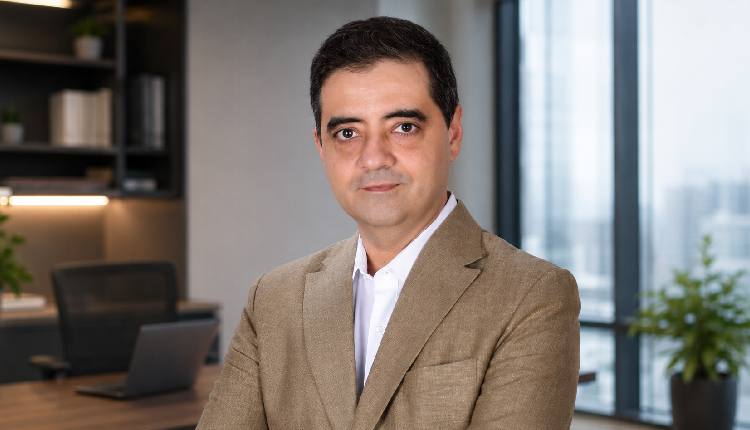
“The additional 150 seats are therefore not simply about accommodating more employees but about creating the infrastructure needed to support multidisciplinary teams working on increasingly complex, business-critical initiatives,” says Vishal Rajani, Managing Director, TVH India.
A GCC that is taking on more specialised work
TVH established the Pune centre primarily around technology and business support. Its remit has since widened as the company has increased its focus on digital products, enterprise systems, data and AI.
One of the more significant developments is the Centre of Excellence for Data and AI in Pune. Rajani says the centre is involved in shaping the architecture and approach to data and AI across TVH rather than functioning only as an execution team for programmes defined at headquarters.
“This is not a team executing briefs handed down from headquarters,” he says. “It is where the thinking, architecture and direction for how TVH approaches data and AI globally is being shaped.”
The distinction is relevant to the broader evolution of India’s GCC market. Many centres began with application development, infrastructure support or other work that could be separated geographically from the parent organisation. Increasingly, the question is whether those centres are acquiring specialised functions and decision-making responsibility of their own.
At TVH, the Pune operation now includes data engineering, AI development, analytics, backend software development, DevOps, cloud infrastructure, cybersecurity and data platforms.
The arrangement remains closely integrated with teams in Belgium and the US. Rajani describes the model as one of alignment rather than independence.
“The goal is not independence but depth,” he says, referring to the specialised capabilities being developed in Pune.
The technology challenge behind 50 million part numbers
TVH’s digital requirements are closely tied to the complexity of its underlying business. The company stocks more than one million items and maintains a database of more than 50 million part numbers, serving customers in more than 180 countries. In such an environment, e-commerce involves considerably more than an online storefront.
Pune contributes to the technology supporting TVH’s digital ecosystem, including search, backend engineering, cloud platforms, data engineering and digital operations.
The company’s E-shop provides one example. Customers use the platform to search for and order parts, but the service depends on systems that can manage product information, search, data and platform reliability at scale.
That places the Pune teams at a point where enterprise technology and customer-facing digital systems meet. The work is not mechanical engineering or the design of the industrial parts themselves. It is the software and infrastructure that help TVH manage and sell them across a geographically dispersed market.
Engineering without a manufacturing remit
Engineering is another growing area within the Pune centre, although its meaning in this context is different from product engineering at a manufacturing company.
The teams in Pune are primarily engaged in software and technology engineering. Their areas of expertise include AI engineering, backend development, DevOps, Linux, cloud infrastructure, cybersecurity and data platforms.
The work is distributed across geographies, with teams in India collaborating with counterparts in Belgium, the US and elsewhere. Strategic priorities are set across the organisation, while engineering teams contribute through development and continuous improvement of the systems supporting the business.
This model leaves an important question around where technical authority ultimately sits. For now, TVH’s approach is not to separate Pune from the rest of the organisation, but to deepen the expertise that can be brought into global programmes from India.
The next test is accountability
The more revealing measure of the Pune centre’s evolution may come over the next two years. TVH is looking towards further expansion by 2028, but Rajani does not frame that future in terms of giving the Indian centre complete autonomy. The company remains a family-owned business headquartered in Belgium, and major decisions continue to be taken in coordination with global leadership.
“Family ownership brings a quality to the working relationship between Pune and TVH’s headquarters in Belgium that is genuinely distinctive,” Rajani says. “There is a long-term orientation built into how TVH operates.”
Yet he draws a distinction between autonomy and accountability. “The right word for how Pune operates is not autonomy, it is alignment,” he says.
What is expected to change is the extent to which specific responsibilities are assigned to teams in India. Functions that are currently distributed across geographies could become more clearly owned within defined domains as the centre grows.
“The expectation is that Pune does not simply contribute to global outcomes, it owns them within defined domains,” Rajani says.
That would represent a different stage in the development of the centre. The addition of 150 seats is the visible part of the expansion. The less visible change is whether Pune increasingly moves from executing work for a global organisation to carrying responsibility for defined parts of it.
For a business dealing with more than one million stocked items, 50 million part numbers and customers across more than 180 countries, that distinction is likely to matter more than the number of desks in the new facility.
