

AI can make MSME lending more contextual, inclusive and scalable: UGRO Capital


Small and medium businesses rarely fit neatly into the structured financial profiles on which conventional credit models depend. Their cash flows fluctuate with seasonality, receivables are often delayed, inventory cycles vary and market demand can change rapidly. At the same time, the information needed to understand these businesses can sit across spreadsheets, invoices, GST filings, handwritten ledgers and other informal records.
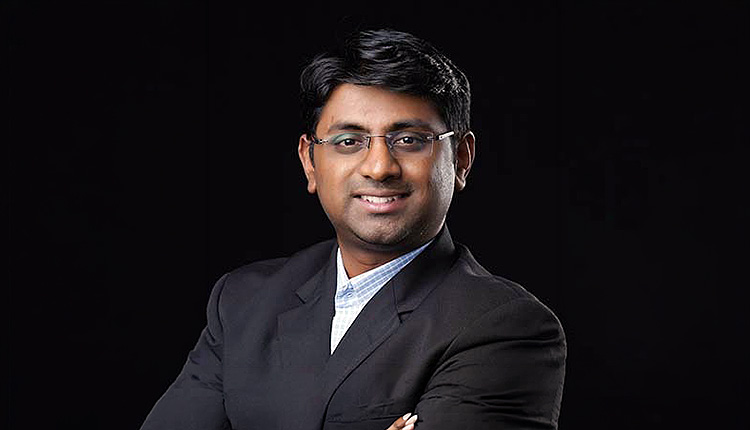
For lenders, this creates a fundamental challenge: a business can appear risky to a conventional credit model simply because its information is incomplete or does not conform to a standardised format. According to Rahul Sekhar, Chief Technology and Product Officer, UGRO Capital, artificial intelligence can help address this challenge, but only if MSME lending is approached differently from consumer or retail credit.
“MSME lending is therefore not purely a statistical exercise; it is fundamentally contextual,” Sekhar says.
Beyond structured financial data
Conventional AI-led underwriting works most effectively when the underlying information is structured, standardised and machine-readable. MSMEs, however, often operate with a much broader set of signals that may not be reflected in formal financial statements.
Inventory movement, customer relationships, supplier quality, operational resilience and the entrepreneur’s ability to navigate different business cycles can all provide important indications of the health of a business. The challenge for lenders is to bring these disparate signals together in a way that gives underwriters a more complete picture of the borrower.
This is where technologies such as computer vision, natural language processing (NLP) and generative AI can become relevant.
Computer vision, for instance, can help assess inventory levels, physical assets and operational scale using warehouse images or videos. NLP can analyse conversations with business owners to identify indicators of growth, stress or operational risk. Generative AI can synthesise fragmented financial records, invoices, GST information and other documents into insights that can be used by underwriters.
The objective, Sekhar argues, should not be to simply apply increasingly sophisticated technology to an existing retail lending framework.
“Applying a highly sophisticated retail model to an MSME can be like using a Formula 1 car on rough off-road terrain: the technology may be powerful, but it is not designed for the environment,” he adds.
The opportunity instead lies in developing contextual intelligence that brings multiple forms of information together and enables underwriters to make more informed decisions.
AI as an augmentation layer
This also defines where AI should sit within the lending process. Sekhar believes much of the heavy lifting involved in collecting, organising, interpreting and summarising complex information can be handled by AI.
Such capabilities can allow underwriters to process substantially more information, identify patterns faster and improve consistency. But that does not mean that the technology should replace human judgement.
MSME credit decisions can depend on information that is difficult to capture through structured datasets alone. Field observations, customer relationships, supplier networks, inventory movement, the credibility of the entrepreneur and the ability of a business to withstand different economic cycles can all influence the eventual decision.
“At UGRO Capital, the opportunity is to use AI as an augmentation layer for underwriting expertise rather than as a substitute for it,” Sekhar says.
This creates a division of responsibilities in which machines provide speed and analytical depth, while humans contribute judgement and context. Rather than treating algorithms and people as competing approaches, the lending model can use both to strengthen the quality of credit decisions.
Reducing false signals of risk
The impact of this approach extends beyond operational efficiency. Contextual AI could also change the economics and inclusivity of MSME lending by helping lenders distinguish between businesses that are genuinely risky and those that merely appear risky because their information does not fit conventional models.
For example, an MSME could have fluctuating cash flows, incomplete formal records or seasonal revenue patterns while simultaneously demonstrating strong inventory movement, loyal customers, resilient operations and a capable entrepreneur.
Traditional models can struggle to capture these nuances because they are primarily built around structured financial indicators. Combining financial information with alternative and contextual signals can give underwriters a more complete view of the underlying business.
That can shift the outcome from an automatic rejection based on incomplete information towards a more informed assessment of the actual business.
The distinction is particularly important for underserved businesses. If a viable enterprise is incorrectly classified as risky because the available information is incomplete rather than because the business itself is weak, a more contextual underwriting approach could help bridge that gap.
The larger opportunity, therefore, is not simply to make lending faster. It is to make it smarter and more inclusive by improving lenders’ ability to identify viable businesses that conventional systems may overlook.
From AI pilots to credit infrastructure
For this to work at scale, however, AI needs to move beyond individual experiments and become part of the underlying credit infrastructure.
Sekhar believes lenders need to rethink underwriting systems around the realities of MSMEs rather than adapting retail lending frameworks to small businesses. Such systems would need to combine financial data with contextual intelligence, alternative datasets and human insight.
Computer vision, NLP and generative AI can contribute by interpreting operational and unstructured information that conventional systems find difficult to process. But technology alone will not create trust in AI-led lending.
The technology needs to demonstrate that it improves the quality of decisions and supports underwriters rather than merely automating their work.
This distinction is important as lenders move from proof-of-concept deployments towards production-scale systems. For AI to become trusted infrastructure, its capabilities need to be embedded into underwriting processes with appropriate governance and human oversight.
“Instead of adapting retail lending frameworks to small businesses, lenders need systems that are purpose-built around the realities of MSMEs and capable of combining financial data with contextual intelligence, alternative datasets and human insight,” Sekhar says.
Building on India’s digital foundation
India’s digital infrastructure provides an increasingly strong foundation for this evolution. Aadhaar, UPI, GST digitisation and the Account Aggregator ecosystem are expanding the ability of lenders to access and interpret financial information.
The next opportunity, according to Sekhar, is to combine this digital foundation with AI capabilities that can interpret information beyond conventional financial datasets.
Computer vision can help lenders understand physical and operational signals. NLP can extract insights from conversations and unstructured information. Generative AI can bring together fragmented documents and financial records. Human underwriters can then apply their experience and contextual understanding to the resulting picture.
This combination could help move MSME lending away from an approach that relies predominantly on whether a borrower fits a predefined statistical profile.
Instead, the aim is to develop credit intelligence that can understand both the numbers and the business behind them.
Closing the MSME credit gap
Closing India’s MSME credit gap at scale will ultimately require a lending paradigm built around the complexity of small businesses.
For UGRO Capital, that means combining structured financial information, contextual intelligence, alternative datasets and human underwriting expertise to create a more comprehensive view of a borrower.
The technological building blocks are increasingly available. India’s digital infrastructure can provide access to financial information, while AI can help lenders interpret the operational and unstructured signals that traditional models often miss.
The challenge now is to turn these capabilities into reliable production-scale systems rather than leaving them as isolated AI pilots.
That requires strong processes, governance and human oversight alongside the technology.
The goal, Sekhar says, is to create “trusted credit intelligence that understands not only the numbers but also the business, its context and its underlying resilience.”
For MSME lending, that could represent a significant shift in how creditworthiness is assessed: from asking whether a business fits the data patterns of a conventional model to developing a richer understanding of how that business actually operates.
