

India may not need to win the AI race, but it cannot miss Q-Day


India may not have to beat OpenAI at its own game. It may, however, have less than three years to prepare for a quantum computer that could make today’s cybersecurity architecture obsolete.
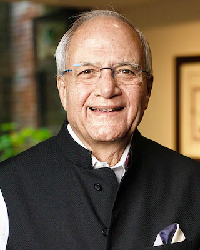
That is the somewhat contrarian proposition emerging from a conversation with Ajai Chowdhry, Chairperson of the India Quantum Mission and co-founder of HCL. For Chowdhry, India’s technology challenge is no longer simply about catching up with the US in artificial intelligence or building ever-larger models. In quantum, the more immediate challenge is to prepare for a deadline that could arrive far sooner than enterprises expect.
“Originally, it was thought to be 2035. But now it’s looking like 2029,” Chowdhry says, referring to Q-Day, the point at which a sufficiently powerful quantum computer could potentially break today’s widely used cryptographic systems.
The implication is uncomfortable. Organisations cannot wait for such a machine to appear before beginning their migration to quantum-safe security. The threat, Chowdhry argues, has already begun because data stolen today can be retained and decrypted later.
“Any data that is existing today, that is available today, can be taken away by any state actor or non-state actor, kept away for being decrypted when a quantum computer is available,” he says. “So it’s called Harvest Now Decrypt Later.”
The concern extends beyond corporate data. Financial systems, electricity grids, defence networks and other critical infrastructure could become targets once quantum capabilities mature. Chowdhry points specifically to the uncertainty surrounding China’s progress.
“We don’t know how far China is in development of quantum computer. Anytime China can have a powerful quantum computer, bring down all our financial systems, bring down our electrical grids, and we’ll be in serious trouble,” he says.
The problem, in his view, is not a lack of technology. It is the lack of urgency. “There is no hindrance. It’s a question of people in the market not understanding the seriousness of the matter and the urgency,” Chowdhry says.
The National Quantum Mission has consequently been working to bring the issue to the attention of financial regulators, banks, power utilities, defence organisations and other critical sectors. The migration, however, will take time. Chowdhry expects critical installations such as banks, RBI and SEBI-linked systems, power and defence to move towards quantum-safe security by 2028, with enterprises following by 2029.
That transition could itself create a significant technology workforce opportunity. Sunil Gupta, co-founder and CEO of QNu Labs, believes India could need around 100,000 trained implementers to execute quantum security across the country.

“Quantum communication is going to be the biggest employer for India,” Gupta says. “We need one lakh trained implementers for our country to implement quantum security.”
India does have a starting advantage. Chowdhry argues that the country has already established a position in quantum communication, including a 1,000-km test that places it alongside China among the only countries to have demonstrated communication at that distance.
“We are already a leader in quantum communication and secure communication,” he says. “Only two countries in the world have actually done 1,000 kilometres.” But if quantum is a race against the clock, Chowdhry sees India’s AI opportunity rather differently.
He pushes back against the increasingly common narrative that India is simply behind the US in the AI race. His argument is that India should not attempt to reproduce the same contest around ever-larger foundation models.
“The world is being led by companies in the US. OpenAI, Anthropic. Everybody, every day talks about these companies,” he says. “They have created the initial LLMs.”
The question, he argues, is what India does next. “Should India copy what the West is doing or do something different?” Chowdhry asks. “So we need to do something different.”
That difference, he believes, lies in smaller, specialised models designed around enterprise requirements, local languages and specific use cases rather than competing purely on model size. “Enterprises do not need LLMs models, they need SMLs,” he says.
It is a potentially important distinction. The first phase of generative AI has been dominated by the race to build increasingly capable general-purpose models. The next phase could be defined by how effectively those models are adapted, compressed and deployed for specific enterprise workloads.
For India, that could mean building an AI ecosystem around its own languages and business requirements rather than simply becoming a consumer of foreign foundation models. “We don’t need to run around doing LLMs only,” Chowdhry says. “We have to have our local language, LLMs for the purpose that we must be independent.”
His broader point is less about declaring India an AI leader today and more about choosing where it wants to compete tomorrow. That makes the contrast with quantum particularly striking. In AI, Chowdhry believes India can still choose a different race. In quantum, the window for choosing may already be closing.
The question is whether Indian enterprises will treat 2029 as a distant forecast or as a deadline.
