

Building for the age of agents: Where human intent meets AI

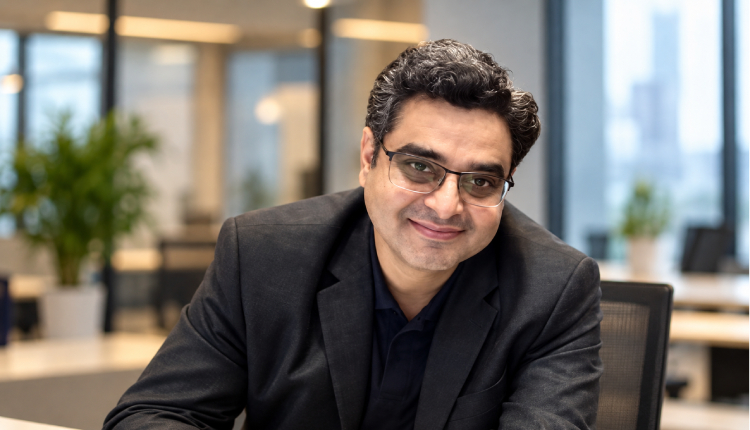

By Sunil Thapliyal, Head – CV Digital IT, Tata Motors Digital.AI Labs Limited
For much of the digital era, the relationship between humans and machines has been built on a simple premise: humans decide, software executes. Every business application, workflow and digital process followed this contract. People defined the rules; machines followed them.
Today, that contract is beginning to change.
The age of software is steadily giving way to the age of AI agents, systems capable of understanding objectives, reasoning through possibilities and taking actions toward a desired outcome. What was once confined to research labs is already finding application across industries, from manufacturing and logistics to financial services and customer engagement.
The implications are profound. Organisations are no longer asking how technology can automate individual tasks. Increasingly, they are exploring how intelligent systems can autonomously coordinate decisions, processes and outcomes across entire business ecosystems.
The first signs of this shift are already visible. Predictive maintenance systems powered by AI and telematics can identify potential vehicle failures weeks before conventional warning systems, helping reduce downtime, improve asset utilisation and enhance customer productivity. Similar applications are emerging across sectors as enterprises evaluate how AI agents can solve complex business challenges with greater speed and precision.
The future, therefore, may not be built by software alone. It will be shaped by intelligent systems that translate human intent into meaningful action.
Navigating a fundamental shift
To understand the significance of this moment, it is important to understand what traditional software fundamentally is.
Software operates on predefined logic. Developers anticipate scenarios, create rules and define responses. The system performs exceptionally well within those boundaries but remains dependent on instructions that were designed in advance.
AI agents operate differently.
Instead of being told exactly how to perform a task, they are given an objective and determine the path themselves. They can assess context, evaluate alternatives, adapt to changing conditions and continuously move towards the desired outcome.
This represents one of the most significant shifts in computing since the rise of software itself. According to industry estimates, task-specific AI agents are expected to become a standard component of enterprise applications within the next few years, signalling one of the fastest technology adoption cycles in recent history.
From automation to coordination
The real breakthrough is not automation. Businesses have been automating processes for decades.
The breakthrough is coordination.
Imagine a customer looking to purchase a vehicle. Today, that journey involves navigating multiple disconnected touchpoints, websites, enquiry forms, dealer interactions, financing discussions and service considerations.
In an agent-driven environment, specialised AI agents can work together behind the scenes. One agent understands customer requirements, another evaluates suitable products, a third analyses financing options, while others coordinate dealership availability and test-drive scheduling.
The customer no longer navigates systems. The systems intelligently orchestrate the journey around the customer.
This shift moves businesses beyond isolated digital interactions towards connected experiences designed around outcomes rather than processes. In many ways, this is already beginning to take shape within Tata Motors. A strong example is the SCVPU agentic AI solution, where AI autonomously engages potential customers, gathers relevant information, sustains conversations through follow-up messaging, and helps move potential customers further along the sales journey. Rather than automating a single task, it coordinates multiple activities across the customer engagement journey, creating tangible business impact. The outcome has been significant: 35% of engaged agentic AI calls converting into opportunities, a substantial reduction in manual effort with a single AI agent performing work equivalent to seven human agents per day, and organic lead generation delivering 12-13% more daily reach-outs than a typical call centre at nearly 30% lower cost per reach-out. More importantly, it demonstrates how agentic AI can unlock solutions to longstanding business challenges by orchestrating workflows end-to-end rather than optimising individual processes in isolation.
Conclusion
As AI agents become more capable, the conversation must move beyond technology itself.
The real differentiator will not be the ability to build smarter agents. It will be the ability to design systems where human intent, organisational goals and AI capabilities work together seamlessly.
For decades, organisations have focused on programming instructions. The next era will require them to articulate intent.
That is both the opportunity and the challenge of the Age of Agents.
Because while machines may increasingly determine the path, humans will continue to define the destination. And the organisations that thrive will be those that successfully combine technological intelligence with human judgment, trust and purpose.