

Cloud has given us scalability, flexibility, and speed, helping achieve business goals: Manjunath Prasad, TVS Mobility

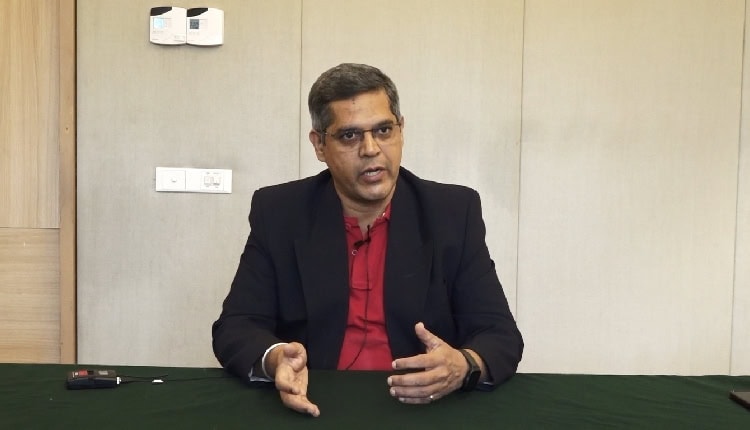

In an exclusive interaction with Express Computer, Manjunath Prasad, Vice President – ITS at TVS Mobility, shares a measured, experience-led perspective on enterprise cloud adoption at a time when discussions are often dominated by cost considerations. Having led large-scale digital transformation initiatives within a legacy-intensive organisation, he emphasises that the true value of cloud lies in the business agility, scalability and speed it enables, rather than in short-term cost savings. In this interview, Manjunath Prasad reflects on TVS Mobility’s transition from legacy infrastructure to a cloud-first ecosystem, the growing importance of hybrid cloud models, the gap between AI hype and real-world implementation, and why effective change management remains central to successful technology transformation.
With rapid technological advancements, especially post-COVID, the pace of change has accelerated dramatically. How challenging has it been for technology leaders like you to keep up, and how do you see the role of a tech leader evolving?
Coming from TVS, which is traditionally a brick-and-mortar organisation, our biggest challenge was legacy, both in systems and in culture. Adopting new technologies wasn’t just about implementation; cultural change was the toughest part.
We had to strike a balance between modernising our technology stack and bringing our people along on that journey. One of the most significant transformations we undertook was cloud migration. Today, despite being a traditional organisation, TVS is fully on the cloud. That shift from legacy infrastructure to modern platforms was a major milestone for us.
We approached this by starting small, expanding gradually, and ensuring scalability. Most importantly, we focused on involving the team. Technology should never be introduced just for the sake of it. People need to understand why it’s being implemented and how it benefits them. Without that clarity, adoption becomes a major challenge.
Does that mean you’ve adopted a multi-cloud strategy?
Today’s reality is hybrid. You can’t rely on just one cloud. We currently use GCP, OCI, and AWS, essentially all major cloud platforms except Azure.
Are you planning to continue fully on the public cloud, or do you see a shift ahead?
Currently, we are 100% on the public cloud. However, moving forward, we are actively working on projects that introduce private cloud and private colocation as well. The future is a mix.
Not every workload fits the same model. We’re now segmenting our business requirements, what belongs on public cloud, what fits better on private cloud, and what should remain on-prem. That segregation is critical, and it’s already underway.
Have you seen tangible benefits from this transformation?
Absolutely, but it depends on how you measure it. If you only look at cost, cloud may not always appear favourable. However, the real value lies in business outcomes.
Cloud has given us scalability, flexibility, and speed. Earlier, rolling out a project could take three months, planning, budgeting, procurement, implementation, and operations. Today, the business often says, “We need a solution yesterday,” and cloud enables us to respond quickly. That agility has directly helped us achieve business goals that would have been impossible with traditional infrastructure.
Cost is, of course, a factor, especially as cloud usage grows over time. That’s why FinOps has become essential. With the right tools and governance, we can maintain checks and balances. At the same time, certain monotonous or stable workloads don’t need to be on the cloud, which is why we’re moving some of them to private cloud or colocation.
Many organisations are now rethinking cloud costs. How do you see this evolving?
Over the last decade, cloud migration was the dominant trend. In this decade, especially post-COVID, rising cloud costs are forcing organisations to rethink. While we are currently fully on the cloud, our focus now is on optimisation and cost control.
The future will clearly be hybrid. Some workloads will remain on-prem, some in private cloud, and others in public cloud. There’s no one-size-fits-all model.
There’s a lot of hype around AI today. Do you see a gap between hype and reality?
Yes, very much so. As of today, AI is largely hype. Very few organisations can genuinely say they’ve implemented AI fully in production. Most are still at the conceptual or POC stage. One major reason is ROI. In POCs, data is clean and results look impressive. But when you move to production, real-world data introduces ambiguity and gaps. The core issue is data readiness. Without proper data preparation, AI initiatives struggle.
Jumping into AI just because the market demands can lead to frustration, cost overruns, and loss of momentum. That said, AI is definitely here to stay, just like cloud was a decade ago. It needs time to mature. Currently, IT use cases are the biggest adopters of AI. Over time, it will expand into other business areas, driving automation through AI, ML, and analytics, but that evolution will take time.
Change management is often the hardest part, especially with multiple generations working together. Have you faced cultural resistance?
In traditional organisations, new technology adoption brings fear—fear of job loss, fear of skill obsolescence. There’s also a mindset of “I know better because I have experience,” which can make people resistant to change. On the other hand, Gen Z comes with a very different mindset. They want speed and high-level tools. They often don’t want to go deep into systems, they prefer abstraction. The challenge is balancing both. Traditional employees bring depth and domain expertise, while younger generations bring speed and adaptability. A successful organisation needs both. Our focus has been on blending these strengths and creating a culture where both perspectives coexist.
Finally, looking ahead to 2026, what are your key focus areas?
We have three major priorities moving forward. The first is strengthening our security portfolio as increasing cyber threats and vulnerabilities make robust security more critical than ever. The second focus area is cloud optimisation while scaling our digital infrastructure, where we are working on cloud augmentation, cost optimisation, and identifying the right balance between public cloud, private cloud, and on-prem environments. The third priority is IoT and AI, where we are planning to initiate a significant program with AI and machine learning embedded as core components to drive intelligence and automation across the ecosystem.
