

Cybersecurity forecast 2026: Five critical shifts that will redefine business defense

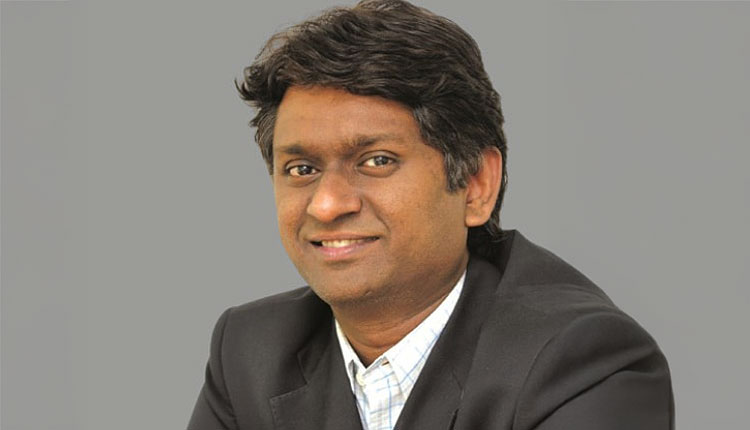

By Govind Rammurthy, CEO and Managing Director, eScan
As organisations finalise their 2026 security budgets, eScan (MicroWorld Technologies Inc.) identifies five fundamental shifts that will separate resilient enterprises from tomorrow’s breach headlines. The threat landscape isn’t just evolving – it’s undergoing a phase change driven by AI automation, ecosystem interdependencies, and the dissolution of traditional security perimeters.
AI democratises advanced attacks
The barrier to sophisticated cyberattacks has collapsed. What required elite technical skills in 2023 now requires only malicious intent and Internet access. AI tools can fingerprint systems, identify vulnerabilities, and deploy exploits faster than humans can read disclosure notices. India experienced this firsthand in 2025 when deepfake videos featuring Prime Minister Modi and Finance Minister Sitharaman promoting fraudulent platforms circulated widely, requiring official government warnings. A Pune resident lost ₹43 lakh to a deepfake of Infosys founder Narayana Murthy – the AI replication so convincing that technical literacy provided no protection.
This democratisation extends beyond social engineering. AI-powered phishing campaigns can generate 100,000 personalised messages in the time a skilled attacker previously crafted 1,000. More concerning: these tools are lowering the barrier for infrastructure attacks. The same automation that helps defenders is enabling mediocre, or even untrained, attackers to execute sophisticated exploits at scale.
Supply chains become primary attack vectors
The Marks & Spencer breach in February 2025 demonstrated how trust relationships become liability chains. Attackers didn’t breach M&S directly – they socially engineered Tata Consultancy Services’ help desk staff in India, obtained credentials, and moved laterally into M&S’s core systems. The £300 million breach cost less than the social engineering call that initiated it.
For India’s IT services sector, this represents both risk and opportunity. As the global back office for countless enterprises, any compromise in Bangalore or Hyderabad can cascade into multinational corporations worldwide. Indian providers demonstrating validated security controls and supply chain governance will find themselves advantaged as Western clients reassess third-party risk.
The home network becomes enterprise perimeter
Thirty to forty percent of home routers globally have never had default credentials changed. In 2025, these devices served primarily as DDoS infrastructure. By 2026, AI-powered tools will inject code into routers at scale – fingerprinting devices, searching exploit databases, and deploying customised malware in minutes rather than hours.
The implications for remote work are severe. A compromised home router can harvest credentials before VPN connections establish, compromise endpoint devices, or capture session tokens when connections drop. Several 2025 ransomware investigations traced initial access to compromised home infrastructure. Organisations will be forced to extend security policies into employees’ homes – an uncomfortable conversation that’s no longer optional.
Cloud complexity outpaces security maturity
The SPARSH portal breach exposing Indian defense personnel pension data resulted from a misconfigured cloud storage bucket. Not sophisticated malware – a checkbox that wasn’t checked. As multi-cloud adoption accelerates, configuration complexity multiplies. A DevOps engineer at 2 AM, opening “temporary” permissions that remain opened for months, creates the exposure path for tomorrow’s breach.
The 2026 challenge isn’t cloud insecurity – it’s that complexity enables human error, and attackers are patient. Breaches increasingly follow multi-step chains: exposed APIs leading to compromised service accounts with excessive cross-cloud permissions, accessing misconfigured databases containing credentials for additional systems. Organisations assuming they can achieve zero misconfigurations are deluding themselves. The question is detection speed, not prevention perfection.
Ransomware evolves into autonomous business operations
India saw a 55% increase in ransomware incidents in 2024, with pharmaceutical companies among key targets. Modern ransomware doesn’t just encrypt – it performs reconnaissance, identifies valuable data, determines optimal ransom amounts, negotiates automatically, and cascades through supply chains. Attack chains now begin with compromised home routers and conclude with persistent corporate network access established weeks before encryption begins.
What this means
Organisations thriving in 2026 will abandon the myth of impenetrable defenses. Instead, they’ll assume compromise, invest in rapid detection, and plan for containment. They’ll treat vendors as security dependencies, govern AI usage rather than prohibit it, and extend security thinking to every device touching corporate data – including employees’ home networks.
For Indian enterprises, this represents a pivotal moment. They will be mandated to demonstrate validated security controls, transparent supply chain governance, and mature remote work policies. These are the steps that will help position Indian providers as secure alternatives in an increasingly risk-conscious global market.
The enterprises that succeed won’t be those with the highest walls. They’ll be those that accept walls are irrelevant and build resilience accordingly.