

India’s ₹14.7 Lakh crore IT opportunity: Where enterprise infrastructure spending is headed

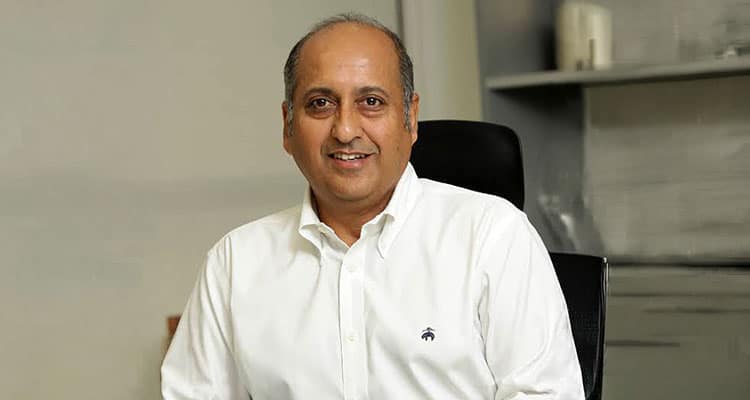

By Sunil Arora, Chairman & Managing Director, ABS India
For most of the last two decades, IT budgets in India were treated as a cost to be contained. That assumption is quietly falling apart. Gartner expects Indian organisations to spend more than $176 billion on IT during 2026, close to ₹14.7 lakh crore, and about a tenth more than the year before. The number matters less than what sits behind it: money is moving from keeping the lights on to building infrastructure that can carry a business for the next decade.
What strikes me is how broad the spending has become. This is not a technology-sector story anymore. Central and state governments, banks, hospitals, universities, hotels and even agricultural supply chains are all rebuilding their networks and data systems at the same time. A cooperative bank in a tier-three town and a hospitality chain in a metro are now asking the same question their larger peers asked five years ago: is our infrastructure secure, current, and ready for whatever we decide to do next?
That question is really about modernisation, and nobody wants to be last. Small and mid-sized firms feel the pressure as sharply as large enterprises, sometimes more, because they have less room to absorb a failure or a breach. The instinct is to buy the newest thing available. The better instinct, the one I keep arguing for, is to buy technology that grows as the business grows. Infrastructure that fits this year’s headcount and chokes on next year’s is a false economy.
There is also a change in how all of this gets paid for, and it may be the most consequential shift of the lot. The old model was capital expenditure: buy the hardware, own it, depreciate it, and replace it when it dies. A great deal of new spending now runs through operating budgets and subscriptions instead. You pay for capacity as you use it. For a finance head this is easier to plan around, and for a technology team it removes the pain of being locked into equipment that ages faster than the business does. Cloud has made this arrangement ordinary rather than novel.
A large share of the budget is going toward one unglamorous job: replacing legacy networks with digital ones. Many Indian organisations still run on network architecture designed for a workload that no longer exists. Rebuilding that foundation, increasingly with AI built into how the network monitors and defends itself, is where a good deal of the ₹14.7 lakh crore will quietly disappear. It rarely makes the headlines, but it decides whether everything sitting above it actually works.
On the technology itself, a few directions look settled. The first is that infrastructure is becoming software driven. Gartner’s own figures show software spending in India growing far faster than device spending, at roughly 18 per cent against 10. Hardware is not going away, but the intelligence and the value are shifting up the stack. The second is that AI is moving from the pitch deck into the plumbing. Within a couple of years I expect most infrastructure decisions to involve some AI-assisted layer, whether that is a network that reroutes itself around a fault or a security tool that flags an anomaly before a human notices it.
Cloud sits underneath all of this, and its growth has a physical consequence people tend to forget. Every workload that moves to the cloud has to live somewhere, which is why data centre investment in India is expanding faster than any other segment, above 20 per cent this year. More cloud means more data centres, more power drawn, more real estate taken, and a steadier pipeline of work for anyone who builds and maintains them.
Security is the other constant. The moment an organisation goes fully digital, its exposure changes shape. Cybersecurity stops being a product you bolt on at the end and becomes something woven through the whole design. As more of the economy moves online, the money spent protecting it will rise in step, and I suspect that spending will outlast several of the trends we get excited about today.
Here is the part that gets less attention than it deserves. Buying good technology and running it well are different problems. Most organisations, particularly outside the largest enterprises, do not hold deep in-house expertise across networking, cloud, communications and security all at once. That is where a capable technology integrator earns its place. Not to sell a box, but to help conceptualise, design, customise and implement solutions that genuinely fit the business. Whatever a vendor promises on paper, the work of making it real is specialist work.
Experience is what separates a good integrator from an average one. Twenty-five years of doing this teaches you the failure modes that no datasheet ever mentions. And the real test arrives after the sale. Service delivery, the unglamorous business of keeping systems running and responding quickly when they do not, is what protects the return on a large investment. I have watched well-chosen technology underperform because nobody planned for support, and I have watched modest setups thrive because someone did. Buyers are slowly learning to treat post-sales service as part of the purchase rather than an afterthought.
₹14.7 lakh crore is a large number. Spent well on infrastructure that scales, with partners who stay on after the invoice is paid, it buys India a decade of headroom. Spent badly, it buys a great deal of equipment that will need replacing sooner than anyone hoped.