

From Reactive Tools to Intelligent Agents: Fulcrum Digital’s AI-First Transformation

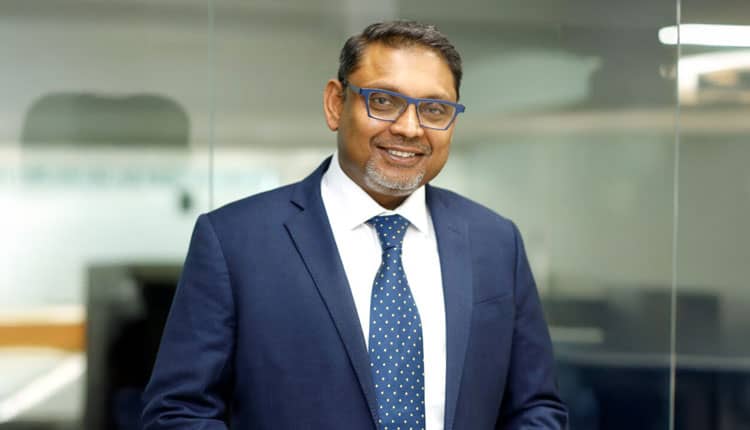

In an exclusive in-person interview with Express Computer, Rajesh Sinha, Founder & Chairman, Fulcrum Digital, shares how the company is positioning itself as a global enterprise AI leader with a strong engineering base in India. He outlines Fulcrum’s AI-led transformation journey, from investing in next-gen talent hiring to pioneering multi-agent AI systems. With India emerging as the hub for AI engineering, Fulcrum is moving beyond reactive tools towards outcome-driven, intelligent AI agents that can reimagine business processes for enterprises worldwide.
We have been hearing that Fulcrum has made waves in the AI and enterprise transformation space, and we are very excited to hear more about it. So, let us start by talking about your digital transformation journey first and how your proprietary platform FD Ryze is shaping the way enterprises function today.
We always believe in being a cloud-first company. Now we are an AI-first company. We announced our AI-first direction and introduced FD Ryze at our New York event in September 2023. In 2024, we moved the conversation from tools to agentic systems and set a clear path for how agents can reshape enterprise workflows. Our focus now is turning that vision into operating reality at scale. This year, on September 4, in New York City, we are announcing that we are launching two things: autonomous AI agents and super agents. What does that mean? We have now reached a maturity level in our agentic journey by solving hundreds of agent problems in the marketplace, and now we have the expertise to bring complex AI agents. Many people solve simple or medium AI agents. Now we are solving very, very complex AI agents which work in collaboration with multiple agents — so 10–12 agents come together to deliver one task. The reason our FD Ryze is better now is because we have matured an enterprise AI operating model. The more you operate with that model, the more ability you have to deliver complex AI agents.
There has been a very drastic shift from reactive tools to intelligent tools, outcome-driven agents, as you mention. You are one of the key movers and players in this area. Can you share the shift that you witness? Outcome-driven agents — does that change your client engagements as well?
The way we work with our customers, the first layer is conversational AI agents. Customers can talk to us and to our people through an intelligent salesperson. We also use Salesforce, so all our customer insights are in Salesforce, and we have our own AI intelligence tool which aggregates the data from SharePoint and Salesforce and Tag (and a couple of other software we use). It connects it, and, based on the customer’s profile, insights are given to the salespeople and account managers. Based on that — and each business unit and port — they receive the LLM. This is all powered by FD Ryze for us.
We also bring in a cockpit concept, meaning all the CEOs, even our customers internally, and our business heads use a concept called Cockpit AI. That Cockpit AI is something like: what does any executive need to see first thing on a Monday morning? That will come through several different sources, and AI analyses it for them and pushes the information they are most interested in. Every morning they keep browsing and accessing it; it autonomously and automatically becomes a self-maturing AI agent, becoming a more personalised AI agent for the executives or business leaders in Fulcrum.
What differentiates your strategy from other players in the AI ecosystem?
We believe everything is not just the LLM. People who are in generative AI think, “I am using cloud or Copilot or OpenAI,” and they are in the agentic AI journey. Our philosophy is slightly different: just by consuming one LLM, you do not become a mature player in the AI space.
To mature, LLM is just one layer. Then you require the integration layer, how you integrate it. Every customer has multiple assets in their business which have to connect with LLM layers. Every business has so many existing applications and new applications; businesses are also buying some new AI agents from the market. How do you bring new AI agents, existing old systems, and new modern systems of the business together — integrating with LLM? That is one aspect.
The second aspect is every business has its own data. So LLM has to train on those datasets. Copilot and OpenAI are trained on zillions of data, but that is LLM. Industry wants SLM—small language models, private language models, and industry-orientated language models. So LLMs have to be fine-tuned according to the industry and also fine-tuned according to their data.
Nowadays people come to realise that LLMs will never give you 100 per cent accurate solutions, no matter which LLM you choose. That is the phenomenon customers and everybody are now learning. The difference between us and others: many players who are new to the game deliver results with LLMs at 70–75 per cent. Because we have matured this game with multiple LLMs coexisting, and with those LLMs together maturing our Ryze platform, we are able to deliver more than 93–95 per cent accuracy. When they run the AI agent from us and then run the AI agent from other vendors or product players, in the outcome we are able to generate a more accurate result, and they trust it more.
India is emerging as an engineering and talent hub. With your strong engineering base in India, what does your hiring and talent development roadmap look like? Can you tell us more?
During a townhall in Pune, I had said that it is time for all our existing employees and the new employees joining to have a change of mindset, and then the second is to have the skill set. These are the fundamentals for them to accelerate in the AI maturity journey. Mindset: people are used to coding in a certain way. There are new ways of doing the code now. Your AI agent is going to write the code. Can you trust it? Can you co-work with the AI agent, because it is going to accelerate your development time?
There was some hesitation in our company about a year back; now I hear beautiful stories. They say, “Oh, it saves me two days to write this stored procedure,” or, “The stored procedures analyse it and tell me where the problem areas will be, which could have taken me weeks to figure out.” Now we hear so many great examples; the confidence is building. Sure, not only 30, 40, or 50 per cent of employees have the AI mindset; 100 per cent of people have the AI mindset in the company.
The second thing we are realising: there are a lot of young people from IIT and all the great colleges, and we are hiring talent from there, and they have a very AI-native mindset. So when they come in, they accelerate the adoption of our AI faster. There are two ways we are doing it: we are pushing our existing people to adopt it; the tools are helping, as well as the next-generation workforce, who are also given empowerment, and they are able to do the coding better because they use their tool more efficiently. We use all options: we have our own Ryze tool; we also give freedom to employees if they want to use Copilot or if they want to use Claude.
As you mention hiring for the AI mindset, apart from that, what kind of skills do you look for as you scale your AI capabilities, especially in terms of hiring needs?
First, we are looking a lot more into soft skills nowadays than technical skills. People who have curiosity, and we try to analyse the historical background from their college time to the first couple of years they have been working. Curiosity you cannot change.
Second, even though we take people with a Python and machine learning background and thinking, we are not hard-and-fast stuck with that. It is good to have those languages, yes, but we believe in the next year, items out there in the market (because once AI starts to do the coding), AI will figure out there is a better language; it will produce a language better than Python. Humans will not be able to catch up, because then it will be producing 10 more mature “Python” languages. It is too much for humans to understand and code on their own. They will have to co-exist with AI agents, learn the output from those languages and work on it.
So what kind of talent will be able to handle this? Talent who has speed, hunger, the ability to understand multiple things, and the ability to maintain the pace of technology. That is why we want curious minds and the ability to understand, and we are also trying to find technical people who have business acumen.
It is considered that most of the time technical people or those with an engineering background have inhibitions; they work in silos or alone; they do not have very good communication skills. Now leaders are looking for engineers who communicate well with the team and who understand and work on problems together better and faster.
Nobody in the industry talks like this, but I’ll tell you. If any project in the digital world uses 100 man-days to deliver it, 40 per cent of the time goes into requirements gathering, architecture and design; 40 per cent of the time goes into coding; and 20 per cent goes into testing and deploying. That is the life cycle of software development.
With AI agents doing coding, what happens is that 40 per cent of the coding time is going to disappear or reduce, so 40 becomes 10 (coding and review). Most of the time will go into Responsible AI, validating the biases, and fine-tuning it based on the data, rather than writing the code. That time goes down.
The phenomenon which happens in requirements gathering and architecture and design: all these technical programmers who are getting freed up now have to spend more time with the client, understanding the business problem, and understanding and architecting the solution. So they are no longer programmers; they are becoming architects because they have to solve the business problem, and they have to think that multiple AI agents can come together and solve the problems. A lot of their time will go into the ends, how to put together the solution, and which is the most efficient solution because, right now, AI agents are not “solutioning” it; programmers and technical people have to solution with the business mindset.
So, instead of having a separate businessperson and a separate tech lead and a separate AI person, people are now expecting all three in one person.
India is rapidly becoming a global AI innovation hub. How are you contributing to this vision in India—both in terms of innovation and ecosystem collaboration?
We have two companies: Fulcrum Digital and Culinary Digital. Culinary Digital has a SaaS software product for commercial kitchen software management using AI. Through that AI, we deliver to commercial kitchens. If you go to the airlines and eat meals there, some of the airlines use our software to deliver the meals. If you add AI and LLM into it, that will be in your everyday lifestyle. If you go to Starbucks and you get an LLM to converse about what you are going to order, and if it is powered by us, those are the implementation strategies we have to bring to society.
With FD Ryze, we are building a life-insurance agent conversation. When you are buying policies now, you will have autonomous agents helping with an investment plan so that you know you have bought the best thing for your money. Those are the mainstream AI adoptions we are bringing to the Indian economy. We are also looking at the India.ai initiative the government has, and we are trying to contribute there so that we become a better thought leader at a government level: not just delivering in the mainstream, but contributing to the bigger cause. We are taking that initiative as well.
Any future focus areas for the next part of the year—any exciting innovations or partnerships on the horizon?
We already partner with Databricks. We have both the domain-centric partnership, and what we are doing is this: there are many innovative AI-agent players in the market. Instead of building everything by ourselves, we collaborate with some of them, and we consume their solutions. We are not going to give our customers anything less; either our tool does it or somebody who is mature in the market. Customers deserve the best of breed from us, and that’s what we deliver.
