

The AI race will be won by those who secure their data first: Sanjay Poonen, CEO, Cohesity

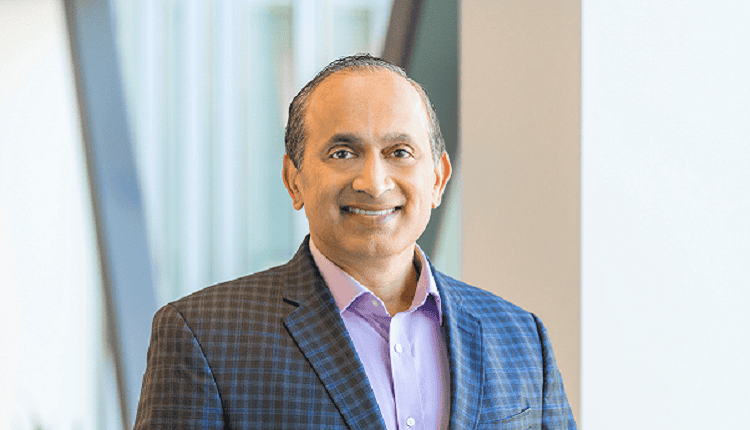

As enterprises race to put AI into production, a more fundamental question is quietly moving into the boardroom: how safe, usable, and sovereign is their data? For Sanjay Poonen, CEO and President of Cohesity, this convergence of AI, cybersecurity, and cloud strategy is reshaping enterprise technology decisions—and increasingly, India is where that future is being built.
“We are a data security company, but today we call ourselves the leader in AI-powered data security,” Poonen says. “We protect and secure the world’s data from cyberattacks—and once that data is safe, we help organizations analyze and search it using AI.”
That dual focus—security first, intelligence next—has propelled Cohesity into the center of some of the most pressing enterprise debates: ransomware resilience, AI readiness, and data sovereignty.
Backup becomes the last line of cyber defense
For years, backup was treated as insurance—important, but rarely strategic. That perception has changed dramatically.
“All the attacks today are on secondary data—backup data,” Poonen explains. “That’s where ransomware hits. And if you can’t recover fast, everything else becomes irrelevant.”
Cohesity has built its platform around this reality, positioning cyber recovery as a core business capability rather than an IT afterthought. The result: more than 13,000 customers globally, representing 70 percent of the Global 500, rely on Cohesity to protect their most critical data assets.
In India, adoption mirrors this urgency. The company works with 600+ customers, including four of the top five Indian banks and three of the four largest telecom operators, as well as large enterprises across manufacturing, retail, and public sector.
“It’s a horizontal problem,” Poonen says. “Every organization—bank, government, telco, hospital—is trying to answer the same questions: how do I protect my data, how do I make it usable for intelligence, and where should it live?”
AI moves from hype to production—on secured data
While AI dominates enterprise conversations, Poonen notes that the nature of those conversations has changed.
“AI is no longer a science experiment,” he says. “It’s moving into production. The focus now is productivity and real outcomes.”
What differentiates Cohesity’s AI strategy is scale and context. The company already sits on hundreds of exabytes of enterprise data, much of it unstructured—documents, PDFs, logs—that traditional analytics tools struggle to unlock.
“People have been storing this data efficiently for years, but no one really built an AI business on top of it,” Poonen says. “We’re the first to do that.”
That vision is reinforced by NVIDIA’s strategic investment in Cohesity. “We’re the only company in our space where NVIDIA is an equity investor,” he notes. “That tells you how important secure, AI-ready data platforms are going to be.”
Hybrid and sovereign cloud: where data lives now matters as much as how it’s protected
As regulation tightens and geopolitical risk rises, data placement has become a strategic choice, not a technical one.
“Customers are trying to figure out where data should live—on-prem, public cloud, sovereign cloud, or the edge,” Poonen says. “We don’t force a choice. We’re Switzerland.”
This neutrality has become especially relevant in markets like India, where sovereign cloud conversations are accelerating.
“We’re the only company that can deliver a single data security platform across edge, data center, and cloud—whether that cloud is private, public, or sovereign,” he says.
That capability places Cohesity at the center of enterprise decision-making as organizations balance agility with compliance, and innovation with national data policies.
India’s expanding role: from delivery center to global innovation hub
These strategic shifts are not abstract for Cohesity—they are increasingly being built and operationalized from India. The company recently marked a major milestone with the opening of a new, expanded regional office in Bangalore, elevating the city into a global hub for innovation, R&D, customer engagement, and talent-led growth.
“The opening of our new Bangalore office marks a profound milestone for Cohesity,” Poonen said during the inauguration. “It reflects our belief in India as a global engine of innovation, resilience, and growth.”
The new Bangalore facility more than doubles Cohesity’s capacity in the city, is designed for hybrid collaboration, and has achieved LEED Gold certification, reinforcing the company’s focus on sustainability and employee well-being. Along with expanded facilities in Pune, the investment underscores India’s central role in Cohesity’s global strategy—particularly as the company completes the one-year milestone of its successful integration with Veritas’ data protection business, a move that tripled Cohesity’s scale and accelerated its leadership in AI-driven data security.
“For me, it’s especially meaningful that my hometown of Bangalore is playing such a critical role,” Poonen said. “From protecting patients in hospitals to safeguarding water, power, and financial systems, the work being done here protects people not just in India, but around the world.”
Talent, trust, and geopolitics
India’s importance goes beyond cost or scale. For Poonen, it is also about trust in a fragmented world.
“In a world of U.S.–China geopolitical tension, India becomes a beneficiary,” he says. “It’s a democracy, it’s trusted, and it has extraordinary talent.”
That trust matters deeply in AI and cybersecurity, where intellectual property, data governance, and national security intersect.
“The biggest export of India is talent,” Poonen says. “As you go up the AI stack—models, applications, real use cases—India can absolutely lead.”
Cohesity now employs 2,200 people in India, with engineering, support, and IT teams increasingly leading primary development, not just secondary execution. The company plans to invest over $1 billion in India over the next five years, with a strong focus on early-career talent and long-term capability building.
“Bangalore has long been a cornerstone of our global talent strategy,” says Rebecca Adams, Chief People Officer, Cohesity. “This new office reflects our continued investment in the people and innovation driving our next phase of growth.”
Public sector, resilience, and national-scale security
Globally, public sector is Cohesity’s second-largest vertical after banking—a trend that is gaining momentum in India as well.
“Nation-state cyberattacks are no longer theoretical,” Poonen warns. “The same attacks we’ve seen in the U.S. and Europe will scale in every major democracy—including India.”
With 76 percent of organizations globally reporting at least one material cyberattack, the need for modern, AI-driven data security platforms is accelerating. Enterprises are increasingly adopting the Cohesity Data Cloud to secure, recover, and gain insight from their entire data estate—regardless of where that data resides.
Looking ahead, Poonen believes AI’s biggest impact will be augmentation, not replacement.
“The right framing isn’t whether AI replaces humans,” he says. “It’s how every job gets turbocharged when AI agents help people work faster and better.”
Cohesity’s generative AI capabilities—designed to search, summarize, and analyze secured enterprise data—are built with that philosophy.
“We sit at the top of the AI stack—applications and data,” Poonen says. “That’s where real value gets created.”
As AI, cybersecurity, and sovereignty collide, Cohesity’s strategy is clear: secure everything, make intelligence usable, and build from trusted global hubs like India.
“In this era,” Poonen says, “protecting data is protecting the future.”