



By Suchit Nanda
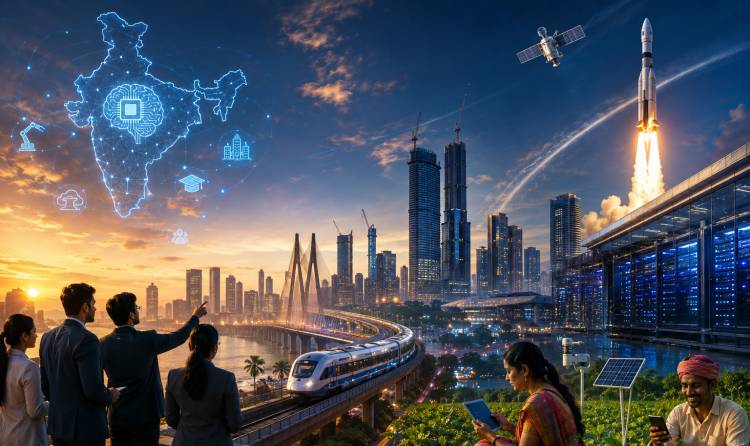
It was been an interesting two months. While, stock markets have been signalling caution, with tech stocks on the NSE and BSE experiencing a prolonged period of underperformance and correction. Yet, the broader tech landscape remains dynamically active, punctuated by high-profile corporate movements—such as Kunal Shah, the founder of CRED, being appointed by Meta as Global CEO, WhatsApp and a $900 million strategic investment. This duality serves as a stark reminder: while near-term market sentiment can fluctuate, India’s long-term technology narrative remains incredibly resilient. This underlying strength is driven by a massive, ongoing digital infrastructure buildout, particularly India’s aggressive data center expansion fueled by surging AI workloads and enterprise demands. Sharad Sanghi, Founder Neysa, Mumbai-based Gen AI and cloud infrastructure startup became India’s second unicorn of 2026 after securing a $1.2 billion funding round led by Blackstone providing AI-native cloud services and GPU infrastructure to deploy large-scale AI workloads.
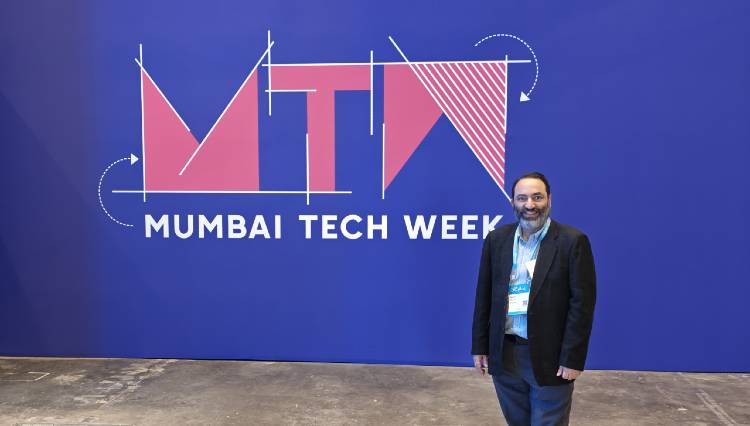 Nowhere was this long-term growth story more evident than at the Jio World Convention Centre (JWCC) in Mumbai. Almost back to back in May 2026, the venue became the epicenter of global tech discourse, playing host to two mega-events: the inaugural edition of ImagiNxt 2026 and the third edition of Mumbai Tech Week (MTW) 2026. Both these platforms brought together policymakers, global tech giants, founders, investors, and innovators to sketch a bold blueprint for the nation’s technology-led growth.
 From grand policy rollouts to sharp insights on execution, the month of May underscored a singular reality: India is no longer just experimenting with technology; it is deploying it at an unprecedented scale. And it is doing it a breath-taking speeds.
The Chief Minister’s Vision: A $1 Trillion Economy Fueled by AI
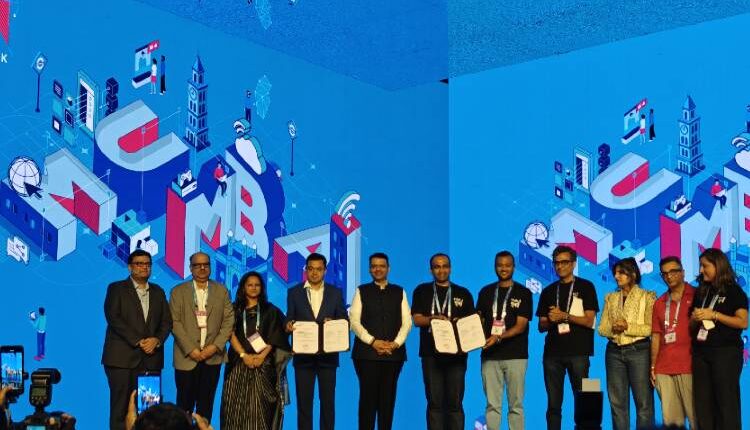
At the heart of it was Hon’ble Chief Minister of Maharashtra, Devendra Fadnavis, who used both platforms to declare the state’s unwavering commitment to emerging technologies. Speaking at the inaugural edition of ImagiNxt, the Chief Minister officially unveiled the landmark Maharashtra AI Policy 2026. The policy represents a massive, calculated roadmap designed to attract over ₹10,000 crore in investments and create more than 1.5 lakh jobs by 2031. He detailed a highly structured infrastructure buildout to support this vision, which includes:
The establishment of six AI Centres of Excellence and five AI Innovation Cities.
The launch of a ₹500 crore AI Startup Fund alongside 12 dedicated AI incubators.
The creation of a shared compute infrastructure boasting 2,000 GPUs to democratize high-performance computing for startups, enterprises, and governance alike.
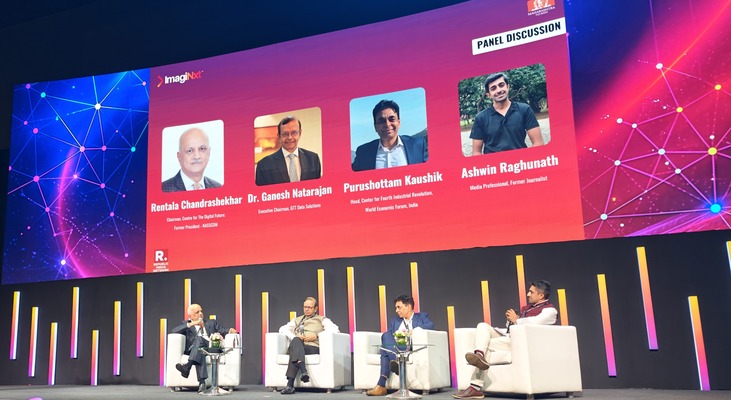
During a high-octane conversation with Arnab Goswami at ImagiNxt, the Chief Minister put these numbers into a larger macroeconomic context. He highlighted that Maharashtra already contributes over 31% of India’s Foreign Direct Investment (FDI) inflows. Moving from a ₹14 lakh crore economy in 2015 to nearly ₹54 lakh crore ($660 billion) today, the ultimate destination is clear: transforming Maharashtra into a $1 trillion economy by 2030.
Devendra Fadnavis reiterated this proactive stance at the launch of Mumbai Tech Week, emphasizing that adopting AI across every sector has transitioned from a luxury to an absolute necessity to engage the youth and solidify the state’s position as a premier global innovation hub.
Expanding Frontiers: Deep Tech and the Space Economy
Complementing the state’s localized push, the national perspective was brought forward at ImagiNxt by Dr. Jitendra Singh, Hon’ble Union Minister of State for Science and Technology. Dr. Singh highlighted that India is firmly entering a transformative decade where AI, quantum computing, biotechnology, and space energy will serve as the primary engines of economic growth.
Dr. Singh shared staggering projections regarding India’s rapidly expanding space economy, which is on track to skyrocket from $9 billion today to nearly $40–45 billion over the next decade. He attributed this exponential curve to the opening of the sector to private participation, which saw the space startup ecosystem balloon from single-digit entities to more than 400 startups, including the nation’s first space unicorn, in just five years.
Furthermore, the Minister highlighted a ₹1 lakh crore Research, Development, and Innovation Fund aimed at backing deep-tech startups and next-generation sovereign technology architectures, such as the India AI Mission and the National Quantum Mission.
What Matters? The Real-World
While ImagiNxt laid out the grand policy visions, Mumbai Tech Week (MTW) 2026—organized by the Tech Entrepreneurs Association of Mumbai (TEAM) in collaboration with the Government of Maharashtra and supported by Meta and OpenAI—focused heavily on practical execution. The theme, “India: AI in Action,” signalled a deliberate shift away from theoretical pilots toward actual production and bottom-line deployment.
MTW 2026 has grown into one of the most critical landmarks on India’s technology calendar because it bridges the gap between high-level AI discourse and absolute business reality. Rather than focusing on what AI can do, it spotlights what AI is already doing to drive corporate efficiency, economic expansion, and job creation.
As Harsh Jain, Co-chair of the Governing Council of TEAM, astutely noted: “The competitive advantage in AI has shifted. It’s no longer about understanding it, it’s about implementing it. The companies pulling ahead are the ones moving from pilots to production and weaving AI into how their business actually runs. That’s why platforms like Mumbai Tech Week are valuable — they show the ecosystem what’s working in the real world, not just in theory.”
The sheer scale of MTW 2026 highlights why it is a vital catalyst for the region:
The Macroeconomic Impact: The event arrives at a time when AI is projected to contribute up to $450–$500 billion to India’s GDP.
Ecosystem Acceleration: The platform nurtures an ecosystem where Mumbai’s startup environment is projected to scale to over 100+ unicorns by 2035, with AI-driven businesses expected to drive up to 15% of the city’s GDP growth and attract over $450 billion in foreign investment over the next decade.
Enterprise and Global Alignment: By hosting curated showcases and masterclasses from global giants like Meta, Anthropic, Google Cloud India, Replit, and OpenAI alongside homegrown innovators like Neysa and NPCI, Dream11, IndiaBonds, GetVantage and Shaadi.com, MTW provides direct, hands-on toolsets for scaling production environments.
Community Engagement: Beyond the main exhibition, the week activated massive ecosystem engagement through satellite sessions, hackathons, workshops, an early-stage startup showcase, and an AI-powered job fair in collaboration with Babblebots.ai.
Proximity is the city’s superpower. As TEAM governing council member Naiyya Saggi pointed out, Mumbai seamlessly interconnects capital, large enterprises, and massive consumer markets, allowing ideas to move from concept to mass adoption faster than anywhere else in the country. This capacity to translate intent into execution positions Mumbai as the city shaping how AI is built and applied.
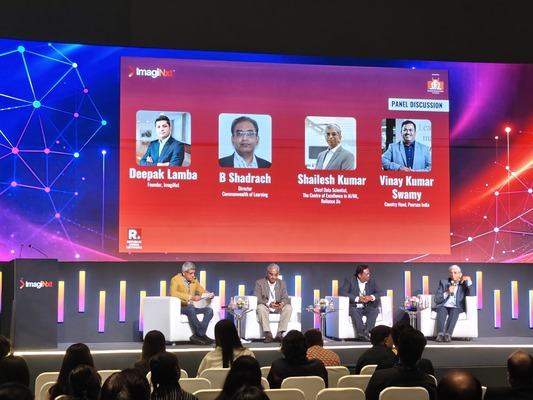
Deepak Lamba, Founder and CEO of ImagiNxt, said, “The response to the opening day of ImagiNxt 2026 reflects the scale of ambition and momentum building across India’s innovation ecosystem. From policymakers and founders to investors, creators and technology leaders, the platform brought together voices shaping what the next decade of India could look like across AI, deeptech, digital infrastructure and entrepreneurship.”
Bringing it Ground Up: The Crucial Lens of Grassroots Innovation
Amidst discussions of massive GPU clusters, space metrics, and corporate AI deployment, it remains vital to ensure that technology serves the entirety of India’s population. This is why the inclusion of the “Grassroots Innovations” track at ImagiNxt was so essential. Deep tech and AI are undeniably revolutionary, but true, sustainable national growth cannot just be top-down; it must happen from the bottom up.
I had the distinct privilege of moderating a vital panel discussion on this topic, featuring an esteemed lineup of experts: Dr. Vipin Kumar (Chief Scientist at the National Innovation Foundation); Prerana Langa (CEO of the Aga Khan Agency for Habitat (AKAH) India); Osama Manzar (Founder & Director at the Digital Empowerment Foundation).
Grassroots innovations are frugal, sustainable, and deeply impactful alternatives created by ordinary individuals within the informal sector to address immediate, localized needs. They are vital because they empower rural economies, foster community-level entrepreneurship, and offer solutions inherently tailored to regional contexts.
If our industry only focuses on building technology for Fortune 500 boardrooms, we miss the vast economic and creative potential of the vernacular and informal markets.
Zoho Founder and Chief Scientist Sridhar Vembu delivered a strong message on tech sovereignty at the ImagiNxt 2026 Summit, cautioning India against relying too heavily on Silicon Valley platforms. He drew parallels between current Big Tech dominance and colonial economics, arguing that true technological self-reliance requires building domestic R&D and products. He advocated for “dharmic capitalism,” balancing profitability with roots in rural India and sustainable, energy-efficient intelligence over blind pursuit of the latest AI trends.
He championed the concept of Swadeshi—meaning Indian entrepreneurs building indigenous technology—and noted that the country is undergoing a vital mental shift towards self-reliance. Key sovereign initiatives were highlighted at the event by Rishi Bal (CEO, BharatGen)—India’s flagship multilingual and multimodal AI initiative—showcase that the technology stack is actively adjusting to become more inclusive. Deepak Bagla, Mission Director of Atal Innovation Mission at NITI Aayog, said the entrepreneurial mindset in India is evolving, adding that the success of the Startup India mission reflects this shift.
The Mumbai Tech Week 2026 brought together prominent leaders from global tech giants and the Indian startup ecosystem such as Arun Srinivas (MD & Country Head, Meta India), Pragya Misra (Head of Strategy & Government Affairs, OpenAI India), Sanjay Gupta (Country Head & VP, Google India) and Manish Gupta (Senior Director, Google DeepMind), Irina Ghose (Managing Director, Anthropic India), Sharad Sanghi (Founder & CEO of Neysa.ai) and V. Vaidyanathan (MD & CEO IDFC FIRST Bank).
Key Insights from the Panel
Democratization of Opportunity: Emerging tech and AI possess an unprecedented capacity to bridge the rural-urban divide, but only if the technology is accessible without steep educational barriers.
The Need for Frugality: True innovation at the grassroots level does not require multi-million dollar compute budgets; it relies on optimizing hyper-local resources to solve day-to-day challenges in agriculture, habitat, and local commerce.
Human-Centric Systems: The consensus among the panelists was clear—technology is merely an enabler. AI can scale a solution, but it requires strong human systems, community trust, and robust institutional support to turn a local hack into a sustainable economic model.
Conclusion: A Tech Month to Remember
May 2026 proved that India’s digital ecosystem has reached a definitive maturity point. Through the combined momentum of ImagiNxt (https://www.imaginxt.in/) and Mumbai Tech Week (https://mumbaitechweek.com/), the tech community successfully bridged the macro-policies of the government with the high-growth execution of startups and the grounded realities of grassroots communities.
June saw Mukesh Ambani officially announced the Jio Platforms IPO during the Reliance Industries Annual General Meeting. This announcement set in motion India’s largest capital markets event, with the public offering estimated to raise upwards of ₹35,000 crore and value the company above $135 billion.
As Mumbai accelerates its data center expansion, draws massive foreign investment, and moves forward with its ambitious AI infrastructure, the city has laid down a clear marker: it is ready to lead the global AI ecosystem.
— Suchit Nanda (www.suchitnanda.com) is a pioneering figure in the history of the Internet and Bulletin Board Systems (BBS) in India and has consulted to many International organizations like IDRC, ORBICOM, UNDP-APDIP, UNESCO etc. He has been associated with Express Computer since launch and has served as Advisor on the Editorial Board. Suchit contributed articles and wrote on technology for Express Computer. He is CEO of Online Services, Advisor to Reliance Industries Ltd., Reliance Foundation, SAGE Foundation and associated with APNIC Foundation.