

The winners won’t just collect data, they’ll mirror their operations: Indradyumna Datta, Jindal Steel & GCC


As steel manufacturing enters a new era defined by artificial intelligence, industrial IoT, digital twins and cybersecurity, digital transformation is becoming the foundation of competitiveness rather than a support function. At Jindal Steel, this transformation is reshaping how the company produces steel, manages assets, optimises logistics, strengthens cyber resilience and prepares for future growth.
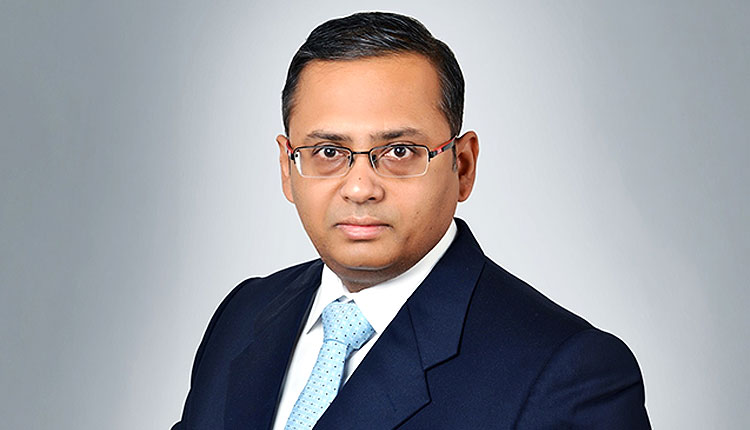
Under the leadership of Indradyumna Datta, Group Chief Digital Officer (GCDO) and CEO, Jindal GCC, the company has built a digital roadmap that integrates data across the value chain while supporting its strategic expansion and sustainability ambitions. From intelligent manufacturing systems and predictive maintenance to real-time digital twins and AI-powered operations, Jindal Steel is building a digitally connected enterprise where production decisions are increasingly driven by data.
At the core of this transformation is the company’s “Better than Before” philosophy and Project प्रगति 2.0. Jindal Steel has embedded AI, ML and predictive analytics across safety, sustainability and operations. MES connects enterprise planning directly with real-time shop-floor execution across the plate mill and hot strip mill.
AI and ML models are optimising power consumption, slag rates and ladle movement, while automated gate entries, GPS-enabled logistics and an SAP-integrated Rake Management System provide end-to-end visibility from pit to port. These initiatives have earned the company the UBS Award for best use of technology in manufacturing.
Explaining the philosophy behind this transformation, Datta says, “We digitalise because it makes the work simpler, faster, and more reliable. Not for the sake of technology.”
Looking ahead, Jindal Steel has identified three strategic digital priorities: smart plants, an intelligent supply chain and trust. Smart plants focus on expanding AI, IoT and predictive maintenance as the company scales its Angul facility from 6 to 12 MTPA, where uptime and yield become critical drivers of margins.
The intelligent supply chain aims to provide customers with real-time visibility and automated technical delivery as the company expands its portfolio of higher-value flat steel products. Trust focuses on strengthening cybersecurity and data governance as IT and OT continue to converge across manufacturing environments.
Summarising this approach, Datta notes, “Three things working together: smarter plants, faster supply chains, secure systems. That’s how a large integrated enterprise stays both efficient and resilient.”
Production optimisation and predictive maintenance have delivered some of the strongest business impact from these initiatives. IoT sensor-driven predictive analytics are improving Overall Equipment Effectiveness (OEE) and asset reliability, while vision analytics and advanced process control are improving First-Time-Right outcomes and product consistency.
Customer-facing AI is emerging as the next phase, with initiatives including the JAI chatbot and broader adoption of generative AI expanding steadily, although these capabilities remain emerging rather than fully industrialised.
Highlighting the company’s AI approach, Datta says, “We don’t chase AI trends. We chase results. Whatever actually works, we scale.”
As manufacturing becomes increasingly connected, cybersecurity has become inseparable from operational continuity. Jindal Steel operates under ISO 27001 certification and follows a board-approved Information Security Policy supported by regular phishing simulations, Vulnerability Assessment and Penetration Testing (VAPT), and red-teaming exercises.
With IT and OT environments increasingly converging, the company is applying Zero-Trust principles to secure the boundary between enterprise systems and plant-floor operations. Business continuity is supported through a disaster recovery system, regular disaster recovery drills and an IT general controls framework. These measures contributed to the company reporting zero data breaches during FY25.
Putting cyber resilience into perspective, Datta says, “A cyber-attack on the plant floor isn’t a data problem, it’s a business problem. We treat it that way.”
A key pillar of Jindal Steel’s digital strategy is its investment in digital twins. Moving beyond IoT deployments and operational dashboards, the company has developed live process twins using a unified data platform that consolidates information from PLC systems, SCADA platforms, SAP and manual data entry into a single operational view.
At Raigarh, digital twins are already live across the steel melt shop, blast furnaces and sinter plant, while similar deployments are being rolled out at Angul across the blast furnace, sinter plant and raw-material handling operations.
The platform enables real-time OEE calculation, process deviation monitoring, quality tracking and fully digitised logbooks, allowing teams to identify and address losses as they occur rather than after a shift report. The digital twin acts as a real-time, auditable digital replica of the plant, enabling faster and more informed decisions.
Describing this capability, Datta says, “A digital twin that works is your plant in real-time. That’s the only kind worth building.”
Looking towards the next decade, Jindal Steel believes digital leaders will be those that transform physical manufacturing assets into continuously connected digital assets. The company’s digital twin platform is operational across multiple plants at Raigarh and continues to expand across Angul, delivering real-time OEE, process-deviation alerts and a comprehensive digital audit trail developed in partnership with global technology leaders.
Combined with Jindal Steel’s green-steel initiatives and integrated manufacturing strategy, these digital capabilities create opportunities to optimise operational cost, product quality and carbon performance simultaneously.
Concluding on the future of digital steelmaking, Datta says, “The steelmaker who wins the next decade won’t just collect data from their plant, they’ll have a living digital mirror of it. That’s the future we’re already building, one plant at a time.”
With AI-driven manufacturing, predictive analytics, intelligent supply chains, cyber resilience and enterprise-scale digital twins working together, Jindal Steel is building a model for the next generation of digitally enabled steelmaking.
