

Real opportunity lies in connecting intelligent manufacturing with intelligent products: Dipesh Shah, Havells India


For decades, the logic of industrial manufacturing was relatively straightforward. Engineering designed the product, the factory made it and the customer used it. The information generated at each stage rarely travelled far enough upstream to fundamentally alter the next product.
That model is beginning to look inadequate as software, sensors, artificial intelligence and electronics move deeper into physical products.
For Havells India, the more consequential technology question is no longer simply how to automate the factory or make an appliance smarter. It is whether engineering, manufacturing and product usage can become parts of one continuous learning system.
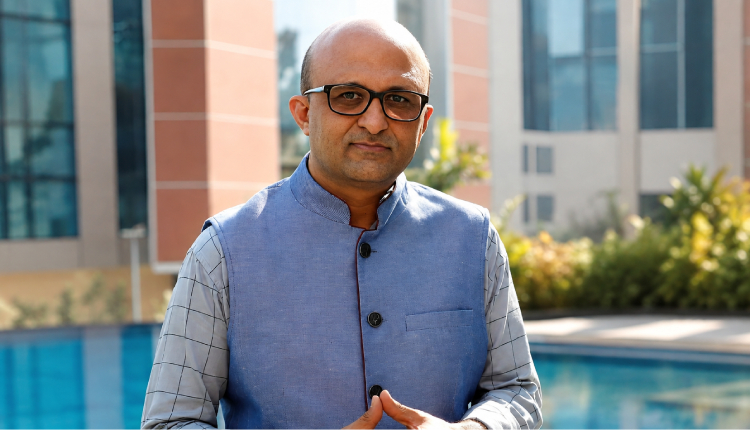
That is the direction Dipesh Shah, Executive President and CTO, Havells India, sees emerging from the company’s Centre for Research & Innovation. “AI is increasingly being embedded across this process to support design exploration, simulation and validation, enabling teams to evaluate possibilities faster, make more data-driven decisions and shorten development cycles without compromising quality or reliability,” he says.
The distinction is important. AI is not being positioned merely as another feature that can be inserted into a fan, appliance or electrical system. Its larger role is upstream, where it can influence what gets designed in the first place, and downstream, where data from products in the field can inform what comes next.
From product development to a continuous loop
The conventional product lifecycle has an inherent limitation. By the time a product reaches the customer, much of the engineering work is already considered complete. Connected products challenge that assumption.
Havells is bringing engineering, design, software and consumer understanding closer together through its Centre for Research & Innovation, with its Customer Experience & Design Studio feeding consumer insights into the development process.
The objective, Shah says, is to accelerate the journey “from identifying consumer needs to developing and validating solutions.”
What changes when that journey becomes data-driven is not merely speed. It changes the nature of the decision-making itself. Simulation can allow engineers to examine more design possibilities before physical prototyping. Real-world product data can expose usage patterns that may not have been anticipated during development. AI can then become part of the mechanism through which those signals are converted into engineering decisions.
“AI is therefore being viewed not simply as a feature within products, but as an enabler of engineering excellence,” Shah points out.
That is a more significant proposition than putting intelligence into individual products. It suggests that the product itself becomes one of the inputs into the next generation of engineering.
The factory becomes part of R&D
The same principle is beginning to alter how Havells thinks about manufacturing capacity. The company has approved an additional ₹255 crore for its greenfield Tumakuru facility while expanding capacity at Ghiloth. But Shah’s argument is that manufacturing investment cannot be separated from the engineering system around it.
“We are increasingly looking at manufacturing as an extension of the R&D ecosystem,” he says. That changes the question from how much capacity a new plant can add to what capabilities should be designed into the plant before production begins.
Automation, digital visibility and data infrastructure can be embedded from the outset. But the real value comes when those capabilities connect back to product engineering. Havells’ R&D teams work with its 17 manufacturing facilities, creating a channel through which prototyping, validation and manufacturing experience can influence one another.
This also changes the economics of existing assets. Capacity expansion alone does not guarantee productivity if factories remain disconnected from the engineering organisation. The objective, according to Shah, is to make both new and existing facilities “more productive and responsive” through automation, data and digital capabilities.
The example of electron beam cross-linking in high-performance cables illustrates another part of this equation. Manufacturing technology is increasingly being used not just to produce at scale but to enable higher-performance products for emerging applications such as solar and renewable energy. In other words, the factory is becoming an engineering instrument rather than simply a production destination.
When intelligence moves inside the product
The boundary becomes even harder to define as Havells enters battery energy storage. Its July 2026 partnership with Pixii is aimed at developing battery energy storage solutions for the Indian market, bringing together Pixii’s modular energy storage technology and Havells’ manufacturing capabilities.
Here, the distinction between a smart factory and a smart product becomes almost artificial. Battery management, power electronics, thermal management and embedded software are fundamental to the system’s behaviour.
“As products become more software-driven and connected, the boundary between intelligent products and intelligent manufacturing is becoming increasingly fluid,” avers Shah. That has an important implication for India’s technology ambitions. Havells does not intend to treat the technology stack behind such products as something that must permanently remain outside India.
“As the BESS business evolves, we expect to develop a significant part of the software and engineering capabilities in India,” he adds. The objective is to build local expertise and intellectual property while using Pixii’s existing capabilities to accelerate the learning curve. For a manufacturer, that is a very different proposition from simply localising assembly. It is about developing ownership of the systems that determine how the product actually works.
The semiconductor opportunity starts after the chip
The same logic applies to semiconductors. India’s semiconductor ambitions are often measured in fabs, packaging capacity and chip production. For a company such as Havells, however, the strategic value of the semiconductor ecosystem will ultimately depend on what happens around the chip.
“The focus is not only on the chip itself, but on how hardware, software and connected intelligence come together to create products that deliver a better consumer experience,” Shah says.
That system-level capability is arguably the harder piece to build. It requires expertise across electronics, embedded systems, firmware, software, AI and product engineering rather than excellence in any one discipline.
Havells is attempting to deepen those capabilities through its R&D organisation and its integrated campus in Noida. The ambition is to give engineering teams greater control over the technologies shaping connected products rather than merely adapting technologies developed elsewhere.
The strategic prize is therefore not semiconductor self-sufficiency in isolation. It is the ability to turn increasingly sophisticated components into differentiated products through Indian engineering.
The competitive advantage will sit in the connection
Over the next three years, Shah does not expect intelligent manufacturing to be judged by a single factory metric. Productivity, quality, agility and uptime will remain important. But the more meaningful measure will be whether those improvements accelerate the entire journey from design to commercialisation.
“When manufacturing is more connected and data-driven, it can help us move faster from design and prototyping to validation and scale, while maintaining consistency and quality,” he states. Nor does Shah see intelligent factories and intelligent products as competing sources of advantage.
“I don’t see these as two separate advantages,” he says. “The real opportunity lies in connecting intelligent manufacturing with intelligent products, so that learnings from the factory, engineering and real-world product usage continuously feed into each other.” That is perhaps the more important shift underway at Havells.
The industrial technology story is often told as a race towards more automation, more connected machines and more AI. But the harder challenge is organisational and architectural. It is connecting systems that were historically built to operate separately.
A factory can become more automated without becoming more intelligent. A product can become connected without becoming meaningfully smarter. An engineering team can deploy AI without fundamentally changing how products are conceived. The real advantage emerges when those three systems begin to learn from one another.
For Havells, that is what the next phase of intelligent manufacturing increasingly appears to mean. Not simply teaching the factory to make products more efficiently, but creating an industrial loop in which engineering informs manufacturing, manufacturing informs products and products inform the next generation of engineering.
