



For most of the past two decades, the enterprise conference room was a problem CIOs tolerated rather than solved. It was expensive to fit out and dependent on specialist installers. It was built around a single powerful box that held all of the room’s intelligence. Then the pandemic taught everyone to meet from a laptop, and the room fell further behind.
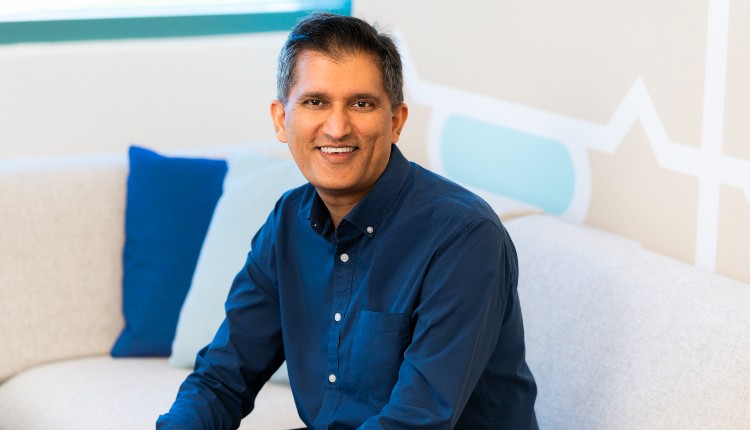
Javed Khan thinks that era is ending. Khan has been CEO of Neat for a little over five months. Before that he spent nine years running collaboration at Cisco, where he led the modernization of Webex through the remote-work surge. He then spent a couple of years at Aptiv building AI for autonomous vehicles. He now argues that advances in edge silicon are changing what a room can do, and what it should be.
“It is an exciting industry, especially now that hardware has become significantly more powerful and enables AI to run at the edge,” says Khan.
Why the return to office reopened the hardware debate
Khan traces the current moment to a simple mismatch. The pandemic years made video conferencing a software experience, with Zoom, Teams and Google Meet running on laptops. When people returned to offices, their expectations came with them.
“We had all become very comfortable joining meetings from laptops, but the conference room experience was still relatively expensive and complex,” he said.
Neat’s answer was architectural. Room systems for the past 15 to 20 years, Khan said, were “built around a central device, or codec, which was extremely powerful but meant that everything was concentrated in one box.” Neat’s design is distributed: “You can add a camera, add a microphone and expand the system as your requirements evolve. You don’t need a large central box, which makes it much easier to get started and then scale.”
For IT leaders, the operational implication is significant. Customers, Khan said, “can set up the technology themselves without making a heavy investment in installation.” Rooms stop being bespoke projects. They become something closer to managed endpoints.
Intelligence moves to the device
The second shift is compute. “Three to five years ago, you did not have the same level of compute available at the device level,” Khan said. “Today, AI can run directly on the device rather than necessarily having to be processed in the cloud.”
In real-time communication, that matters because latency is unforgiving. “You cannot always afford to wait for latency or depend entirely on cloud processing,” he said. Features such as automatically framing a speaker or sending multiple video streams are now possible on the device itself. “AI is becoming smaller and more capable, allowing more intelligence to run at the edge.”
India as the proving ground
Neat entered India in 2022. By Khan’s account, the market has gone “from zero to close to $20 million in revenue in India alone” in roughly three and a half to four years. He cautioned that the figures are approximate because Neat is privately held. The business did this with a sales and marketing team of about 20 people, selling entirely through partners, and Khan says India is “growing much faster here than in some of our other markets.”
He points to two India-specific dynamics. The first is how quickly offices refilled. “In India, people tend to spend five days a week and around eight hours a day in the office,” he said. Even then, employees keep collaborating with colleagues, customers and teams elsewhere, which makes the room a heavily used asset rather than an occasional one.
The second is the economics of distance. For companies with operations in India or Indian firms working globally, “if I do not have to travel to Europe or the US for a meeting, or if a supplier is located elsewhere in Asia, having world-class collaboration technology can generate meaningful savings.” He describes that as a stronger driver than in Europe or the US.
Global capability centers and large multinationals are the core customers. Their demand, Khan said, is not new in kind but new in scale: “What is changing is the number of devices and conference rooms organisations need.” He expects growth from two directions, new customers and share gains, plus deeper expansion inside existing accounts, “because they need more devices than they did five years ago.”
Government is an emerging segment too. Khan cited India’s court system, which is adopting remote collaboration so that participants “do not always need to be physically present.”
An open platform, not another meetings app
Neat does not plan to compete with the meeting platforms. “We are not trying to build a meetings platform ourselves,” Khan said. “We work with Zoom, Google, Microsoft and now Zoho.” The Zoho partnership is a recent announcement, and Khan said the court system also has its own video solution that Neat works to enable on its hardware.
The more consequential move is Neat Open. Historically, developers built inside a platform vendor’s ecosystem, such as a Teams app or a Zoom app. Neat Open lets “any software vendor build an application that is essentially an Android application and run it on our devices.” Customers can build their own as well.
Khan offered examples: a customized whiteboarding app on a touchscreen device, transcription and translation running on the device rather than a phone, or bespoke digital signage. A curated marketplace lets customers choose which applications to enable.
AI-assisted development could widen the field. “Building an application itself is becoming fundamentally simpler because of AI. You do not necessarily need to be a traditional developer anymore,” he said. “The playing field is becoming more level.”
There is no formal developer program in India yet. “Technically, however, the platform is open,” Khan said. “Any developer with basic coding skills can build a solution.”
From meetings to workplace management
This is where Khan’s ambitions for the category become most visible, and most relevant to CIOs. He describes the campus as full of application “islands,” from HR tools to ServiceNow and Jira, and sees the room device as a way to connect them.
“Why shouldn’t I be able to look up HR information or interact with my enterprise applications through these devices?” he asked. The interface, he said, is “not just about a voice interface. It can be an audio and video interface. The device knows who is in the room, can understand what is being said and, over time, can perform tasks on behalf of users.”
He sketched what context-aware rooms could do. A device that knows five people are present could record a meeting with added context. If it recognizes participants, it could surface relevant information “subject to the appropriate permissions.” That qualifier will matter a great deal to security and privacy teams.
Facilities use cases are closer to reality. Neat devices already carry sensors for temperature, air quality, humidity and people count, with utilization data exposed through dashboards and software integrations. System integrators have built integrations that monitor campus temperature and use it to control air conditioning. Occupancy data can reveal which rooms are wasted and which are overcrowded: “If a room designed for five people consistently has seven people, that could indicate a need for additional devices or capacity.”
Other ideas are still emerging. Cameras might verify that a room is ready at the start of the day, or flag a recurring problem such as a microphone that has stopped working or a corner the camera misses. Khan was candid that these won’t be packaged products. “We may not be able to build generic solutions for every use case,” he said. “Our role is therefore to build a platform that allows enterprises to build or customise their own applications.”
The competitive picture
Neat is competing with Cisco, Logitech, Poly and other established vendors. Khan estimates its India share is “in the higher single digits” and says the company “has already demonstrated that we can compete with them through some large customers.” Near-term priorities are share growth beyond GCCs into other verticals and a wider partner ecosystem that includes local platforms such as Zoho.
The long-term ambition is broader than the category it started in. “Ultimately, we want to become a workplace management platform, not just a meetings platform,” Khan said. “Indian companies tend to have very large workforces. The question is: how do you manage your workplace effectively?”
The meeting room may be the first place many employees meet the enterprise’s edge AI. Khan’s bet is that whoever makes it simple to deploy, open to build on and trustworthy to run will own far more than the meeting.