

How Dabur is leveraging intelligence for business transformation


For an FMCG company, the hardest part of artificial intelligence may not be building the model. It may be getting a sales representative, factory worker, marketer, distributor, or business leader to trust what the model is telling them.
That challenge is particularly acute in a business where consumer behaviour can change quickly and where decisions must work across thousands of employees, distributors, retailers and markets.
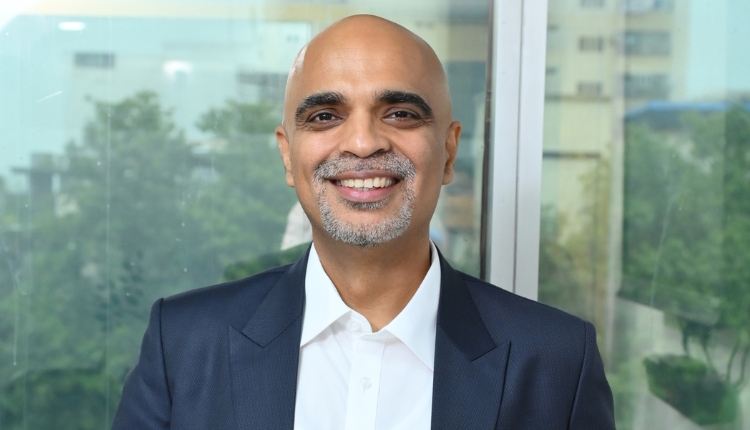
For Manas Mehra, Global CIO, Dabur India, that is why the company’s AI journey is less about deploying technology and more about changing how the organisation makes decisions. “AI cannot be looked at as a technical project; it will fail. Dabur has successfully made AI a business project or a business transformation.”
That philosophy runs through Dabur’s emerging technology architecture—from its Global Capability Centres and data foundation to DaburGPT, functional AI pilots and its exploration of Agentic AI.
The ambition is not to add AI to the organisation. It is to make intelligence part of the operating model.
From consumer intuition to data-driven intelligence
The traditional FMCG playbook was built around scale, distribution, brand strength and managerial experience. But consumer behaviour is becoming increasingly fragmented and dynamic, forcing companies to understand not just what consumers bought, but why—and what they might want next.
“There is no more one-size-fits-all approach. Marketing today is data-driven,” Mehra says, arguing that the days when a marketer’s personal preference could determine what worked are disappearing.
That shift is pushing Dabur towards more sophisticated data and AI capabilities across marketing, sales and customer engagement.
The company’s digital marketing capability is being designed around hyper-personalisation, campaign effectiveness and media efficiency, with AI helping analyse consumer behaviour and enable faster course correction.
The opportunity also extends beyond India. In markets such as the Middle East and North Africa, AI can help adapt content to local language and cultural sensitivities while enabling near-real-time monitoring of campaign effectiveness. Instead of learning only after a campaign ends, marketers can increasingly adjust while it is still running.
The implication is significant: AI is beginning to shift FMCG marketing from periodic analysis towards a continuously learning system.
The GCC is becoming more than an IT centre
Dabur’s Global Capability Centre strategy reflects the same transformation. Two functions are currently operational—IT and digital marketing—but the longer-term vision extends into finance, HR, procurement, manufacturing, supply chain and potentially e-commerce.
The GCCs are therefore not being designed simply as shared-service operations. The IT GCC, in particular, is intended to create the technology foundation for future global capabilities.
Dabur’s global SAP Ariba procurement platform is one example. Its IT GCC will provide global delivery, while SAP SuccessFactors is being implemented globally for human-resource management. These technology foundations are expected to provide the agility and scalability required to build additional global capabilities.
“The whole purpose of creating these two GCCs is that they will create a speed-up for the future GCCs that we have,” Mehra says.
That makes the GCC strategy a long-term architectural play—not a short-term cost or capacity initiative.
DaburGPT: AI as a digital colleague
Perhaps the clearest expression of Dabur’s approach to AI adoption is DaburGPT, its homegrown generative AI platform.
But the rationale behind it is as important as the technology itself. Dabur deliberately positioned the platform as an “enablement tool and a digital colleague,” rather than a replacement for employees. The objective was to make people comfortable with AI before introducing more sophisticated forms of automation and autonomy.
Employees can use the platform for financial analysis, content creation, marketing assets, and procurement-related tasks, while keeping enterprise information within an in-house environment. Marketing teams can generate images, video, and audio; finance teams can work with sensitive information more securely; and other functions can access purpose-built productivity capabilities.
Dabur’s longer-term vision is even more interesting. Mehra describes DaburGPT as potentially becoming the company’s own “Dabur Play Store”—an access-controlled marketplace where employees can discover and use approved AI capabilities according to their roles and requirements. An agile team would continuously develop new applications based on employee feedback and emerging technology.
The platform is therefore becoming both a productivity tool and a mechanism for organisational change.
From experiments to business KPIs
Dabur is now moving from individual experimentation towards production-level business applications.
The vehicle is Project Genesis, a flagship programme focused on functional AI. Its pilots extend into commercial investment planning, sales decomposition, demand forecasting and demand pulses—areas where AI can influence actual business decisions rather than simply improve employee productivity.
The governance model is equally important. Dabur is moving from experimentation to controlled live pilots with business ownership. There is no separate technology KPI; the measure is the business outcome. “There is no technical KPI; it is a business KPI that is being targeted.”
Mehra describes this evolution through a cricket analogy: Dabur is moving from a “Test match approach to a T20 reality”—retaining the discipline of experimentation while increasing the speed of production deployment.
One example is AI-enabled must-sell lines for sales teams. Instead of giving every salesperson the same recommendation, Dabur can recommend different products for individual Kirana stores—even stores only 50 metres apart—based on their specific characteristics.
The objective is not simply deployment. If a salesperson is being given nine recommended lines, the business wants to know whether AI can help increase that to 15, or generate a 10–20% uplift. Mehra also cites 15–25% as an industry-level AI uplift range in FMCG.
That distinction matters because Mehra acknowledges that calculating AI ROI remains difficult. “Qualitative aspect we all respect, but quantification is a must for us to continue the investments.”
Data before AI, action before Agentic AI
For all the attention surrounding AI, Mehra sees a more fundamental prerequisite: data. “Data is the oil for AI,” he says.
Dabur accumulated rich information over decades, but much of it was created for reporting rather than intelligent decision-making. Data could explain what had happened—sales KPIs, advertising returns and other historical metrics—but remained fragmented across systems.
That has to change before Agentic AI can deliver its full potential. “AI is different; it is predicting, and an agent is even more different. It is not only predicting, but it is actioning.”
The progression is therefore straightforward: Data tells the enterprise what happened. AI predicts what could happen. And Agentic AI can potentially act on it.
That requires a strong data foundation and a centralised source of truth.
Interestingly, manufacturing may have an advantage. Decades of lean methodologies, ISO standards, process discipline and earlier ERP adoption mean manufacturing data is often less fragmented than information in other business functions.
The hardest part of AI is still human
The technology may be evolving rapidly, but Mehra believes change management is the decisive factor in FMCG AI adoption.
The sector has an unusually diverse stakeholder ecosystem: corporate employees, blue-collar workers, sales teams, supply chain personnel, distributors, stockists, retailers, and consumers. An AI system useful to a corporate executive may be irrelevant or difficult to use for a factory worker or distributor.
Consumer behaviour creates another complication. A customer who buys toothpaste today may switch tomorrow because of sensitivity, experimentation, or a preference change. Historical behaviour, therefore, cannot automatically be treated as a permanent predictor.
And AI itself is evolving faster than organisations can comfortably absorb. Mehra compares it with cloud computing, which had a much longer adoption runway. Even after more than two decades in technology, he says he cannot confidently predict what AI will look like three years from now.
That is why Dabur is taking what Mehra calls a controlled and systematic approach rather than pursuing disruption for its own sake.
Its priorities are clear: become a stronger technology enabler for FMCG, raise AI skills across its stakeholders, use AI and foundational technologies to support the company’s business vision, and strengthen the data and systems foundations beneath its innovation platforms.
The ultimate differentiator, Mehra argues, will be the innovation platforms built on those foundations. But technology alone cannot deliver the transformation. “Technology will never fail… It will fail because we are not able to do a proper change.”
For Dabur, that may be the most important lesson of the AI era: the winning enterprise will not simply deploy intelligent technology. It will build an organisation capable of absorbing it, trusting it, governing it—and turning its intelligence into measurable business outcomes.
