

Beyond delivery: How Equiniti India is engineering its AI future


For decades, India’s technology centres built their reputation on scale. The next chapter, however, is being written around a different metric: ownership.
At Equiniti India, that shift is increasingly visible in the work being undertaken. The ambition is no longer simply to deliver technology from India, but to influence how platforms are engineered, modernised and increasingly infused with AI.
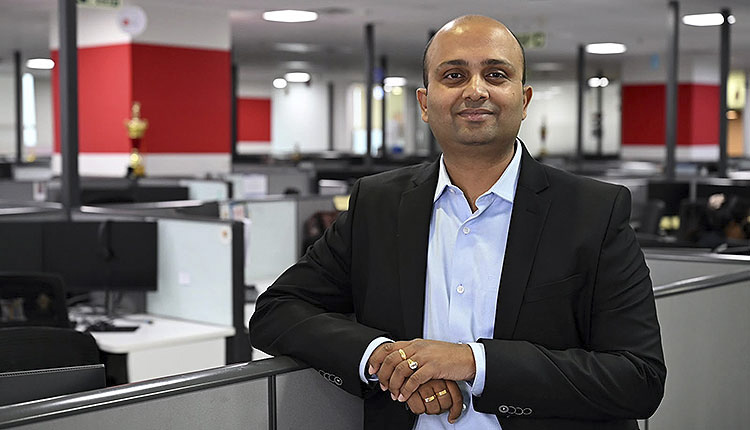
For Jyoti Prakash Dash, Head of Engineering, Equiniti India, the transformation can be summarised in two words. “What has changed is trust and ownership.”
That distinction matters in a business where technology sits close to highly sensitive financial processes. Equiniti’s share registry operations involve complex responsibilities around shareholder records, dividends, rights issues and IPO-related processes—an environment where innovation must coexist with regulatory obligations and near-zero tolerance for error.
The challenge, therefore, is not simply to innovate faster. It is to do so without compromising resilience.
From back office to business outcomes
Dash sees Equiniti India’s evolution as a deliberate move away from the traditional offshore delivery model.
Over the past year, he says, the organisation has focused on greater accountability across platform engineering, architecture, cloud modernisation, AI adoption and delivery. The objective is to move beyond executing assigned work towards owning measurable outcomes for the global organisation.
This evolution has been enabled by something less visible but strategically important: domain knowledge accumulated over more than a decade.
That institutional expertise, combined with newer engineering talent, is changing the role of the India centre. Teams are increasingly expected not merely to deliver mature capabilities but to contribute to areas where they carry direct accountability.
The arrival of AI has accelerated that transition. Equiniti India is now involved not only in engineering and delivery, but also in devising and orchestrating AI capabilities across different parts of the business.
The underlying philosophy is clear: the value of a technology centre should be measured not by the volume of output it produces, but by the business outcomes it helps create.
Changing the engine while the car is moving
Greater ownership brings greater responsibility—and nowhere is that more evident than in the modernisation of core financial technology.
Dash describes Equiniti’s approach through the familiar “strangler fig pattern”—gradually replacing and modernising legacy systems rather than attempting a wholesale switch.
The process, he admits, can appear chaotic up close. “It is like changing the engine of the car as you’re driving.”
The analogy captures the balancing act of financial-services modernisation. Core systems cannot simply be taken offline for innovation. They must continue to operate while new capabilities are progressively introduced.
That makes purposeful disruption essential.
For Equiniti, modernisation is centred on resilience, automation, data quality and cloud readiness, supported by investments in cloud alongside AI. But the entire effort sits on a more fundamental foundation: compliance, operational performance and risk management.
AI, therefore, cannot be treated as an afterthought—or as a technology experiment disconnected from governance.
From assistance to AI-native workflows
Equiniti’s AI journey is currently moving through an important transition.
Dash describes the organisation today as being in an augmentation phase: AI is assisting people and processes across engineering, customer relations and operations. The longer-term ambition is to become increasingly AI-native.
But he is clear about one thing: pilots are easy; scale is hard.
The organisation has focused on identifying high-value, relatively low-cost use cases and leveraging existing technology ecosystems to accelerate adoption. Document processing is one example, where AI and OCR can potentially speed the flow of information to process executives and subject-matter experts.
Engineering is another major area. The ambition is not simply to use AI for code generation, but to compress the entire software development lifecycle—from converting client conversations into requirements and tasks to automating subsequent stages of development.
The early results are significant. Dash says Equiniti has seen upwards of two-to-three-times productivity improvements across areas where early AI deployments have been implemented.
Yet productivity is only part of the equation. In financial services, every efficiency gain must be measured against risk. “Measurement is not just the benefits, but measurement is the lack of risk as well.”
The agentic AI opportunity—and its red lines
The next frontier is agentic AI. Dash makes a useful distinction between generative AI and agentic systems. Generative AI produces or analyses content; agentic AI orchestrates workflows, connects systems and automates sequences of actions.
The biggest opportunity, he believes, lies initially in routine operational and engineering workflows.
But there are clear boundaries. “Any decision that has client impact cannot be immediately automated.”
Such decisions require rigorous validation and, even then, human sign-off—the familiar principle of human-in-the-loop.
This is particularly critical in an environment involving considerable financial risk. The more consequential the decision, the stronger the governance required around the AI system.
For Dash, context is king. Better information, delivered to a properly governed AI system, produces better outcomes. But no model eliminates the need for accountability.
When innovation becomes a culture
Perhaps Equiniti India’s most interesting AI development is not a platform but a change in engineering culture.
Dash recalls an internal initiative in which an engineer built an agentic system that automated retrieval-augmented generation across business and application documentation. Instead of employees spending hours searching through scattered documents, they could query a consolidated knowledge base conversationally.
The value of such initiatives extends beyond saved time. “People don’t hesitate to start talking ideas anymore.”
The question increasingly being asked, Dash says, is simple: How can AI make an individual’s work, a team’s work, an application or a product better?
That may be the most meaningful measure of Equiniti India’s transformation.
Looking three to five years ahead, Dash says the organisation can no longer see itself as a delivery or back-office centre. The deliberate ambition is to become a global innovation hub, with a stronger voice in platform strategy, product and engineering delivery, and AI. The shift, ultimately, is from output to outcome.
And as AI reshapes technology organisations everywhere, Equiniti India’s strategy offers a broader lesson for India’s GCC ecosystem: the future belongs less to centres that simply execute work and more to those that combine engineering depth, business context and AI capability with the willingness to own the result.
For Dash, however, the AI-powered future will still depend on something more fundamental: strong engineering discipline.
Advanced AI may change how software is built and operated, but in a regulated financial environment, it cannot replace the basics—robust architecture, rigorous testing, resilience, governance, and accountability.
AI may transform the tools of engineering. But the discipline behind engineering will remain indispensable.
