

Four days to fifteen minutes: Inside the 7-Eleven’s GCC that is rewriting what a GCC is for


A field service process that once took technicians almost four days to complete now takes 15 minutes. A pricing engine reads more than 100 local signals — from competitor positioning to demand elasticity — and recommends store-level price points that lift merchandise topline. Both were built end-to-end by 7-Eleven’s Global Solution Center (GSC) in Bengaluru — proof that the center’s remit now extends well beyond execution.
That’s a different story from the one most Global Capability Centers still tell. For years, the GCC pitch was simple: cheaper talent, longer hours, lower cost per transaction. That model is evolving fast, and 7-Eleven’s Bengaluru center is one of the sharpest examples of where it’s heading — a center that has grown into a genuine co-owner, alongside its global teams, of the products, platforms and outcomes that define how the world’s largest convenience retailer competes.
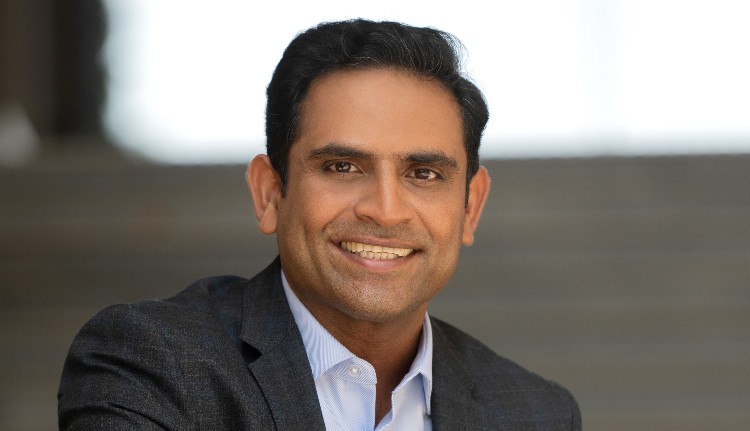
“The GSC now has business, technology, and product teams that jointly own outcomes across platforms, products, and processes,” says Malahar Pinnelli, VP and Country Leader, 7-Eleven Global Solution Center. “Instead of being just an execution arm, the Bengaluru team owns specific functions and components of enterprise platforms, especially around merchandising technology, cybersecurity, data analytics, and digital engineering.”
That distinction — owns, not supports — is doing a lot of work. It marks the difference between a GCC that receives a spec and ships code, and one that is trusted to define the spec in the first place.
The Proof Is in the Products, Not the Pitch Deck
Every GCC leader talks about “strategic value.” Pinnelli is one of the few who can point to the receipts.
The pricing engine wasn’t a side project — it was co-built by the GSC team from the ground up, and Pinnelli credits it with a measurable uplift in merchandise topline, not just cleaner dashboards. The field service overhaul tells a similar story: a web-based process that once forced technicians through a slow online workflow was rebuilt as an offline mobile app, collapsing completion time by more than 99%.
“It is a clear testament to when business and technology teams stay close,” Pinnelli says. “The center spots operational pain points sooner and ships improvements that lift the whole enterprise.”
A four-day process compressed to fifteen minutes is not an incremental efficiency gain — it’s the kind of number that gets a technology leader a seat at the next strategy review.
AI’s Real Job: Turning Reports Into Decisions
Ask Pinnelli where AI is actually moving the needle inside 7-Eleven, and he doesn’t reach for the usual buzzwords. He reaches for a distinction that matters more than most executives admit: the difference between reporting and deciding.
“Within Business Services, we are experiencing a fundamental evolution — moving from a traditional focus on executing transactions to becoming a true intelligence and capability center,” he explains. “We are shifting our focus from producing reports to generating insights, and from simply maintaining data to actively improving business decisions.”
Today, that shows up in merchandising analytics, item setup, and business intelligence that lets global teams see how products perform, how demand shifts store by store, and where inventory is quietly underperforming. Tomorrow, Pinnelli argues, the bigger prize is on the front line.
“The next wave is in tying AI together with frontline retail operations,” he says. “When automation starts covering the usual routine, store associates can spend more time with customers, offering tailored experiences and giving recommendations.” He sees AI extending into deeper personalization and predictive decision-making across the entire retail value chain — not just in the back office, but at the counter.
Why Sitting in the Same Room Changes Everything
If there’s one operational decision Pinnelli credits most for Bengaluru’s growing role as a decision-making hub, it’s a deceptively unglamorous one: seating business and technology teams together.
“Now business and technology folks sit together, side by side, so collaboration happens in real time,” he says, describing how this setup has sharpened the team’s ability to move quickly on emerging priorities.
The effect compounds. Problems get caught before they become quarter-defining headaches. Innovation cycles compress. And — perhaps most importantly for any leader trying to build a real GCC rather than a cost center — accountability sharpens.
“Co-location has tightened accountability,” Pinnelli notes. “Teams are pushed to not only execute, but also to understand the business problem, to shape the solution, and then take end-to-end ownership for the results. Instead of ‘just do the request,’ they aim for outcomes.”
It’s a subtle but important cultural shift: performance reviews built around business impact, not ticket closure.
Building Talent That Doesn’t Wait to Be Told What to Build
Ask any GCC leader what talent they need, and most will say “AI skills.” Pinnelli’s answer is broader — and arguably more honest about what actually differentiates a GCC that leads from one that merely executes.
7-Eleven GSC is structured around product-oriented teams that fuse business, product and technology capability into a single unit — deliberately mirroring, Pinnelli says, “the company philosophy of being one global team,” rather than the old split between onshore strategy and offshore delivery.
Behind that structure sits a deliberate talent bet: leadership programs, democratized learning platforms, formal certifications, mentorship, and career mobility, all aimed at keeping employees ahead of shifting business and technology needs.
“The expectation is no longer to execute transactions,” he says, “but to act as solution creators who can combine technology, business understanding, and innovation to drive value.”
The Hard Problems Convenience Retail Doesn’t Get to Ignore
Convenience retail runs on two things most customers never think about: a supply chain that cannot afford to be wrong, and a customer experience that has to be instant. Bengaluru, Pinnelli says, is now doing serious work on both.
The center supports the full merchandising lifecycle — item setup, catalog management, product onboarding, and the analytics that gauge how products perform across thousands of stores and markets.
Automation is chipping away at manual workload in the more tangled business processes, cutting time without sacrificing accuracy. And on the engineering side, the team is directly supporting digital business growth.
“These innovations, in general, help build a retail ecosystem that feels more agile and smoother,” Pinnelli says, “while improving day-to-day experiences for employees, store operators, and finally customers as well.”
The Next Chapter: From Delivery Center to Global Strategy Hub
Where does this go from here? Pinnelli’s answer is unambiguous about ambition, if characteristically understated in tone: Bengaluru is positioning itself to be one of 7-Eleven’s core strategic hubs, working alongside its global teams to help shape the company’s future.
“The long-term vision for the Bengaluru GSC is to become a strategic hub that drives platform ownership, product innovation, and enterprise transformation for 7-Eleven globally,” he says. “The center’s mandate is steadily expanding from talent access to ownership of business outcomes, platforms, and end-to-end processes.”
But it’s the last priority Pinnelli names that reveals the most about how seriously 7-Eleven is betting on Bengaluru: positioning the center as “the talent destination for Leadership & AI-Native teams” — not a feeder site for execution talent, but a place senior leaders and AI-first hires actively choose to build their careers.
“The ambition is to accelerate digital transformation, operate as a true global partner, and evolve into a ‘solution powerhouse’ rather than a transactional support organization,” Pinnelli says. “The overarching goal is clear: to build a globally integrated organization where teams in Bengaluru not only support growth but actively shape the future of 7-Eleven’s retail, technology, and customer experience strategies.”
For CIOs and GCC leaders watching the category evolve, the 7-Eleven playbook offers a useful marker of what “maturity” actually looks like in practice: not headcount, not cost savings, but a pricing engine influencing topline, a four-day process compressed into fifteen minutes, and a leadership team willing to say, plainly, that the India center is no longer support — it’s strategy.