

How Ashirvad CIO Vipin Rustagi built a digital benchmark in an industry late to technology

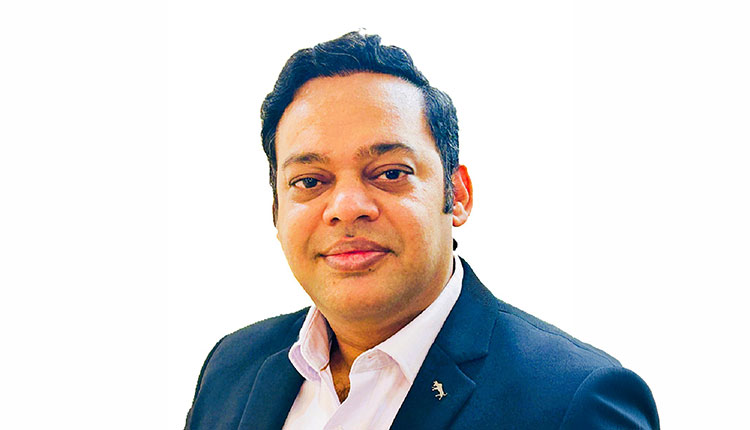

Manufacturing has spent the last decade chasing a familiar arc: automate a machine here, digitize a workflow there, and call it transformation. But a quieter shift is underway across the sector. Enterprises are moving past isolated automation wins toward something harder to build — a connected, data-driven operating model that spans the shop floor, the supply chain, and the last mile of customer engagement.
Few industries illustrate this shift more candidly than PVC and pipe manufacturing — a segment not typically associated with cutting-edge technology. Yet Ashirvad by Aliaxis, part of the Belgium-headquartered Aliaxis Group that operates in more than 40 countries, has used that very gap to its advantage. Vipin Rustagi, CIO of Ashirvad, has spent recent years pushing the company from a digitized enterprise to a genuinely data-driven one — and he’s refreshingly candid about both the progress and the work still ahead.
“PVC and pipe manufacturing, as a segment, has traditionally been a laggard when it comes to digital adoption. I’ll be the first to admit that,” Rustagi says. “But if you benchmark Ashirvad against our peers today, we are clearly ahead of the curve — and that didn’t happen by accident.”
From digitized to data-driven: the real trigger for transformation
Ashirvad’s transformation didn’t start from zero. The company had already run on SAP ERP for more than six years, with accounting and governance fully digitized. But Rustagi draws a sharp distinction that many enterprise leaders still struggle to articulate: digitization is not the same as being data-driven.
“There’s a big difference between being digitised and being genuinely data-driven,” he says. “The triggers for acceleration were very specific: we needed better analytics, we needed integrated data across functions, and we needed to engage with our ecosystem of dealers, distributors, plumbers in a way that matched the expectations of a smartphone-first world.”
Being part of a global group added its own pressure — in a good way, according to Rustagi. Aliaxis’s scale across 40-plus countries means Ashirvad must meet global technology and governance benchmarks that go well beyond local industry norms.
“That’s not a constraint. It’s actually a forcing function that keeps us honest and moving forward,” he notes. “Compliance and governance are non-negotiable here. As I often say, the cost of not doing it is very high.”
Two buckets, one strategy: compliance versus competitive edge
One of the more useful mental models to emerge from this conversation is how Rustagi frames Ashirvad’s technology roadmap — not as a single list of priorities, but as two distinct categories with very different decision logic.
“I think about our roadmap in two distinct buckets, and this framing is important,” he explains. “The first bucket is compliance and governance — ERP, cybersecurity, governance frameworks. These are non-negotiable… You don’t negotiate on control and compliance.”
The second bucket is where ambition lives. “These are investments we evaluate on productivity improvement and return on investment. We’re increasingly getting more ambitious here.”
That ambition shows up concretely across the stack. Snowflake now powers Ashirvad’s enterprise data lake, increasingly described internally as a strategic asset rather than just infrastructure. Salesforce anchors the CRM layer, supporting both dealer- and plumber-facing apps. A transportation management system (TMS) has digitized logistics end-to-end, from indenting through vendor payments — touching one of the company’s largest cost centers.
But the more telling shift, Rustagi says, is conceptual. “Earlier, [transformation] meant SAP and automation. Now we’re thinking about customer-centric planning, optimisation, and genuinely smart processes. That’s a meaningful evolution in ambition.”
Cutting through AI hype: where the ROI actually shows up
Few CIOs are willing to publicly push back on AI enthusiasm. Rustagi is one of them — and it’s arguably the most useful part of his perspective for other technology leaders navigating board-level pressure to “do something with AI.”
“AI is an abused word these days, and everything gets called AI,” he says bluntly. “We’re very selective about where it actually makes sense for us.”
The use cases that have earned their place at Ashirvad are unglamorous but measurable: predictive maintenance that cuts unplanned downtime, analytics-driven demand forecasting that has sharpened production planning, and anomaly detection that strengthens quality control beyond what periodic manual checks could catch.
On the productivity side, Microsoft Copilot inside Office 365 and Salesforce Einstein are quietly reshaping how teams work with information — not through dramatic headline wins, but through accumulation. “These aren’t dramatic individual wins, but cumulatively they’re changing how our teams work through information,” Rustagi says.
His caution is just as instructive as his enthusiasm. “What I want to guard against is technology for the sake of technology,” he says. “Our focus right now is on building strong digital fundamentals and automating the right factory processes — deploying sensors and tools where there’s a tangible ROI. The deeper AI play comes after you’ve got that foundation solid.”
It’s a useful corrective for any organisation tempted to bolt AI onto immature data infrastructure.
The shop floor and the supply chain: where the numbers tell the story
Ask Rustagi where AI and analytics have made the most visible difference, and he doesn’t hesitate: manufacturing and supply chain. On the factory floor, real-time IoT monitoring of manufacturing parameters has automated processes like finished goods declaration, with measurable gains in quality and productivity. One initiative stands out in particular — an encrypted QR code system for serialized tracking and anti-counterfeiting on Ashirvad’s pipes.
“This is something I’m particularly proud of,” Rustagi says. “Earlier, counterfeiters could replicate our codes. With encryption, we’re staying at least one or two steps ahead and making it essentially impossible to crack. That has real implications for brand integrity, not just operations.”
In the supply chain, the TMS has delivered end-to-end visibility across logistics, while analytics-led planning has reduced forecasting variances. Automation of scheme and claim handling — previously a persistent source of channel friction — has significantly cut processing times.
The downstream effect, Rustagi argues, is something harder to put a number on but just as real: trust. “When your operations become more predictable, that reliability cascades outward to your partners.”
The unglamorous foundation: IT-OT convergence
If there’s one theme Rustagi believes is underweighted in industry conversation, it’s the plumbing beneath the AI narrative — quite literally, in this case.
“It’s one of the more underappreciated challenges in the industry conversation,” he says. “Everyone talks about AI and analytics, but those capabilities rest entirely on whether your underlying data environments are coherent and connected.”
Ashirvad’s approach centers on building middleware and API layers to connect on-premises and cloud systems, with the Snowflake data lake serving as the unifying layer between operational and supply chain data.
Rustagi is equally candid about the friction involved. “The honest challenge is that OT environments come with legacy systems, proprietary protocols, and a very reasonable operational culture that prioritises uptime above all else,” he says. “Plant teams think about stability first — as they should. The job of IT leadership is to build integration pathways that don’t disrupt that stability while progressively connecting the shop floor to the broader data ecosystem. That requires patience, good change management, and choosing your integration partners carefully.”
Rewriting the “commodity” narrative through customer engagement
Piping is, by most market definitions, a commodity category. Rustagi sees digital engagement as the lever that’s changing that perception from the inside out.
“This is an area I feel strongly about because piping is often perceived as a commodity business. Digital transformation is precisely how we’re changing that narrative from within,” he says.
Dealer and distributor systems, the plumber app, and a Salesforce-powered CRM together cover order management, scheme claims, loyalty, and service — turning what used to be purely transactional touchpoints into something closer to a relationship.
The plumber app gets a special mention, and for good reason — it targets a segment of the value chain that technology investment has historically ignored.
“Plumbers have historically been the most underserved part of the value chain when it comes to technology,” Rustagi says. “When someone who is out on a job can check product specifications, raise a loyalty claim, or access training content from their phone, that genuinely changes their relationship with the brand. The loyalty that comes from being genuinely useful to people in the field is not something you can manufacture through marketing spend.”
That last line is worth sitting with — it’s a quiet rebuke of the idea that brand loyalty in B2B channels can be bought rather than earned through utility.
What’s next: Integrated Business Planning and a culture built on data
Rustagi is clear that transformation, for Ashirvad, isn’t a project with an end date. “Digital transformation is not a one-time project — rather it’s a journey,” he says. “And I think we’re at an inflection point where the foundations we’ve built are now ready to support a more ambitious next chapter.”
The near-term centerpiece is Integrated Business Planning (IBP), an initiative Rustagi describes as going well beyond traditional sales and operations planning. “The goal is to bring demand forecasting, internal resource planning, and supply chain execution into a single synchronised view,” he explains. Tellingly, he’s sequencing this carefully: “The first step is getting the process readiness right. The technology enablement follows that. Done well, IBP will fundamentally change our speed of response to market changes.”
Beyond IBP, the roadmap includes deeper IoT deployment across the shop floor and a sustained push to make data “the first language of decision-making across functions, not just a report that gets pulled when someone raises a question.”
With a technology team now over 80 people, Rustagi frames this as much a culture challenge as a technical one — aligning people around a genuinely data-driven operating model.
The long-term aspiration is bigger than operational efficiency. “The broader aspiration, aligned with where Aliaxis is heading globally, is for our technology platforms to become a genuine source of competitive differentiation — and not just an enabler of operations,” Rustagi says. “We’re investing consciously, and we’re investing with a long-term perspective. The curve keeps moving, and our job is to stay ahead of it.”
Ashirvad’s story offers a useful template precisely because it resists the instinct to chase every shiny technology trend. The sequencing matters: governance and compliance first, then ROI-driven competitive bets; data infrastructure before AI ambition; process readiness before technology enablement. And throughout, Rustagi keeps returning to a deceptively simple idea — that the most durable form of digital transformation isn’t measured in dashboards, but in how reliably an organisation can show up for the people at the edges of its value chain, from a plant floor technician to a plumber checking specs on a job site. In an industry not known for moving fast, that discipline may be exactly what’s letting Ashirvad move first.
Manufacturing is entering a new era driven by AI, automation, industrial data, digital twins, and connected operations. To recognize the organizations leading this transformation, Express Computer presents the Intelligent Manufacturing 500—India’s definitive initiative spotlighting the country’s most progressive manufacturing enterprises and technology leaders. Learn more at Intelligent Manufacturing 500