

In the race to be AI-first, discipline matters more than speed: Abhinav Srivastava, CIO, Daimler India Commercial Vehicles

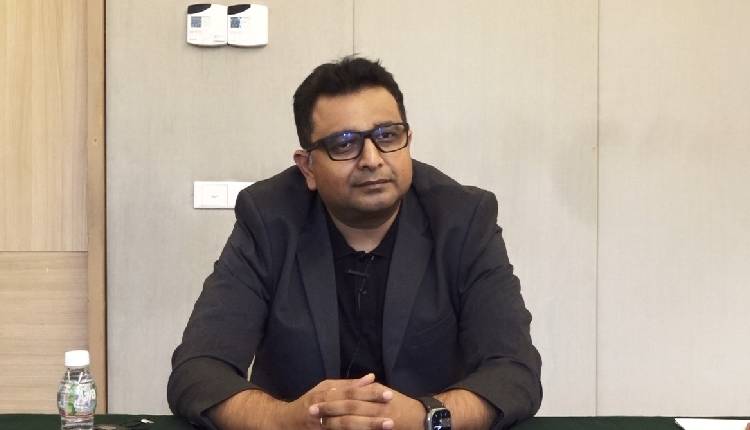

At a time when enterprises are racing to brand themselves as “AI-first,” Abhinav Srivastava, CIO, Daimler India Commercial Vehicles, offers a rare note of restraint. AI, he insists, will not save broken systems, compensate for poor data, or magically transform organisations unprepared for change. In manufacturing especially, the real work of digital transformation is far less glamorous, and far more demanding, than the AI hype suggests.
“As glamorous as AI looks, if the core is not intact, all of this will fizzle out,” Srivastava says. “It becomes a soda-water effect. There’s effervescence initially, and then everything stabilises, and fades.”
That belief forms the backbone of how Srivastava approaches technology leadership today. For him, AI is not a shortcut to transformation; it is a stress test of how strong an organisation’s fundamentals really are.
From support function to strategic nerve centre
Srivastava is clear that the CIO’s role did not suddenly change with the pandemic, but COVID accelerated an inevitable shift. “The role of the CIO was evolving even before COVID,” he says. “But after COVID, the CIO started taking centre stage.”
The transformation, he explains, is philosophical as much as functional. CIOs have moved from “keeping the lights on” to shaping enterprise strategy. “I don’t find many organisations today where the CIO is not sitting in the executive chair, participating in strategic discussions,” he notes.
More importantly, the lens through which decisions are made has changed. “Earlier, the time horizon was about yesterday and today. Now it’s about tomorrow,” Srivastava says. Technology leaders are no longer custodians of past performance; they are expected to anticipate what’s coming next, and prepare the organisation for it.
Resilience starts with frugality, not excess
In an environment defined by uncertainty, economic volatility, cyber threats, supply-chain shocks, Srivastava believes resilience must be architected deliberately into the IT ecosystem.
“We create an ecosystem that is so frugal that even if there are funding cuts or crisis situations, operations continue to run,” he explains. The objective is simple and uncompromising, the business must not stop. Digital initiatives may slow down, but the organisation itself should remain operational, regardless of external disruption.
This focus on frugality is not about austerity. It is about discipline. “Resilience is not built when times are good,” Srivastava says. “It’s built when you assume disruption is inevitable.”
Data: The uncomfortable truth behind AI ambitions
If AI has exposed one uncomfortable truth for enterprises, it is the poor state of their data. Srivastava addresses this head-on, with little patience for superficial fixes.
“Imagine having artificial intelligence that can do anything, but it cannot read your data,” he says. “What kind of magician is that?”
While most organisations boast of expansive data lakes, Srivastava believes many are fundamentally flawed. “Everyone has a data lake, but most of them are running out of clean water,” he observes. The real challenge lies in keeping data uncontaminated, consistent, and usable.
There are tools, he acknowledges, that promise to clean and standardise data using AI itself. But relying on them is a mistake. “Do not rely on a tool to clean your data later,” he warns. “Clean the data at the source. If garbage goes in, removing it later becomes a humongous effort, and the model will still throw garbage values.”
For Srivastava, data hygiene is not an AI problem, it is an organisational discipline. “Protect the data at the source,” he says, “and the AI engine will start working for you.”
Digital is easy, transformation is not
Despite the complexity of modern IT stacks, Srivastava is unequivocal about where the real difficulty lies. “Technology is the easiest piece to crack,” he says. “Digital transformation is one of the most abused terms in the industry. Digital is easy. Transformation is hard.”
Enterprises, he notes, are usually successful at acquiring tools, platforms, and licenses. “Everything that money can buy…tools, people, licenses…falls into place,” he says. What money cannot buy, however, is where transformation often breaks down to mindset shifts, adoption, ownership, and behavioural change.
This challenge is particularly acute in manufacturing. “The industry I come from is very orthodox,” Srivastava admits. “And, with all due respect, sometimes resistant to change.” Convincing people to actually use new systems, and use them well, has been his toughest test.
“I would be wrong if I said I have solved this problem,” he states candidly. What has helped is rejecting top-down mandates in favour of participation. “Most of our digital transformation initiatives are bottom-up,” Srivastava explains. “That’s how you create acceptance, ownership, and democracy within the organisation.”
AI without hype: From personal productivity to enterprise impact
For all his caution, Srivastava is not sceptical about AI’s potential. Quite the opposite. “AI is here to stay. There are no two ways about it,” he admits. Comparing today’s anxieties to fears around Excel and PowerPoint decades ago, he adds, “People thought entire jobs would disappear, but humans and technology coexisted.”
At Daimler India Commercial Vehicles, AI is not experimental, it is strategic. “We are an AI-first organisation,” Srivastava states. But the emphasis is shifting from individual productivity to organisational intelligence.
“The journey will move from writing better emails or creating images to simulating business problems,” he says. “How can I simulate a challenge and see what AI gives me as an answer?”
To make that real, the company has built its own internal AI platform, Maya, or Modular Yield AI Accelerator. Srivastava describes it as an internal marketplace where employees across functions can access, train, and deploy AI models using organisational data.
“If you are in R&D, procurement, supply chain, or HR, you go into Maya, download the accelerator, train it, and run it,” he explains. “That’s how AI gets democratised, not by novelty use cases, but by solving real business problems.”
A vision anchored in discipline
Srivastava’s long-term vision is both ambitious and precise. “I want to transform the organisation into a tech-led and data-led enterprise,” he says. One aspiration, however, stands out for its symbolism. “I want the organisation to be completely paperless. The day I see no printer in my company, I will be extremely happy.”
By 2030, he is confident the organisation will be AI-first, data-driven, and decisively digital. “In the boardroom,” he says, “I want two extra chairs, one for an AI agent and one for the customer.”
In the near term, the roadmap is already unfolding. Shop floors are moving towards paperless operations, machines are becoming deeply connected, and simulation models are taking precedence over physical testing. “We will do crash testing digitally,” Srivastava notes, underlining how far data-driven decision-making will go.
Where cloud ends and the edge begins
As AI workloads scale, infrastructure becomes a strategic question. Srivastava describes Daimler as cloud-first, but with a crucial distinction. “Cloud and edge computing is a paradox for us,” he points out.
In automotive environments, decisions must be made in milliseconds. “If a vehicle sends data to a data centre and waits for a response, by the time it comes back, whatever had to happen has already happened,” he says. As a result, intelligence must live at the edge, inside the vehicle itself.
While this is expensive today, Srivastava sees it as inevitable. “Very soon, vehicles themselves will become edge data centres.”
The unfashionable truth about transformation
If there is one theme that defines Srivastava’s thinking, it is that AI does not reward shortcuts. It magnifies strengths, and exposes weaknesses. Organisations that chase AI glamour without fixing their core will struggle. Those willing to do the unglamorous work, clean data, resilient systems, and human change, will define the future.
In a world obsessed with speed, Srivastava’s approach is refreshingly grounded. And perhaps that, more than any algorithm, is what will determine who truly wins the AI race.
