

Our goal is to move from developers to product and process owners: Prakash Kumar, Carl Zeiss India

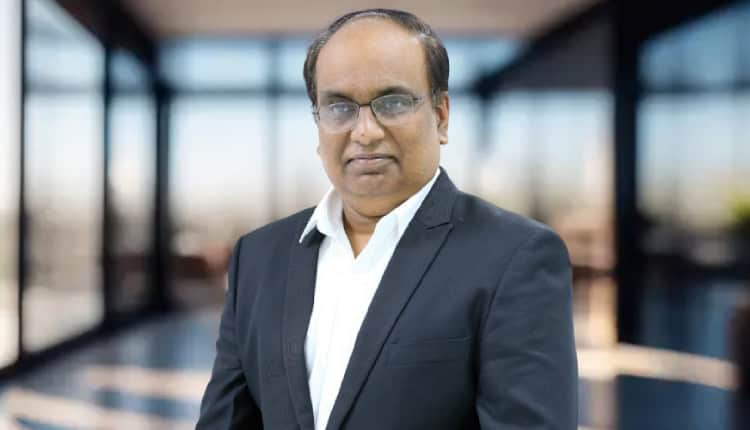

When most GCCs begin their journey, they start with support functions like IT operations, application maintenance, or shared services, and then gradually move up the value chain. At Carl Zeiss India, the story unfolded very differently.
“We started in reverse,” says Prakash Kumar, Head of Corporate IT, Carl Zeiss India and Zeiss GCC India. “Our first mandate itself was product development. That is the extreme end where every GCC ultimately wants to go.”
The India centre’s early involvement in developing medical technology products, particularly in refractives, set the tone for what would follow. Teams in India didn’t just contribute to global projects; they built products end to end. One of these solutions was eventually commercialised and continues to evolve through regular feature releases. That early success established credibility with global stakeholders and positioned the India GCC as a core innovation engine rather than a downstream delivery arm.
“That initial phase was small in size but extremely significant in impact,” Kumar explains. “Once you demonstrate that level of ownership and delivery, there is no stopping back.”
Building AI with guardrails, not hype
As AI becomes central to enterprise transformation, Zeiss has chosen a deliberate and highly governed approach, one shaped by the industries it operates in and its European roots.
“We work in environments that directly impact human lives,” Kumar says. “So AI has to be very, very well governed.”
Globally, Zeiss began by putting strong foundations in place before scaling AI initiatives. This included defining responsible AI frameworks, setting up a digital council, and establishing guardrails for how AI should be developed and deployed. Hackathons followed, not as innovation theatre, but as structured mechanisms to identify real use cases aligned with business priorities.
India has now emerged as a key execution and innovation hub within this framework. Dedicated AI teams are being built, and employees are being trained to develop AI agents themselves. “We are not just consuming AI,” Kumar notes. “We are enabling people to create with it.”
Importantly, AI at Zeiss is not new. Many of its medical products have long embedded AI capabilities that analyse data and generate insights. “It may not always have been called AI in the way it is today,” Kumar says, “but we have been doing this for years.”
What has changed is the rise of LLMs and enterprise-wide AI adoption. To address data privacy concerns, Zeiss has built its own secure AI layer, Zeiss GPT. Rather than sending sensitive data back to public clouds, this internal platform allows employees to work with AI while ensuring enterprise data remains protected.
AI that solves everyday problems
Zeiss GPT is available to all employees globally, embedded directly into the intranet. Within defined security boundaries, employees can build their own agents and applications.
Some of the most impactful use cases are refreshingly practical. In India, the admin team developed an internal chatbot that helps employees with everyday queries, from facility bookings to office services, by pulling data from internal systems and responding instantly.
“These may sound like small things, but they significantly improve productivity and employee experience,” says Kumar.
Across functions such as finance, facilities, sales, and service, AI is already delivering measurable efficiency gains. In finance alone, use cases like invoice reconciliation, contract drafting, and document analysis are moving beyond experimentation into active implementation.
Rethinking ROI in the age of AI
Despite widespread AI investments, many GCCs struggle to articulate clear ROI. Kumar believes this is the wrong starting point.
“In the early stages of adopting any new technology, ROI should not be the primary lens,” he argues. “If you start with financial numbers, you risk creating a bottleneck to adoption.”
At Zeiss, the focus is first on usage, adoption, and productivity gains, especially for internal processes. While there is a formal evaluation framework for larger investments, many AI-driven improvements deliver value without requiring heavy upfront justification.
“There are many small steps you can take with AI that don’t need ROI calculations but still create significant cumulative benefits,” Kumar adds.
From delivery to co-creation
One of the defining characteristics of the Zeiss India GCC is its operating model. The organisation is structured around products and processes, with global product owners defining roadmaps and priorities. India-based teams work as an extension of headquarters, not as an external supplier.
“Our teams here are deeply involved in solution design, future planning, and delivery decisions,” Kumar explains. “We operate in a continuous agile model, sprint after sprint, where collaboration is seamless.”
This model ensures that the GCC contributes not just to execution, but to value creation.
Creating hybrid engineers for the future
As GCCs increasingly seek professionals who understand both domain science and digital technology, Zeiss has placed domain knowledge at the centre of its talent strategy.
“Technologies will change,” Kumar says. “Domain knowledge is what stays.”
While many engineers in India join with strong platform expertise, Zeiss invests heavily in developing their understanding of business and industry domains. To track this evolution, the organisation has built a detailed skill matrix that measures maturity across technology, platforms, and domain knowledge.
“It has nothing to do with age or years of experience,” Kumar notes. “A 25-year-old can be at a higher maturity level than someone with decades of experience.”
However, the ambition for the Zeiss India GCC is clear. As stated by Kumar, it is to move from execution to ownership.
“We want to go beyond developers, testers, and architects,” Kumar says. “Our goal is to become product owners and process owners.”
This transition will take time and trust-building with global headquarters, but the direction is firmly set. Over the next three to five years, Zeiss India aims to take end-to-end ownership of select global processes and products.
“It’s not an easy journey,” Kumar acknowledges. “But this is where we want to go, and this is where we are steadily moving.”
In an era where many GCCs are still redefining their purpose, Zeiss India offers a compelling blueprint: start with trust, build with discipline, and grow into ownership, one product, one process, and one innovation at a time.
