

We envisioned GIFT City not just as a financial hub—but as India’s first truly future-ready smart city: Nilesh Purey, GIFT City

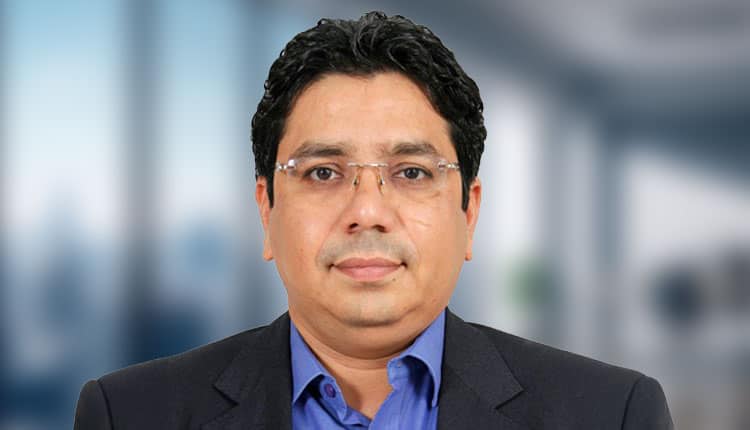

In today’s era of rapid urban transformation, GIFT City (Gujarat International Finance Tec-City) stands as a pioneering example of how visionary leadership, advanced technology, and sustainable planning can converge to create a truly future-ready smart city. At the heart of this transformation is Nilesh Purey, Chief Technology Officer of GIFT City and Smart ICT Services Ltd, whose journey from a software engineer in the ERP domain to a leader in smart infrastructure has been both inspiring and impactful.
With over two decades of experience across diverse sectors—ranging from manufacturing and banking to telecom and IT services, his career took a defining turn in 2012 when he joined the Government of Gujarat’s flagship project, then spearheaded by Prime Minister Narendra Modi. Since then, he has played a key role in shaping GIFT City’s technological backbone, building one of India’s most integrated and resilient urban infrastructures from the ground up.
In this exclusive conversation, Purey shares insights from his professional journey, the long-term vision of GIFT City as a global financial and technology hub, and how the city is integrating cutting-edge technologies like AI, IoT, and blockchain. He also sheds light on GIFT City’s environmental commitments, alignment with national initiatives like Digital India and the Smart Cities Mission, and offers candid advice to the next generation of urban technologists and planners.
Can you briefly share your professional journey and how it led you to your current role at GIFT City and Smart ICT Services Ltd?
I began my career as a software engineer in the ERP domain in 1997 and soon transitioned into a Head of IT role. Over the years, I’ve had the opportunity to work across industries such as manufacturing, banking, telecom, retail, and IT services.
In 2012, I was offered the chance to work with the Government of Gujarat on the GIFT City project, led by the Hon’ble Prime Minister Shri Narendrabhai Modi, then Chief Minister. While some peers were skeptical, the encouragement from my wife and mother led me to accept the offer. My cross-sector experience has been key in designing and implementing the IT and telecom infrastructure for India’s first smart city. Initially, a consortium of national and international firms supported the effort, as the scale was considered too ambitious. However, we have since built strong internal capabilities and taken over most of the responsibilities originally assigned to private partners.
How do you define the long-term vision of GIFT City as a global financial and tech hub?
GIFT City began with a humble vision—to transform the Hon’ble Prime Minister’s grand dream into reality. The goal was to establish a world-class financial and technology hub that would generate employment opportunities in the services sector and position India on the global map. GIFT City is envisioned as both a Global Financial Centre and a model smart city.
At GIFT, we firmly believe in placing our users at the heart of every initiative. The innovative urban infrastructure we’ve developed and the technologies we’ve adopted are all aimed at enhancing the quality of life for those who live and work here. For instance, one of the key requirements from our major clients—multinational IT and BFSI companies—is high service uptime. In response, we conceptualised a “dig-free” city and introduced the Utility Tunnel, which has since become a benchmark in urban infrastructure.
GIFT IFSCA continues to strengthen its position among global financial centres. It currently ranks 46th in the Global Financial Centres Index and holds the top spot in Reputational Advantage. We remain committed to attracting more financial institutions and IT/ITeS companies to GIFT City, furthering our mission to build a vibrant and future-ready ecosystem.
On the domestic side of the city, major biggies like Google, Cognizant, IBM, TCS, Oracle etc., have already started their development centres. Now the Govt. of Gujarat’s GCC policy is helping us to bring GCC to GIFT City.
What are the key differentiators that make GIFT City stand out compared to other smart city projects in India?
GIFT City represents a pioneering development in India—unparalleled in both scale and quality. As a first-of-its-kind smart city, it exemplifies vertical urban planning and modern infrastructure, offering a unique blend of commercial, residential, and social amenities.
The city is strategically divided into three key zones:
- Domestic Tariff Area (DTA)
- An operational Multi-Service Special Economic Zone (SEZ) featuring India’s only International Financial Services Centre (IFSC)
- Residential and social infrastructure that includes schools, universities, skill development institutes, hotels, clubs, restaurants, parks, and a multi-specialty hospital.
As a greenfield development, GIFT City’s infrastructure has been purpose-built from the ground up, specifically designed to cater to the needs of global businesses and residents. This is in stark contrast to most other smart city projects in India, which are typically brownfield initiatives—retrofitting technology into existing urban environments to solve legacy challenges.
A city’s success hinges on economic opportunity—and GIFT City delivers on that front. As India’s only officially designated IFSC, it offers a globally competitive business environment supported by special tax incentives, making it a compelling destination for financial institutions, fintechs, and multinational corporations.
In addition to IFSC-specific benefits, GIFT City is further bolstered by:
- Gujarat Government’s IT Policy
- GCC (Global Capability Centre) incentives
- Support for Mega Projects
Together, these factors create a vibrant ecosystem for investment, innovation, and sustainable urban growth—positioning GIFT City as a future-ready financial and technological hub of India.
How are you integrating emerging technologies like AI, IoT, and blockchain into GIFT City’s infrastructure?
As a smart city, GIFT City is envisioned to proactively monitor and manage its infrastructure through advanced Information and Communication Technologies (ICT) to ensure efficient and seamless service delivery to its citizens.
The city’s infrastructure encompasses a wide range of critical utilities, including:
- Smart Water Management Systems
- Advanced Electrical Infrastructure
- Automated Waste Collection and Recycling Systems
- India’s first District Cooling System
- Safety, Security, and Surveillance Mechanisms
- Intelligent Traffic Management Systems
When construction of GIFT City commenced, there was no existing, comprehensive hardware or software platform capable of monitoring and managing such diverse infrastructure components through a unified interface. It was at this stage that we recognised the transformative potential of the emerging Internet of Things (IoT)—a concept that aligned perfectly with our vision of creating a truly integrated smart city.
For GIFT City, IoT means “connecting the unconnected.” It enables city managers to digitise and monitor elements of urban infrastructure that were previously managed in silos. While globally, critical utilities like power, water, waste, and cooling are typically monitored independently, GIFT City has successfully integrated these systems onto a single, cohesive technology platform—a significant first in India.
By leveraging IoT, GIFT City has developed a unified City Command and Control Centre (C-4). This platform represents a seamless convergence of Operational Technology (OT) and Information Technology (IT), effectively creating a “Digital Twin” of the city. The digital twin enables real-time monitoring, analysis, and management of all city operations, providing end-to-end visibility and operational efficiency.
Automation at every level empowers city administrators with:
- Advance alerts and notifications in case of faults, incidents, or infrastructure failures
- Proactive communication to affected citizens and stakeholders
- Faster response times and better decision-making capabilities
Additionally, GIFT City is harnessing AI for customer service delivery and is currently in the process of developing a proprietary Service Lifecycle Management (SLM) platform to enhance operational workflows.
Understanding the growing importance of blockchain technologies, GIFT City also aligns with regulatory innovation. The International Financial Services Centres Authority (IFSCA)—the regulator for the IFSC zone within GIFT City—is actively working on a blockchain and tokenisation framework focused on the tokenisation of Real World Assets (RWA). This forward-thinking initiative underscores GIFT City’s commitment to adopting future-ready technologies to foster trust, transparency, and efficiency in the financial ecosystem.
How is technology contributing to making GIFT City environmentally sustainable and future-ready?
GIFT City stands as a benchmark for sustainable and environmentally responsible urban planning. It is proudly recognised as India’s first IGBC Platinum-rated city, with approximately 40% of its total area allocated for green cover—promoting ecological balance and quality of life.
Every building within GIFT City is constructed to the highest environmental standards, with each being IGBC Gold certified or higher, ensuring energy efficiency and sustainable design across the built environment.
One of the city’s most forward-thinking innovations is its Underground Utility Tunnel, which houses critical services such as electricity, water, gas, and telecom infrastructure. By placing utilities below ground, GIFT City minimises surface-level disruptions, simplifies maintenance, and enhances the visual and functional appeal of the cityscape.
Another standout feature is the centralised District Cooling System (DCS), which is a first-of-its-kind initiative in India. This system:
- Reduces energy consumption by up to 40%
- Lowers operational costs by around 28%
- Significantly reduces the city’s carbon footprint
To further enhance operational efficiency, all buildings are equipped with Integrated Building Management Systems (IBMS). These systems enable real-time monitoring and control of energy, water, and security operations—ensuring optimal resource utilisation and timely interventions.
GIFT City also places a strong emphasis on renewable energy:
- Solar power is actively harnessed across the city.
- All streetlights are energy-efficient LED-based and operate on a Time-of-Day (ToD) lighting model, further optimising energy use.
In terms of water sustainability, GIFT City is designed around the “zero discharge” principle. All wastewater is treated and reused for horticulture and construction activities. Moreover, rainwater harvesting is mandatory for every building, ensuring groundwater recharge and reducing dependency on external water sources.
Together, these features make GIFT City a future-ready, eco-conscious urban ecosystem, setting new standards for sustainable development in India and beyond.
How do you align with national initiatives like Digital India or Smart Cities Mission?
GIFT City has been recognised as a model greenfield smart city under the Atal Mission for Rejuvenation and Urban Transformation (AMRUT). Its innovative approach to urban planning and technology-driven governance has set a benchmark for smart city development across India.
The concepts and technologies pioneered in GIFT City—such as integrated infrastructure, centralised utility management, and smart service delivery—are being actively referenced in the country’s 100 Smart Cities Mission. These ideas serve as a blueprint for how technology can be effectively leveraged to manage urban ecosystems.
GIFT City is frequently visited by senior urban administrators, government officers, and political leaders who seek to understand and adopt its advanced technological solutions in their own cities. These visits reflect GIFT’s growing influence as a hub of innovation and sustainable urban development.
On the Digital India front, GIFT City has emerged as a key epicenter of the country’s financial and digital transformation in recent years. Most of India’s international subsea cables currently land in Mumbai and Chennai, and both cities are nearing their capacity limits. This concentration has created a bottleneck, especially in terms of last-mile connectivity, which in turn drives up the cost of internet access across the country.
We are establishing a new Subsea Cable Landing Station (CLS) in GIFT City, which will serve as a strategic digital gateway for Western, Northern, and Central India—covering nearly 70% of the country’s population. Beyond its significant socio-economic impact, this infrastructure will play a crucial role in reducing internet costs at the grassroots level, thereby contributing meaningfully to the Hon’ble Prime Minister’s vision of Digital India.
The CLS will not only enhance connectivity and affordability but also significantly strengthen the country’s cyber resilience by diversifying international bandwidth routes and reducing dependency on existing landing points. This initiative positions GIFT City as a key enabler of India’s digital infrastructure and a catalyst for inclusive digital growth.
What’s next for GIFT City in terms of digital and technological advancements?
With over 800 BFSI and IT/ITeS organisations, three international stock exchanges, three data centres, and the pervasive use of technology across every corner, GIFT City stands as a testament to India’s technological capabilities. But we’re not stopping here.
We are currently working on several strategic initiatives, one of the most significant being the establishment of a City-level Security Operations Center (City SOC). In today’s digital age, cybersecurity is one of the most critical challenges facing organisations and governments alike. GIFT City aims to pioneer a new model by offering Cybersecurity-as-a-Service to entities operating within the city.
This initiative could very well be the first example of a city providing cybersecurity as a managed service, ensuring that businesses in GIFT City benefit from enhanced protection, proactive threat monitoring, and rapid incident response—all within a unified and secure digital ecosystem.
Secondly, we are working towards transforming ongoing construction activities into Digital Construction. While we have already adopted Building Information Modeling (BIM) for all new buildings, we are now extending its use to support better maintenance and lifecycle management of city infrastructure.
By integrating BIM into city operations, we aim to further enhance our existing digital twin and enabling predictive maintenance, efficient resource planning, and real-time monitoring of assets. This shift not only enhances operational efficiency but also aligns with our broader vision of building a technologically advanced and sustainable urban ecosystem.
What advice would you give to young professionals aspiring to work in smart technologies and urban planning?
My message to young planners and aspiring professionals working in the smart city domain is simple yet profound: build cities that are inclusive by design. Cities where technology is not just a layer of sophistication, but a tool that genuinely improves the lives of people at the grassroots level. Envision and develop urban spaces that are child-friendly, where everyone—from a daily wage laborer to an industrialist—feels a sense of comfort, dignity, and belonging. Inclusivity must be the foundation of every smart city initiative. If you’re working on a brownfield smart city project, remember to preserve the spirit and character of the city. Technology should enhance, not erase, the cultural and historical essence of urban spaces. And finally, every city has its forgotten corners—spaces that are often overlooked. Use these areas creatively to retain the originality and soul of the city. Let them become symbols of thoughtful planning and community connection. Smart cities are not just about sensors and systems—they’re about people. Let your work reflect that.
