

We’re not just helping build CoEs, we’re co-creating the future of AI innovation with GCCs: Sahil Dhawan, Tech Mahindra

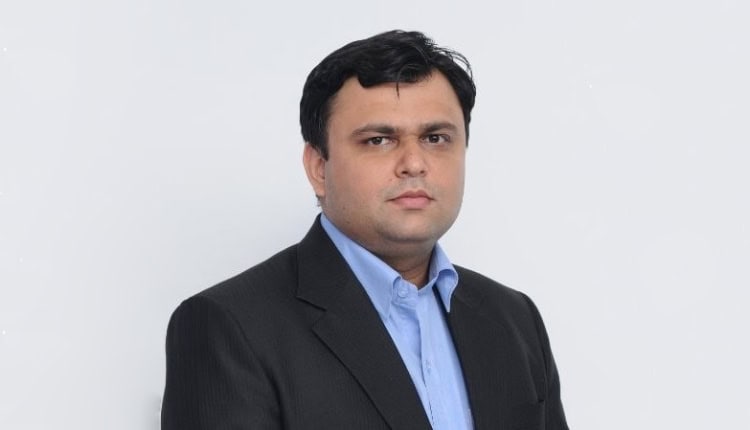

GCCs in India are undergoing a remarkable transformation from cost-focused delivery units to innovation-led hubs driving strategic business outcomes. Sahil Dhawan, President and Head – India, Middle East & Africa Business, Tech Mahindra, sheds light on the key forces behind this shift, including the rise of AI, a robust talent ecosystem, and a growing culture of collaboration. He also shares his outlook on how GCCs are becoming global command centres for R&D, product innovation, and platform-driven transformation.
GCCs are rapidly evolving in India. Initially, they were a cost-centric delivery sector, but now they’re becoming innovation-first hubs focused on business outcomes. What do you think is the driving force behind the significant growth of GCCs in India?
If you look at it, this model, in some form, started as an Offshore Delivery Centre (ODC) – probably the first level of outsourcing that began in the late ’80s and early ’90s. Some of the initial ones emerged in Bengaluru or Hyderabad. As any industry shifts and evolves, this has transformed into the GCC model. The word itself, “capability,” implies innovation and a forward-looking approach, not just cost arbitrage. While cost arbitrage is still a given to some extent, it’s now more about the capability and innovation you bring. That’s the first factor that led to this shift.
Secondly, the technology stacks have become more complicated over time, and the scale of technology has intensified. It’s not just IT; look at the business process innovation, technology innovation with cloud, AI, and the entire gamut that has increased. It’s no longer possible to find all the required talent in one geography. Hence, you want to bring operations to places where you can get good talent at scale. India provides an excellent blend of the scale and the talent pool with the necessary capabilities. I think that’s the second key reason.
Thirdly, I also feel that the world has become more global after COVID-19. While this world was always connected, global work is now very acceptable. You no longer hunt for talent in a specific location; you hunt for talent wherever you can find it in bulk, which makes India a natural choice. India has taken the lead in building its talent base, whether in AI, cloud, or security. The quality of talent at the scale that India has built has made it a natural choice for companies to establish operations here.
Finally, I also feel people have come full circle. Most of the people leading GCCs today have seen the full circle: they started their careers in India, went to the US or Europe to work with global companies, and at some point, returned to India. They understand how it works and how their customers operate. All of this combined has evolved the leadership at GCCs, their charter, and the ecosystem we’ve built around them. Tech Mahindra itself was born from a GCC for British Telecom; it evolved into a full IT services company and a larger telecom innovation hub because a GCC was established. So, it’s a proven model that can be replicated to build more GCC capability centres.
Do you think GCCs coming into India are causing a cultural shift in the workspace, in the way people operate and work?
I think it’s a very interesting space to look at. With GCCs, a lot of cross-learning is happening. There are two main objectives: one is to ensure that the global culture and ways of working are protected – you don’t want your India or GCC operations to deviate from how your global teams operate.
The second part is that India provides a very strong base for GCCs to learn from each other. The amount of collaboration you can build with similar industries and technologies is far easier to do here. So, there’s a shift towards much more collaboration, not running GCCs in isolation, while simultaneously ensuring the cultural shift from the parent organisation doesn’t occur.
GCCs are also now focusing on building a very homegrown talent base. There was a time when you’d just hire talent for a specific need. Culturally, they are more forward-looking, aiming to build all layers of the talent pyramid by forecasting where their business is going to grow. They are far more connected with the business, asking, “If I need to do certain technologies at scale, how do I build the talent at all pyramid levels?” This has also changed the culture a bit; it’s not just about hiring senior people but optimising the entire pyramid. This also necessitates investment in learning organisations, training, and people-centric initiatives. So, there is a shift happening, but a lot of effort is dedicated to preserving the core culture while integrating learnings from local ways of working.
The last point is that GCCs are also getting better and better at co-innovating with companies like us. They understand that this isn’t a space where you can do everything on your own. So, if there are certain players in the market that culturally align with them, they’re open to co-building, co-creating, and collaborating. They’re far more open now. I’m sure when you’re doing all these events, you’re seeing them as far more engaging than just being a back office. The moment you break that “offshore development” mindset to an “innovation and forward-looking” mindset, a new set of opportunities emerges.
A section of leaders are in the opinion that the GCC growth has somewhat saturated. Do you agree with that, or do you think there’s still more space for GCCs to grow?
I think, this business, in any form, goes back 20-25 years. When the first GCCs were formed, people felt it would get saturated, and only larger companies would engage. But that’s not the case now; you see a very different scale of GCCs coming to India.
What’s important here is that different GCCs would be at different levels of the maturity curve, and it’s crucial to understand their specific requirements. Some are very mature, like some of the consumer healthcare ones that have been around for a long time; they operate at a much more mature scale and technology stack. Then there are others in the middle: they’ve built some capabilities and capacity but are looking for more opportunities or a push to the next level. Third, there are those that are just entering.
And there’s also a category of exiting GCCs. Not everyone has succeeded, and it hasn’t worked out for everyone. This provides a good amount of opportunities at all four levels. Latecomers don’t want to spend 20 years to reach maturity, so they need expertise, help, and scale from a services company like Tech Mahindra to accelerate their growth. They say, “Don’t let us make the mistakes others have made; tell us how to do it in terms of capability, scale, innovation, and frameworks.” Those scaling up need help beyond just scale, perhaps to establish more CoE or diversify. Those that are very scaled up are seeking high-level, cutting-edge innovation. And those looking for an exit also seek options on how to manage it, especially if they’ve scaled to a couple of hundred people. This presents good opportunities for M&A, joint ventures, and partnerships to provide a phased or scheduled exit.
So, that’s the whole spectrum. But in no way is this trend slowing down, because every company in the US, Europe, or Asia is very actively looking at establishing or expanding their GCC presence.
Statistics suggest that by 2030, there will be around 2,400 GCCs in India, employing millions of people. Now, focusing on Tech Mahindra, I understand the company emphasises ecosystem collaboration to build talent pipelines, especially with intensifying competition for specialised tech talent. So how are you building multi-tier talent models, covering Tier 1 metros and emerging centres, from recruitment to reskilling? What’s your policy or approach for retaining and attracting talent?
Talent building is always at the heart of any services organisation. We’re applying a couple of approaches.
Firstly, we’re leveraging our talent to help customers build CoEs. We use our innovation hubs and frameworks, like our MakersLab, which focuses entirely on AI innovation. In many instances, we’re working with GCCs to help them set up their AI CoEs, which requires a foundational structure, basic teams, guidance, and expertise.
A critical element for us is to build and retrain a lot of talent. Today, a lot of talent requires reorientation because anything you touch now has an AI treatment. There’s a massive amount of upskilling we’ve been doing. That’s why we’ve set up a very focused Chief Learning Organisation under our CEO, which heavily concentrates on training, reskilling, and upskilling.
We emphasise fresh talent induction. As a company, we’ve heavily invested in fresh talent to build a permanent workforce. In many new technologies, like AI or AI security, years of experience don’t matter as much as actual exposure. These technologies are so new that you’re not looking for 20 years of AI experience; you’re looking for exposure to multiple platforms, industry experience, and understanding of the business context. That’s where we’re focusing our talent build.
We also have a very sharp focus on specific industries and clients as part of our product strategy. We don’t intend to serve all industries and all clients. We go very deep into chosen areas and build a very relevant, not generic, talent pool. Our service lines and industry mix are well-defined as part of our “five-wheel” strategy. We’re building relevant talent within these industry domains and horizontals we want to focus on, across all levels from entry to expert, ensuring that whether ODCs or GCCs are at any level of expertise, we have the right talent to address their needs.
How do you nurture the talent you have? With so much technological advancement, like AI security, employees require constant upskilling to avoid redundancy. Has change management been a challenge for you?
One of the things we did a couple of quarters back was to reorganise ourselves based on geographies and service lines. This was our first step to reorganise into more logical structures with two purposes: to bucket our talent into the right spots and to build both expertise and scale, which are incredibly important.
Putting ourselves into a very focused Service Line model was the right bucketing. For example, when I ran the Enterprise Application Service Line for a couple of years within Tech Mahindra, we could group everything from applications together. When you group everything together, you understand the maturity level and curve in every practice you want to build. Then, you can focus on every element of that practice because you have a full view of what’s happening with your business. That was the first step.
The second step was to make it future-ready, looking at it from a futuristic perspective, not just today’s needs. A lot of our service line initiatives are very focused on building the next generation. Whether it’s investing in LLM models or an AI-driven delivery strategy, we ensure we’re investing far ahead of time. This comes at a cost, but you have to place your bets in certain areas based on your industries, focus, and specific customers. We’ve focused on that logical grouping and on very structured initiatives, ensuring they are executed with full intensity so that outcomes are predictable.
I recently came across one of Tech Mahindra’s projects called “Project 40.” Could you tell us what it’s about?
“Project 40” is a transformation program that Tech Mahindra has implemented across our company to further structure and streamline all our operations. As I mentioned, we went through a new organisational structure a couple of quarters back, and it was crucial to settle into this new, service-line-led and geography-led organisation. Project 40 focuses on defining the right direction our organisation wants to take, particularly from a cost structure perspective going forward. It looks at every element of productivity and efficiency that we want to drive from an operational standpoint. It’s a very core program running within Tech Mahindra with high intensity to foster an agile and faster organisation. Based on this, we also introduced a new narrative: “Scale at Speed.” The whole purpose is how Project 40 enables us to scale at speed.
The next wave of GCC evolution is expected to focus on high-value functions like R&D, product ownership, and platform engineering. What’s your outlook on the future of GCCs over the next couple of years, and how are you preparing to support this evolution from a delivery centre to a global innovation command centre?
Like I said, this business has evolved, and it will undergo further transformation from a cost-delivery model to an innovation-led one. In my view, as it progresses in the next couple of years it will become a very, very heavily technologically driven business, with centres operating that way. The entire AI wave will significantly drive this. Whatever GCCs do in terms of processes or technology, AI will play a very significant role.
The second part I see evolving in GCCs would be a high amount of innovation. Today, a lot of historical cost arbitrage work still gets done, but this will drastically shift to innovation-led initiatives.
Also a lot of global transformation initiatives will start running out of GCCs. Today, many GCCs support transformation initiatives but may not be leading them from the upfront. This flip will happen where they start leading programs, as talent and location are no longer constraints.
I even feel that the convergence of all stacks—whether engineering and IT, or BPO operations with networks—will enable a new set of opportunities to reimagine operations. At some point, these will all start converging onto a very platform-driven services model. I’m already seeing many GCCs not just talking about application cloud but completely about platform-driven stacks that they want to build with an industry narrative. This industry narrative will deepen the context, but the platform approach will drive a combination of synergies between BPO, IT, network, and security, all coming together.
Do you have any plans to expand to Tier 2 cities? We’ve seen a shift where GCCs are moving to both Tier 1 and Tier 2 cities for talent and cost benefits.
We always had a Tier 2 strategy. If you look at it, we have a significant presence in many Tier 2 cities. For example, we have a large delivery centre in Chandigarh up north. Although we have a very big presence in Delhi, we also have centres in Cochin and a couple more places; Bhubaneswar has been a very long-standing centre for us. So, Tech Mahindra has made heavy investments in infrastructure and Tier 2 facilities.
For us, Tier 2 isn’t a problem because we’ve already built this presence. In fact, I feel we are already in many geographies within India with a huge physical presence. What’s important now is to synergise between the talent in these locations and bring common ways of working. I believe that multiple teams working from different locations is an area where expertise will build over time. Our Tier 2 strategy isn’t solely driven by cost but by ensuring longevity. If people have options to work out of a place they prefer, it contributes to long-term talent retention and comfort.
