


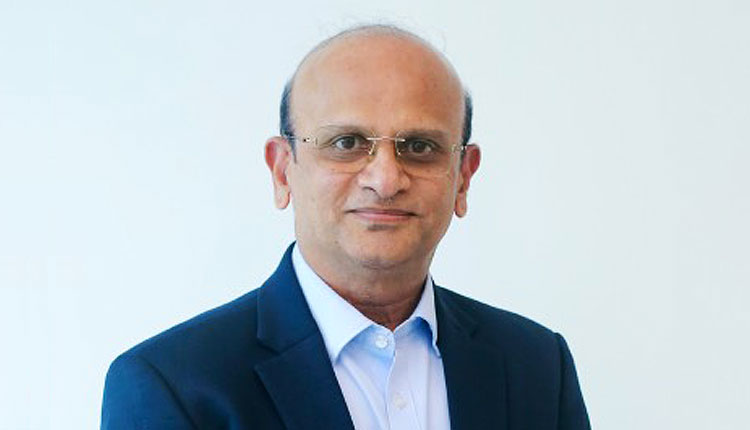

Global Capability Centres (GCCs) are rapidly evolving from cost-efficient delivery hubs into strategic engines of AI-led innovation and enterprise transformation. Today, success is measured not by headcount or cost savings, but by business outcomes, platform innovation, and AI adoption. In this interview, Singaravelu Ekambaram, SVP and Global Head of Delivery, Americas at Cognizant, shares how AI-first operating models, platform engineering, and outcome-driven leadership are reshaping the role of GCCs, and why India is at the forefront of this transformation.
How are GCCs moving from talent arbitrage to AI-driven value creation?
The shift is visible in what enterprises are now measuring. Today, the conversations I have with business leaders are about platform outcomes, AI adoption rates, and how directly the centre is influencing growth of the company and risk. That change in measurement reflects a change in ‘Human to AI leverage’.
What has made this possible is the move towards context-aware AI, solutions built with a genuine understanding of the industry, the regulatory environment, and the operational realities the enterprise actually lives in. Generic AI does not scale in complex enterprise settings. What scales is intelligence embedded into the platforms and workflows the business already runs on. GCCs that have made this transition are no longer cost centres with a headcount advantage, they are strategic assets with a capability advantage, and the enterprise treats them accordingly.
What defines an AI-first GCC in terms of talent, tech, and operating model?
An AI-first GCC is not defined by the tools it uses, it is defined by where AI sits in the operating architecture. In the centres doing this well, AI is not a layer added on top of existing operating models. It is embedded into how the work is designed, how decisions are made, and how teams are structured and held accountable.
On talent, the defining characteristic is the combination of domain depth and engineering fluency, professionals who understand the business problem as clearly as the technical solution, and who own the outcome, not just the delivery. On the technology side, platform-led architecture is the foundation: modular, reusable, governed AI services that scale across use cases rather than being rebuilt for each one. The operating model has to match product-aligned teams with clear accountability for value realisation, not siloed specialists handing work across functions. When all three come together, the GCC stops being an execution centre and becomes a genuine driver of enterprise transformation.
What are the biggest challenges in scaling AI within GCCs today?
The challenge is almost never the AI itself. The models exist, the tools exist, and most GCCs have run some form of pilot. What is hard is operationalising AI, moving from a proof of concept that works in a controlled environment to something that runs reliably at scale, inside regulated systems, with real data and real consequences.
The gap is usually in three places: data quality and context, governance discipline, talent architecture and operating model readiness. AI that is not grounded in the actual data and domain realities of the enterprise will not scale. And AI that scales without governance creates fragmentation, duplication, and eventually, risk. The operating model has to evolve in steps, scaling AI requires cross-functional product teams with clear ownership and end-to-end accountability. The GCCs closing this gap are the ones treating AI operationalisation as a core delivery discipline, not a parallel innovation agenda running alongside the business.
What sets Cognizant’s GCC strategy apart in the AI and platform era?
What sets us apart is that we approach GCC enablement as an end to end lifecycle commitment, not a setup engagement. The work does not end when a centre is operational, it deepens as the enterprise’s ambitions grow. We have navigated the full arc of this industry: from the early offshoring era through the shift to centers of excellence, to what GCCs are becoming now, AI-native capability engines that shape enterprise strategy. That experience produces something difficult to replicate: pragmatic, context-grounded playbooks built from running these programs at scale across industries and geographies.
When we embed AI into a GCC operating model, it is not a generic framework applied uniformly. It is engineered to the regulatory environment, the talent profile, and the platform architecture the enterprise already operates in. The objective is always the same, to help the GCC move from capability to measurable enterprise impact, without the false starts that come from treating AI as a separate agenda from the core business.
What makes India a global hub for AI and platform engineering?
India’s position is built on something that has compounded over decades, the combination of engineering scale, domain depth, AI ready talent and the experience of running complex, global-grade systems under real operational pressure. That last element is often underappreciated. India’s GCC talent has not just been trained in AI and platform engineering, it has been forged in environments where scale, compliance, and continuous delivery are not aspirational, they are table stakes.
What is particularly relevant for the AI era is India’s strength in applied engineering, the ability to take sophisticated models and make them work reliably inside the complex realities of enterprise systems. That is where most AI programs live or die. Layered on top of this is an ecosystem, hyperscaler infrastructure, academic depth, a maturing startup community, that gives enterprises the confidence to build here not just for cost advantage, but for genuine innovation leadership. India has moved from being the place enterprises come to scale, to the place they come to build what matters most.
How is the role of GCC leaders changing in this new phase?
The leaders who are thriving in this environment are those who have made a fundamental shift in how they define their own role. They are not running a delivery operation with global oversight, they are building and leading an enterprise capability. The difference sounds subtle but it changes almost every decision they make, from how they hire to how they engage with global business leaders to what they measure and report.
Concretely, this means GCC leaders are now accountable for AI adoption strategy, for talent architecture that compounds over time, and for outcomes that show up in the business. They are orchestrating ecosystem partnerships, shaping platform roadmaps, and sitting in rooms where enterprise strategy is being set. The technical and operational skills that made someone a strong GCC manager five years ago are necessary but no longer sufficient. What is required now is the commercial and strategic range to lead an organisation that the enterprise treats as a core asset, not a support function.


