

2026 predictions: The great AI fluency shift and what it means for India’s workforce and education System

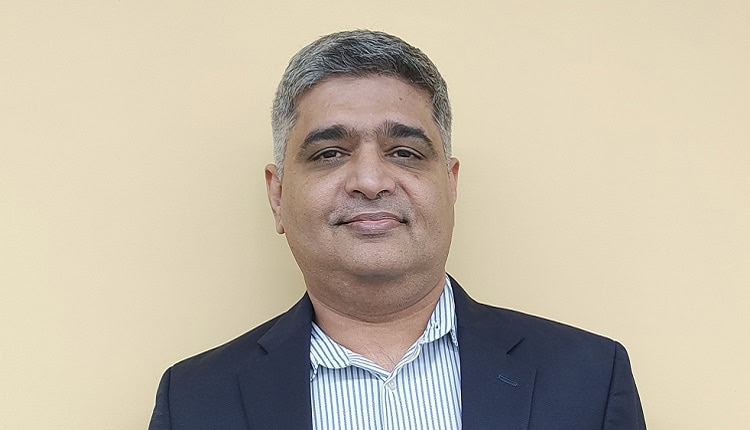

By Bhuvan Nijhawan, Senior Director – Education, SAS Asia Pacific
2026 will be a defining year in India’s AI journey. The last two years have been dominated by excitement around large language models and rapid experimentation. The next phase will focus on using AI responsibly, integrating intelligent workflows at scale, and preparing the workforce to operate confidently in environments where human and machine decision making coexist. This shift affects students preparing for their careers, working professionals navigating new expectations, and universities and enterprises responsible for shaping an AI enabled future.
The common goal across all is clear. AI fluency is becoming the new foundation for growth, employability, and innovation. The ability to understand how AI systems behave, how data informs decisions, and how automation can enhance productivity is moving from an advantage to a necessity. AI fluency will emerge as the baseline skill across industries. For students, it will determine how well they transition into modern workplaces. For working professionals, it will affect career mobility as roles become hybrid, analytical, and technology supported.
Organisations in sectors like banking, telecom, healthcare, retail, and government are already embedding AI into daily operations. This means future talent must be comfortable interpreting AI outputs, validating recommendations, and collaborating with intelligent systems.
Agentic analytics reshapes how teams operate
One of the most significant changes coming in 2026 is the growth of agentic analytics. AI agents will shift from generating information to initiating actions such as surfacing anomalies, recommending responses, and automating routine tasks. A typical scenario will involve AI agents reviewing daily business data, drafting operational recommendations, and handing them to human teams for validation.
This evolution requires new skills. Students must learn how automated workflows function, while professionals must understand how to supervise AI agents, ensure accuracy, and maintain accountability. For higher education institutions, this means updating curricula so that learners graduate with exposure to modern data and AI workflows rather than legacy concepts. Programs like the SAS Academy are already incorporating these applied experiences through hands on learning, which gives learners practical insight into how autonomous systems influence decision making.
With organisations wanting outcomes, not models, the focus is moving toward decision intelligence, a discipline that brings together analytics, rules, automation, domain knowledge, and governance into a single decision flow. This capability is becoming essential in sectors that need transparency, such as financial services, healthcare, and public administration. This shift underscores the need for universities to teach applied problem solving rather than isolated algorithms. For professionals, it highlights why understanding the entire lifecycle of data, analytics, and decisioning is more important than memorising techniques.
Hybrid roles emerge across industries
India’s digital ambition depends on a workforce that understands data, analytics, and responsible AI. Employers want talent that can move quickly from concept to application. This places responsibility on higher education to modernise, and on enterprises to invest in upskilling their teams. Industry aligned programs play an important role in this ecosystem by providing hands on exposure to real enterprise workflows, responsible AI practices, and modern data pipelines. These skills form the foundation for both employability and innovation.
2026 will see the rise of new hybrid roles that combine domain strength with AI oversight. Examples include applied AI engineers, decision intelligence specialists, AI governance managers, and model risk analysts. These roles require analytical understanding and the ability to collaborate with intelligent systems, but they do not demand deep research expertise. For students, this opens pathways that combine their existing domain of study with AI supported tools.
For professionals, it offers opportunities to build on their experience while adding skills that are increasingly in demand. Learners joining the Academy often come from business, finance, engineering, and operations backgrounds. They are seeking the blend of analytical confidence and practical AI knowledge that defines these new roles.
Looking forward
AI is creating roles that blend creativity, analytical thinking, and communication with technology supported workflows. A financial analyst validating AI drafted summaries, a supply chain professional adjusting AI generated forecasts, or an educator using AI enhanced tools to personalise learning modules are all examples of what 2026 will bring. The ability to guide, refine, and supervise AI systems will become a core part of many roles. This is why learners need to be empowered to enhance both technical and human judgement skills, gaining insights on leveraging AI to support transparency, accuracy, and business value.
As AI becomes more deeply integrated into everyday work, the leaders of tomorrow will be those who can evaluate AI outputs, understand their limitations, and make informed decisions. This combination of analytical skill, domain understanding, and responsible judgement is essential for the leaders of tomorrow.
Students, universities, and enterprises all face the same reality. The future belongs to those who understand how intelligent systems support decisions, enhance productivity, and transform workflows. Building AI fluency and applied analytical skills is now the most important investment individuals and institutions can make. It is the foundation on which India’s next decade of digital growth will be built.