

AI with purpose: The new playbook for India’s digital lending ecosystem

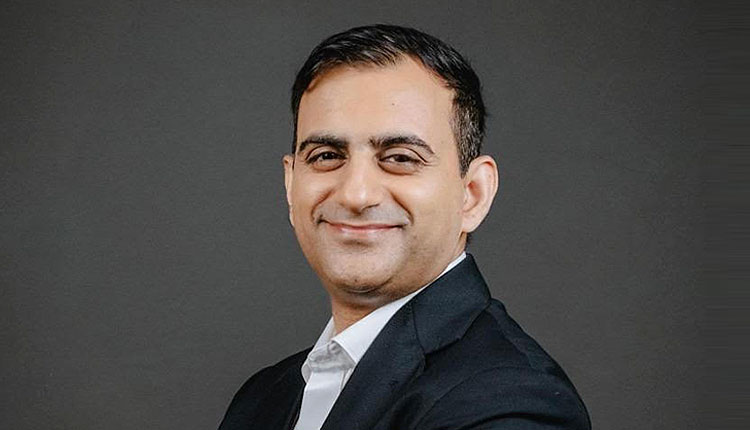

By Akshay Mehrotra, MD & Group CEO, Fibe
India’s digital lending story is often told as a technology story. But at its core, it has always been a credit story, who gets access, on what terms, and how quickly the system can respond to someone who genuinely needs it.
Over the past decade, fintech platforms have steadily dismantled the paperwork-heavy, branch-dependent model that defined formal lending for generations. The result is a lending infrastructure that processes applications in minutes, disburses funds within hours, and serves borrowers that traditional banks structurally could not reach. That is not a forecast. It is the operational reality for millions of borrowers across India today, and it is something worth taking a moment to appreciate. Behind this progress, AI-led automation is quietly streamlining everything from document interpretation to risk evaluation, enabling faster and more consistent decision-making at scale.
Credit assessment has actually changed.
The most meaningful shift has been in how creditworthiness is determined. Legacy credit models were built around a narrow set of signals: salary slips, ITRs, and a CIBIL score that itself required prior borrowing to exist. This created a circular problem. You needed credit history to get credit.
Digital lenders broke that loop. By analysing transaction-level data, UPI payment behaviour, merchant activity, and repayment consistency, platforms can now construct a far more accurate picture of financial discipline. A freelancer with irregular income but a spotless repayment record looks very different through this lens than they did through a traditional underwriting model. That person is now getting credit they always deserved.
AI-driven models are also helping interpret unstructured financial documents such as invoices across healthcare, travel, education, and other categories, converting them into structured insights that strengthen underwriting accuracy while reducing manual effort. This is not about relaxing standards. It is about making the standards more accurate and fair.
Personalisation that actually means something
The word “personalisation” gets overused in fintech, but in lending it has a specific and practical meaning. It means structuring a loan, its tenure, EMI size, and repayment schedule around how a borrower’s money actually moves rather than how a product brochure assumes it should.
For a small business owner whose revenue peaks around festivals, a rigid monthly EMI can create unnecessary stress during quieter months. For a salaried borrower paid on the 7th, an EMI due on the 1st is a design problem, not a discipline problem. Digital platforms can solve both of these things today. That is not futuristic AI. It is thoughtful use of data that already exists, put to work for the borrower. Increasingly, AI-powered conversational interfaces are also helping borrowers interact in multiple languages, clarify queries instantly, and complete verification steps at their convenience, making personalisation more practical and accessible.
Speed and prudence, together
“Speed” and “caution” are often framed as opposites in lending. Better data has made it possible to have both at the same time. Early warning signals that flag shifts in repayment behaviour allow lenders to have a conversation at the right moment, early enough to actually help rather than late enough to only recover.
Fraud detection has improved in a similar way, not by adding friction to every application but by building smarter contextual models that protect genuine users without slowing them down. The borrower who needs money urgently and has done nothing wrong should not be made to feel like a suspect. Internally, AI-enabled automation is also improving operational efficiency, from accelerating engineering workflows to enabling secure enterprise-level use of large language models for analytics, productivity, and decision support. This allows teams to focus more on responsible credit delivery and customer outcomes.
The real opportunity
India’s formal credit gap is still significant. A large share of the workforce, including gig workers, self-employed individuals, and small merchants, still sits outside structured lending. This is not because they lack financial discipline, but because older systems had no way to evaluate them fairly.
That is changing. The infrastructure is in place. The data signals are available and improving. More people are accessing formal credit today than at any point in India’s history, and the gap between “creditworthy” and “credit-served” is narrowing in a real and measurable way.
The work now is to keep building on this carefully, making sure the systems that open doors for new borrowers are also robust enough to serve them well over time. That balance, between access and responsibility, is what will define the next chapter of digital lending in India. AI, when deployed thoughtfully and with strong governance, will play a key role in ensuring that this expansion remains both inclusive and sustainable.