

Can India build the global financial operating system for its diaspora?

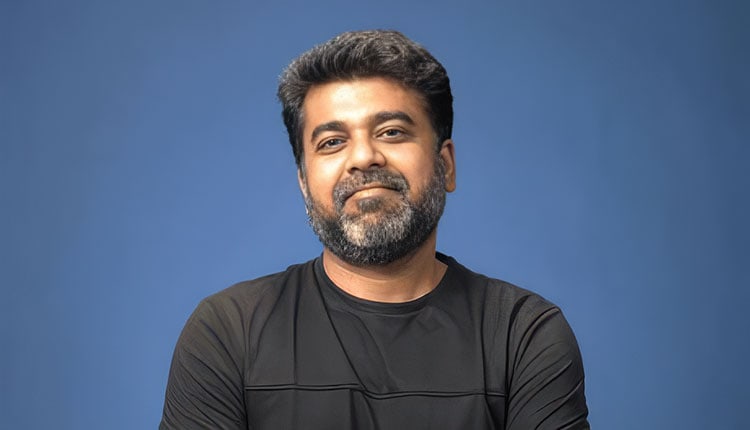

By Ankur Choudhary, CEO and Co-Founder, Belong
For decades, India’s relationship with its diaspora has been defined largely by remittances. The question was simple: how does an NRI send money to India, support family and maintain financial ties with the country?
That relationship is changing. India has 35.4 million people living overseas, while remittances reached over $150 billion in FY26. The diaspora increasingly needs more than a channel to send money home. Global Indians need banking, investing, insurance, retirement planning and wealth management across countries.
In my view, the question is therefore shifting from “How does an NRI send money to India?” to “How does a global Indian manage their financial life across borders?”
I believe India already has many of the building blocks to answer that question. The opportunity now is to connect them.
India already has the building blocks
India has demonstrated what digital financial infrastructure can achieve at scale. UPI, Aadhaar based electronic KYC, DigiLocker, CKYC and a large fintech ecosystem have changed how millions of Indians access financial services.
UPI, expanding internationally in over 10 countries, demonstrates that Indian digital infrastructure can connect users and institutions beyond the domestic market.
To me, the lesson from UPI is bigger than payments. India has shown that interoperable digital infrastructure can allow different financial institutions and applications to work together while giving customers a relatively simple experience.
The next opportunity is to take that principle beyond payments and apply it to the entire financial journey of a global Indian.
From payment interoperability to financial interoperability
Today, an NRI may have a bank account in the country where they live, an NRE or NRO account in India, mutual funds, equities, insurance policies, property and retirement assets across different jurisdictions.
Each institution can require similar documents and information. A customer may repeatedly have to establish their identity, tax residency, source of funds and eligibility.
For someone managing finances across countries, this creates unnecessary friction.
The next phase should therefore be financial interoperability. This does not mean building another super app that tries to own every part of a customer’s financial life. It means creating an interoperable layer through which regulated banks, brokers, insurers, asset managers and fintech platforms can connect.
The goal should be simple: a global Indian should not have to rebuild their financial identity every time they open an account, move money or access a new financial product.
Cross border finance requires more than proving who a customer is. Institutions also need to establish where the customer is a tax resident, where their money comes from, which products they are eligible for and which regulations apply to them.
A future financial system could make this information portable and consent based
Instead of every institution collecting and verifying the same information separately, customers could give permission for verified information to be shared with regulated institutions.
Developments around electronic KYC, digital onboarding at GIFT IFSC are early building blocks for this model. This would not remove KYC or regulatory checks. It would make them more efficient and reduce the need for customers to repeat the same processes.
GIFT City can become the international layer
I see GIFT IFSC playing a primary role in connecting global Indians with India’s financial ecosystem.
As of March 2026, GIFT IFSC had more than $111 billion in banking assets, more than $39 billion in fund commitments and 1,147 registrations and authorisations.
NRI deposits had reached $1.65 billion, up 43% year-on-year, while NRI retail accounts crossed 20,000.
These numbers show that GIFT City is developing into more than an international financial centre. It is becoming an ecosystem covering banking, funds, insurance and capital markets by leveraging its tax-efficient policies for both businesses and retail NRIs and OCIs.
For the diaspora, its potential is significant. An NRI could increasingly use GIFT City to access India linked investments, global products and other financial services through a framework designed for cross border activity.
The opportunity is therefore not only about attracting capital into GIFT City. It is about making GIFT City a practical financial bridge between India and its diaspora. Regulation will be the bigger challenge
Technology alone cannot solve the complexity of cross border finance
A global Indian may be subject to Indian tax and financial regulations as well as the rules of the country where they live. Securities regulations, data protection, tax reporting, foreign exchange rules and investor protection requirements can all differ. This means regulatory interoperability will be as important as technological interoperability.
India will need greater coordination between financial regulators, financial institutions and regulators in countries with large Indian diaspora populations. The objective should be to make legitimate cross border financial activity easier while maintaining strong standards for investor protection, tax compliance and financial integrity.
It will determine whether India can move from having strong digital financial infrastructure to becoming a genuine financial ecosystem for its diaspora.
What should the end state look like?
I believe a global Indian should eventually be able to establish their financial identity once, and use that verified information across all other financial institutions in India and GIFT City.
They should be able to move money across borders through compliant digital channels, access suitable investment products, manage banking, investments and insurance, and understand their tax and reporting obligations without navigating multiple disconnected systems.
The experience should be closer to the simplicity of making a digital payment than managing a collection of unrelated financial relationships across countries.
Importantly, I do not believe everything needs to sit within one platform. A truly interoperable system would allow banks, brokers, insurers, asset managers and fintech companies to compete while connecting through common digital infrastructure.
India has a unique opportunity
India now has a combination that few countries can match: a diaspora of 35+ million people, significant financial flows, digital public infrastructure, a deep financial market, a large fintech ecosystem and an international financial centre in GIFT City.
The $150+ billion in remittances received in FY26 shows the scale of the existing relationship. But remittances should be seen as the beginning of the opportunity rather than its end. The larger opportunity is to build an ecosystem where global Indians can bank, invest, insure and manage their wealth across countries without having to repeatedly navigate disconnected systems.
Technology can provide the infrastructure. GIFT City can provide the international financial layer. But trust, regulatory coordination, investor protection, privacy and tax clarity will determine whether the model succeeds.
India has already shown that it can build digital infrastructure for hundreds of millions of people. The next challenge is to build financial infrastructure that works across borders.
The real test is not whether an NRI can invest in India. It is whether a global Indian can manage their financial life across countries as simply as they can make a digital payment today.
If India can solve that problem, GIFT City could become more than an international financial centre. It could become the financial bridge between India and its diaspora.