

From cash vans to vision AI: How CMS Info Systems rebuilt itself into an AI-led infrastructure platform


For most of its history, CMS Info Systems was known for a fleet of armored vans — the company that moved and managed India’s cash. Today, that same company runs one of the largest Vision AI deployments in the country’s financial sector, processing over a million alerts a day across more than 350,000 cameras. The transformation wasn’t a pivot so much as an excavation: CMS built a technology backbone underneath its logistics business, and then let AI take over.
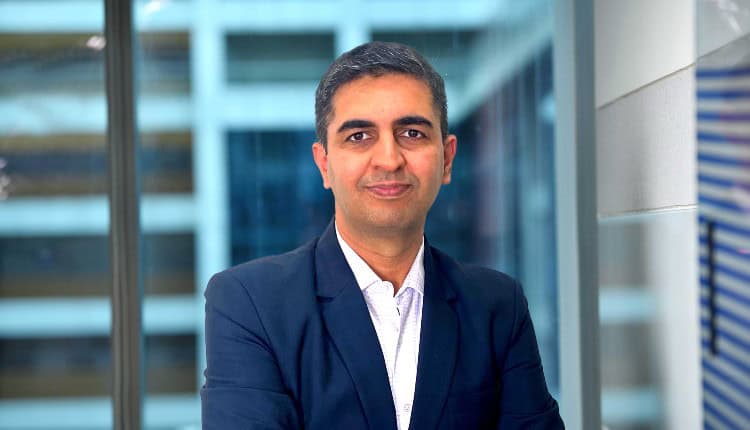
“CMS has grown into a broader business services platform from its roots as a cash logistics provider, through deliberate, phased expansion,” says Rajeev Bhatia, Chief Information Officer, CMS Info Systems. The company first built out managed services and banking automation, he says, before developing proprietary technology in ALGO, HAWKAI, and Retail 360. “The thought was to build physical and digital operations on a single technology foundation, as one operational platform where capabilities are built once and deployed across the entire network.”
That foundation, Bhatia explains, rests on three design principles: “a shared platform spanning all three business segments” — ATM Management Solutions, Retail Solutions and Currency Logistics, and Technology and Payment Solutions — “a unified network, so physical cash flows and digital transaction flows are orchestrated through common interfaces,” and “full stack ownership of hardware, software, and AI models, which gives us end-to-end control over performance, latency, and reliability at scale.” It is this architecture, he says, “that allows CMS to use AI as a system-wide capability.”
Two Kinds of AI, One Company
The most visible expression of that capability is HAWKAI, which Bhatia describes as the largest Vision AI platform in India’s BFSI sector, with a 36% market share. But the less visible transformation, he argues, is happening inside CMS’s own operations.
“Multiple AI agents already automate pieces of our operations, from indent automation, which reads and processes cash requests the moment they arrive, to an agent now being rolled out to auto-verify cash counter slips after replenishment,” he says. “We are not just adopting AI, we are restructuring around it. Today 70% of our tech team includes AI/ML and engineering.”
That restructuring shows up starkly in the numbers behind HAWKAI: over a million alerts processed daily, more than 350,000 cameras under watch, and an agentic AI layer that Bhatia says analyzes nearly 90% of incoming data in under four seconds. Getting there required rethinking where intelligence should live. “HAWKAI deploys over 40+ proprietary VisionAI models trained on real-world ATM conditions, covering intrusion, loitering, cassette validation, and compliance monitoring,” Bhatia says. “These run on our own chipsets and IoT panels, because a cloud-only architecture does not work reliably at a Tier 4 ATM with intermittent connectivity.”
The system is built end to end, from the edge inward. “We have developed capabilities across the stack, from our own AI modules, proprietary firmware for chipset-level compression, and the chipset and IoT panel at the edge, so processing begins as close to the source as possible,” he says.
Crucially, the underlying models are trained on Indian conditions rather than idealized ones: “Our in-house Vision AI models focus on practical, high-frequency use cases such as intrusion, loitering, crowding, and compliance, and are trained on varied, real Indian scenarios rather than controlled environments or synthetic data, which makes them far more reliable in the field.” The same philosophy, he adds, extends to language models: “That same discipline lets us build small, purpose-trained language models for specific use cases, lighter on compute, and more accurate than a general-purpose model would be.”
What happens after a camera flags something matters just as much as the detection itself. “We have built an agentic AI layer that processes alerts before they reach human operators,” Bhatia says. “The majority of alerts are validated and closed automatically, with human intervention required only for edge cases. This allows us to scale intelligence without proportionally scaling manpower.”
If there’s a single lesson from running AI across tens of thousands of unattended, often remote sites, it’s that raw model accuracy isn’t the hard part. “The biggest lesson in deploying AI across 50,000+ distributed sites is that accuracy alone is not enough, systems must be designed for consistency, latency, and decisioning at scale,” he says. “By reducing noise, filtering false positives, and enabling real-time response, the system moves from passive monitoring to active decision-making. That shift is what ultimately drives operational impact. It makes large-scale monitoring viable without linear cost increase.”
From Detection to Decision Support
CMS’s Vision AI footprint has grown roughly 15-fold in recent years — from about 20,000 live sites in FY22 to more than 50,000 in FY26 — and Bhatia says that scale itself is a kind of proof: “An architecture that performs consistently in real-world conditions is far more complex than optimising for controlled settings.”
More telling than the growth in sites, though, is the shift in what customers actually ask for. “Two years ago, the focus was largely on detection, flagging specific events or anomalies,” Bhatia says. “Today, customers want more: the ability to search across video data, correlate events, and reconstruct timelines to support faster investigations and better decision-making.” What began as straightforward surveillance, he says, “has transformed into SOP adherence, financial integrity checks, threat prevention and productivity monitoring.”
He sees the next wave of demand moving a layer deeper still — from insight to action. “We see the next wave of demand emerging in deeper automation and orchestration, where AI doesn’t just surface insights but triggers actions across systems,” he says. In the BFSI vertical alone, Bhatia points to a market opportunity he pegs at ₹2,000 crore: “We see a clear runway to grow our market share meaningfully by FY30.”
One Platform, Many Industries
CMS is now pushing HAWKAI beyond banking into retail, quick-service restaurants (QSR), EV infrastructure and other physical environments — a move Bhatia frames not as diversification but as an extension of a data architecture that was reusable by design. “The scale of physical operations we run has created a data layer that goes beyond BFSI, capturing, timestamping, and consolidating events across environments in real time,” he says. “The key design choice was to ensure this data doesn’t remain a historical record but becomes the operating system that drives decisioning across use cases.”
At the center of that architecture sits a single, shared data lake. “Bringing surveillance, operational, and field data onto a single layer rather than keeping them siloed is what lets us extend the platform across industries,” Bhatia says. “Whether it is a bank branch, a retail store, or a QSR outlet, the underlying architecture remains the same: ingest, standardise, and derive intelligence from diverse physical environments at scale.”
He breaks the model down into three layers: “The first is common across every industry, elements such as a missing security guard or a PPE compliance check. The second is industry-specific, tuned building blocks for retail, QSR, or warehousing and others that get reused within that industry. The third is bespoke, highly customised use cases built for a specific customer’s requirements. That layering is what lets us move fast without rebuilding the platform each time.”
What changes as CMS moves into new industries, Bhatia says, isn’t the underlying technology but the problem it’s pointed at. “In banking, the focus is on compliance, security, and uptime. In retail or QSR, it shifts toward customer flow, store efficiency, and service quality. In EV infrastructure, it is about asset uptime, utilisation, and safety. We retrain and tune our models for each environment, but they continue to run on the same foundational stack.” And every new sector makes the whole system smarter, he adds:
“As we scale across sectors, the diversity and volume of data improve model accuracy, strengthen predictive capabilities, and sharpen operational outcomes. This allows us to move from monitoring to active decisioning across industries, while keeping costs scalable and performance consistent.”
Measuring AI by What It Converts Into
CMS invested ₹40 crore in technology in FY26, with roughly 70% of its tech workforce dedicated to AI/ML and software engineering. For Bhatia, the return on that investment isn’t measured in capability built but in outcomes realized. “Our approach to measuring return on technology investment is outcome-based rather than input-based,” he says. “We don’t measure success by how much AI/ML capability we’ve built, but by what that capability converts into commercially.”
He points to three lenses in particular. The first is a shift in revenue mix: “Our Technology and Payment Solutions segment, which houses HAWKAI, has grown from ~7% of consolidated revenue a few years ago to around 16% in FY26, and we’ve guided to this crossing 20% of revenue by FY30 at a 20%+ CAGR.”
The second is reuse. “HAWKAI now runs 40+ AI/Vision modules across 15+ industries,” Bhatia says.
“We track cost-per-module-to-build against the number of clients/sites each module gets reused on. A module built once for QSR loss-prevention that gets resold into quick-commerce or retail surveillance without material re-engineering is a direct measure of R&D leverage, not just headcount utilization.”
The third lens looks inward, at CMS’s own cash logistics operations. “Unit economics inside existing ATM contracts — uptime and efficiency gains on the ATM/cash logistics side, forecasting accuracy, first-time-fix rates, cash-in-transit optimization — reduce our own servicing cost, which shows up in margin rather than top-line and is easy to isolate client by client,” he says.
Toward Closed-Loop, Autonomous Infrastructure
Ask Bhatia where physical infrastructure is headed, and he doesn’t hedge: toward systems that detect, predict, decide and act with less and less human involvement — and he says CMS is already partway there. “Our Dispatcher and Route Mapper automates crew allocation and route efficiency at scale, while our currency forecasting engine predicts cash needs across 1,50,000+ touchpoints,” he says. “HAWKAI command centres add a real-time layer of detection and response across distributed assets.”
The next step, in his view, is tighter integration between those systems. “The next step is tighter orchestration, where these systems move toward closed-loop action with minimal human intervention,” he says. That pattern, he adds, is already visible outside financial services too: “We’re also seeing this play out across sectors, from reducing shrinkage in retail to improving uptime in fuel stations, fraud detection in QSR, and utilisation in EV infrastructure.”
Bhatia’s outlook for the next three to five years follows the same trajectory that brought CMS here — from watching to deciding. “AI-led infrastructure in India will become more predictive and prescriptive,” he says, “with routine decisions automated and response cycles significantly faster.”
For a company that started out driving cash from point A to point B, it’s a striking place to end up: not just moving physical assets, but building the nervous system that runs them.