

AI is set to change entertainment from content discovery to intelligent orchestration


The challenge facing India’s streaming ecosystem is no longer simply about making more content available. With consumers navigating multiple OTT platforms, live television services, connected devices and increasingly fragmented content catalogues, discovery is becoming as important as availability.
For technology leaders, this is creating a different problem: how to understand not just what consumers have watched, but what they may want to watch at a particular moment, across different devices, languages and household contexts.
Artificial intelligence is emerging as a key technology in addressing this challenge. Rather than relying only on conventional metadata and keyword-based search, AI can bring together content intelligence, behavioural signals and contextual information to create a more personalised entertainment experience.
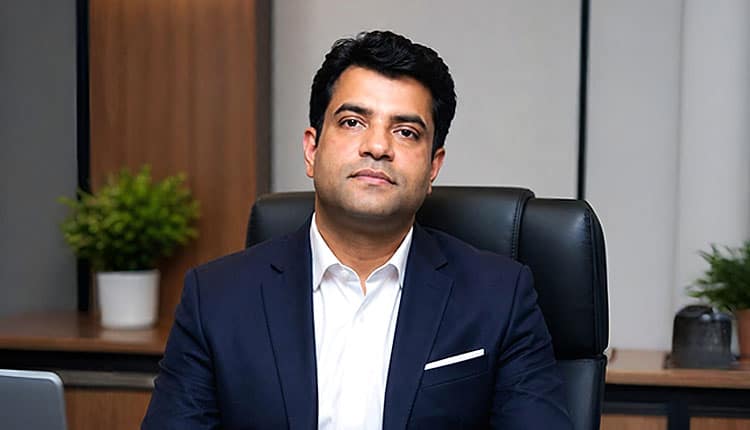
In an exclusive interaction with Express Computer, Uttam Tiwari, CTO, VZY, Dish TV Group, discusses how AI is reshaping content discovery, why the entertainment experience needs an intelligence layer, the architectural challenges of serving diverse Indian consumers, and how AI agents could fundamentally change the way people interact with entertainment.
Discovery is becoming the fundamental problem
According to Tiwari, consumers do not necessarily need more content. They need a better way to navigate the enormous amount of content that already exists across platforms.
“Discovery has become one of the fundamental problems in entertainment today. Consumers don’t necessarily need more content; they need a better way to navigate the enormous amount of content already available across platforms, live television and screens.”
VZY is therefore working towards an intelligence layer capable of understanding content beyond conventional metadata such as genre, cast or language.
“We are working towards a knowledge graph that goes beyond basic metadata such as genre, cast or language and starts understanding characters, relationships, themes, mood, context and other semantic signals.”
The problem becomes more complex because the same piece of content can appear across different platforms with different descriptions, names or metadata. Before an intelligent system can recommend that content, it first needs to understand that these different representations refer to the same underlying content.
“This is where AI and machine learning become central,” says Tiwari. “The objective is ultimately very simple for the consumer: open VZY and spend less time searching and more time watching.”
Personalisation needs to understand context
Tiwari believes search will continue to have a role when consumers know exactly what they want to watch. But entertainment discovery often starts with a much less precise question: what should I watch right now?
AI can potentially answer that question by understanding context rather than relying exclusively on keywords.
India presents a particularly complex use case because entertainment consumption is often shared across households. A television may be used by an entire family, while individuals have very different viewing behaviours on their personal devices. “Someone may watch news in the morning, cricket with the family in the evening and a series individually later at night.”
Consequently, personalisation cannot rely solely on an individual’s viewing history. “It needs to consider time, device, language, household behaviour, content preferences and context,” he points out.
Multilingual AI adds another dimension to this opportunity, allowing entertainment platforms to understand intent across languages and cater to smaller audience segments rather than relying on broad demographic categories.
“The long-term goal is for VZY to increasingly understand what might be relevant to you at that particular moment, rather than simply showing what is popular.”
Building for continuity across screens
Serving video at scale is only one part of the technology challenge. Tiwari says VZY needs to create a consistent and intelligent experience across different consumers, devices, content formats and network environments.
The platform has to process large volumes of behavioural and content data while making recommendations in near real time. At the same time, every user, household and device can present a different context.
“There is also the fundamental engineering layer: latency, security, adaptive bitrate, device capability, network fluctuations, availability and reliability. These things are largely invisible when they work well, but they immediately become the product experience when they don’t.”
VZY is also attempting to bring together behaviours that have traditionally been treated separately: live television and on-demand entertainment, shared and personal screens, and individual and household preferences. “The architecture therefore needs to be built not simply for streaming, but for continuity and intelligence across the entire entertainment journey.”
AI-first architecture offers a different starting point
Tiwari brings experience from building and scaling technology platforms across fintech, commerce and telecom, including BharatPe, CARS24 and Airtel. While each industry presents different requirements, he believes several engineering principles remain constant.
“Customer obsession, engineering reliability, strong data foundations and making decisions based on evidence rather than assumptions.”
One lesson has remained particularly relevant across organisations: scale eventually exposes weak architectural decisions.
VZY has an opportunity that many established technology platforms do not: building AI into the architecture from the beginning rather than retrofitting it onto a large legacy environment.
Entertainment also changes the technology objective. Unlike commerce or fintech, where a transaction can represent the completion of a journey, entertainment depends on understanding the consumer.
“The transaction is not the end goal; understanding taste, context and intent is. That makes the intelligence and personalisation layer much more central to the core product itself.”
The focus is on useful AI, not proprietary models
Tiwari takes a pragmatic approach to AI infrastructure. He does not believe every enterprise problem requires a proprietary model.
VZY uses proven industry models where appropriate while developing custom systems and models on open-source frameworks where the problem is specific to the platform and offers an opportunity to build differentiated intellectual property.
The greater engineering challenge, he says, is taking an AI capability from an interesting demonstration to something that can work reliably for millions of consumers. “That means continuously balancing accuracy, latency, infrastructure cost, scalability, security and responsible use of data.”
Over time, he expects some of VZY’s most valuable technology IP to emerge from the intelligence built around content understanding, discovery, household context and personalisation rather than simply deploying increasingly large models.
“For us, AI has to ultimately improve the consumer experience. If it doesn’t make discovery faster, smarter or more relevant, it is technology without a meaningful outcome.”
The entertainment interface could become conversational
Looking ahead, Tiwari expects AI to fundamentally change how consumers interact with entertainment.
Today, users navigate applications, browse rows, search catalogues, switch between platforms and eventually decide what to watch. AI could remove much of that navigation.
“The consumer should increasingly be able to express an intent such as ‘I have 30 minutes, give me something funny in Hindi’ or ‘What match is live right now?’ and allow the intelligence layer to orchestrate the experience.”
For this to work reliably, however, AI needs a deep understanding of both the content universe and the consumer. This is why VZY is investing in areas such as its knowledge graph, content ontology and contextual signals. “A strong knowledge layer helps the system reason from structured context rather than relying only on probabilistic responses from a large language model.”
As the knowledge graph becomes richer with content and behavioural signals, Tiwari expects recommendations to become increasingly precise.
“The long-term opportunity for VZY is therefore bigger than building another interface for entertainment. It is to build the intelligence layer that understands what you may want to watch and helps orchestrate how you get to it,” he says.
For India’s increasingly fragmented entertainment ecosystem, that could represent a fundamental shift; right from platforms competing primarily on the breadth of their catalogues to experiences that compete on how intelligently they understand the consumer and connect them with the right content at the right moment.
