


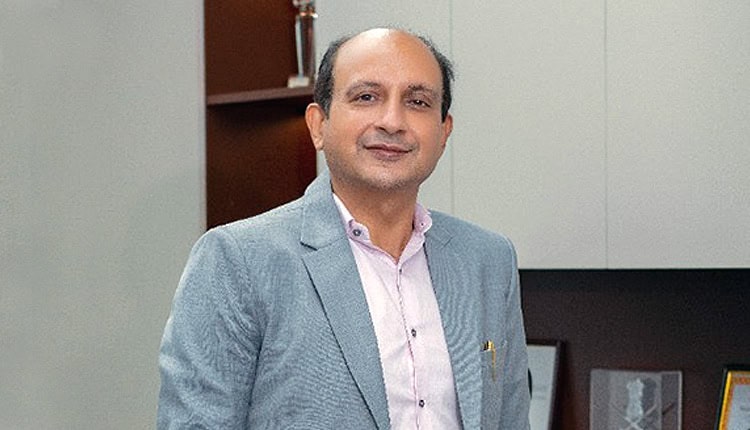

When Pankaj Sachdeva is asked to describe Pitney Bowes’ India Global Capability Centre in one word, his answer is immediate—transformation. It is a term that reflects not just the evolution of the GCC, but also Sachdeva’s own 18-year journey within the organisation.
As Vice President – Data Science & Analytics and Managing Director, India, Sachdeva leads the Pitney Bowes India Innovation Centre across Noida and Pune. With over 26 years of experience in IT, and a strong academic grounding in mathematics, computer applications, and a recent MTech in data science, he brings together technical depth, business perspective, and a strong belief in continuous learning.
From cost arbitrage to strategic ownership
Pitney Bowes established its India presence in 2007, initially to leverage cost advantages. The early years focused on QA, support, and limited development roles. However, it soon became clear that this model would not sustain long-term growth.
The first major shift came when Pitney Bowes began insourcing projects previously handled by third-party vendors. India teams delivered improved outcomes through better cost control, higher quality, and stronger business understanding. This success led to a more decisive move—taking end-to-end ownership of products.
Over time, the India GCC expanded into product management, professional services, pre-sales, and technical support. The centre progressed steadily from a small execution outpost to a satellite unit, and eventually into a portfolio hub owning full product lines and working directly with global customers.
Sachdeva describes the next milestone as becoming a transformation hub, where strategic business decisions and leadership roles are driven from India. While that stage is still evolving, the presence of global roles operating from India has already accelerated the shift.
India as the engine of data and AI innovation
A critical driver of this transformation has been Pitney Bowes’ focus on data, AI, and emerging technologies, with India at the core of this effort. Today, more than 80 percent of the company’s innovation teams are based in India, contributing not just to development, but to design thinking, data-led product strategy, and enterprise AI initiatives.
What began as a Data Science Centre of Excellence has matured into a broader AI and Data CoE, building unified data platforms that bring together information across business units to unlock new value. One such initiative, born out of an internal hackathon, evolved into a revenue-generating product that delivers deep shipping and tracking insights to enterprise customers. The solution has helped clients optimise carrier selection, improve post-purchase experiences, and gain better visibility into logistics spend—eventually translating into multi-million-dollar business impact.
Beyond product innovation, AI is also being used extensively across internal operations. From automating vendor and procurement data validation to enhancing global support functions, Pitney Bowes is applying AI across the enterprise. Sachdeva also sees strong potential in applying AI to HR and finance functions, enabling smarter employee support and more accurate financial processing.
Reimagining the GCC operating model
For Sachdeva, the success of a GCC depends as much on mindset as on technology. One of the most significant cultural shifts underway at Pitney Bowes India is the move towards client-centricity.
“Technology will keep changing, but client problems remain consistent,” he says. To address this, the India GCC has invested in building deeper domain understanding—studying customer personas, industry challenges, and competitive dynamics—so that teams can apply AI and advanced technologies to real business problems rather than abstract use cases.
Equally important is the focus on enterprise-wide thinking among leaders. Sachdeva believes GCC leaders must go beyond local delivery and develop a holistic understanding of the business. This includes awareness of financial performance, the ability to communicate effectively with global executives, and a strong understanding of market competition. Without this enterprise perspective, he argues, GCCs risk remaining tactical rather than strategic.
Sustaining innovation while driving efficiency
Balancing operational efficiency with innovation is a challenge facing every global centre. At Pitney Bowes India, the two are treated as complementary rather than competing priorities.
The GCC continues to invest in focused centres of excellence across data, AI, cybersecurity, cloud operations, and design thinking, while also encouraging innovation through business-driven hackathons and proof-of-concepts that are closely tied to measurable outcomes. Education assistance programs support employees in upskilling, provided learning aligns with business needs. An enterprise-wide ideation portal, currently being rolled out, aims to capture and scale ideas from across the organisation.
“Innovation must create value,” Sachdeva notes. “Otherwise, it cannot be sustained.”
Delivering measurable business impact
The transformation of Pitney Bowes India has produced tangible results. A proposal from the India leadership to establish centralised IT centres of excellence across security, cloud infrastructure, and enterprise applications received swift approval from the global executive team and delivered multi-million-dollar cost savings.
On the people front, the organisation has also seen strong recognition. In 2024, Pitney Bowes India was ranked among the Top 3 Best Places to Work by the Great Place to Work Institute, underscoring its focus on talent growth, culture, and leadership development.
Reflecting on his learnings, Sachdeva highlights the importance of aligning India-specific goals with global business priorities, expanding global leadership roles from India, embedding AI across both technology and G&A functions, and maintaining regular engagement with senior executives.
The road ahead
As global enterprises increasingly look to their GCCs as engines of innovation and transformation, Pitney Bowes India offers a clear example of what is possible when ownership, capability, and trust converge.
For Sachdeva, the opportunity is clear. “India has the talent and the scale,” he says. “The next phase is about leading global transformation—not just supporting it.”
