

From disruption to co-creation: How UPL is wiring the agricultural value chain

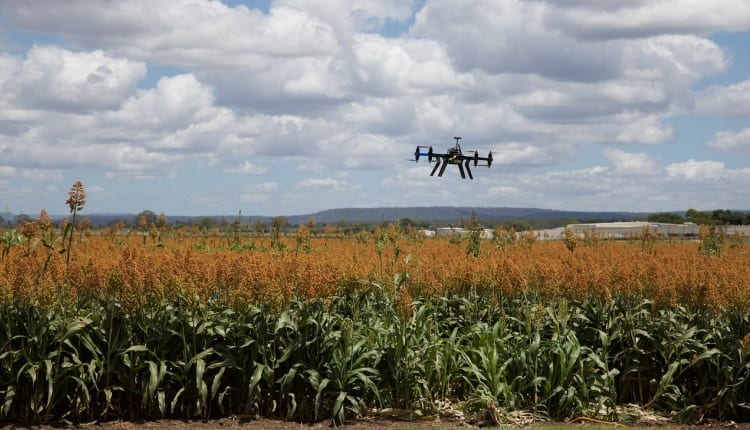

Agriculture is one of the world’s oldest industries, and one of its least digitized. Millions of smallholder farmers depend on a vast network of retailers and distributors for seeds, crop protection, advice and credit. Data is sparse, connectivity is uneven, and trust is built face to face, season after season. For a technology leader, it is about as far from a greenfield environment as it gets.
 That is the terrain Amit Srivastava navigates as Chief Digital Officer at UPL, the global agri-solutions company. His mandate is not to disrupt this ecosystem from the outside, but to strengthen it from within. “Agriculture is a relationship-driven industry,” he says, and that single idea shapes nearly every technology decision UPL makes.
A strategy built on two goals
UPL’s digital strategy rests on two pillars: connecting everyone across the agricultural value chain more closely, and using technology and AI to make the organization itself work more effectively.
The company’s retail platform, nurture.retail, belongs squarely to the first pillar. It strengthens the ecosystem that carries products and knowledge to farmers, and it is designed to create value for retailers, channel partners and growers alike. Around it sits a broader portfolio: farmer-facing digital services, tools for field teams, and AI-driven insights for planning and decision-making.
The cumulative effect, according to Srivastava, is a tighter connection with customers, simpler processes, and faster, better-informed decisions across the business.
Why co-creation replaced disruption
Many digital-agriculture efforts began with a disruptor’s mindset: build a platform, then persuade the field to adopt it. UPL’s roadmap has moved in the opposite direction. As the company has grown, it has increasingly built solutions together with retailers, distributors and farmers.
The logic is pragmatic. Co-creation ensures that tools address real needs, which in turn drives adoption, the metric on which most enterprise technology in rural markets quietly fails. It also builds an ecosystem in which, as Srivastava puts it, everyone grows together. For CIOs working with fragmented partner networks in any industry, the lesson is familiar: adoption is designed in at the start, not mandated at the end.
Forecasting where data is thin
One of the hardest technical problems in rural markets is demand forecasting at the PIN-code level, where retail data is limited and inconsistent. Srivastava is candid that no single data source tells the full story. UPL combines multiple signals and keeps refining its models as data quality improves.
The ambition is deliberately practical: better local visibility, so the right products are in the right places at the right time. In a business where a missed planting or spraying window cannot be recovered, that is the difference between a useful product and a wasted one.
Where AI counts
Srivastava sees AI creating value in two directions. Internally, it improves productivity and decision-making. Externally, it makes information and services easier for farmers and retailers to access. The common thread is a refusal to treat AI as a showpiece. The focus is on embedding it into everyday workflows so that it delivers practical, measurable outcomes.
Weather and satellite intelligence is a promising frontier. The potential is clear: timely, relevant advisories, such as early awareness of crop risks, delivered to farmers who need them. But Srivastava is measured about it. UPL is exploring the area carefully, and any application, he says, must be scientifically sound and genuinely useful to farmers. In a sector where bad advice has real consequences for livelihoods, that restraint is a feature, not a limitation.
Credit, access and fairness
Access to credit is a perennial constraint for small retailers. UPL’s role, Srivastava is careful to note, is to make that access simpler: lending decisions rest with its financing partners, while digital tools streamline the process and shorten turnaround times.
For small and first-time retailers with limited credit histories, he believes technology can widen access to formal credit. But he is clear that fairness, transparency and responsible lending must remain central. As AI moves deeper into financial workflows, that principle is one every enterprise technology leader will need to hold onto.
What comes next: voice, vernacular and agents
Looking ahead three years, Srivastava expects two shifts to matter most. The first is voice and vernacular interfaces, which could make digital services far more accessible to farmers and retailers who are not served well by text-heavy apps. The second is the rise of AI agents that take on routine work, freeing people to focus on higher-value activities.
Together, he says, these will create a more connected, intelligent and inclusive agricultural ecosystem.
The takeaway for technology leaders
UPL’s approach carries lessons that reach well beyond agriculture. Start with the relationships that already exist, and build technology that strengthens them rather than bypasses them. Be honest about the limits of your data, and improve your models as it matures. Embed AI into daily work rather than around it. And move carefully wherever the advice or decision you automate touches someone’s livelihood.
The farm of the future will certainly be data-rich and AI-assisted. But if Srivastava’s strategy is any guide, the winners will be those who remember that the most important network in agriculture is still human, and that the best technology simply helps that network grow stronger, together.