

PELF Infotech launches Digital Twin and Engineering Intelligence practice in its 25th year

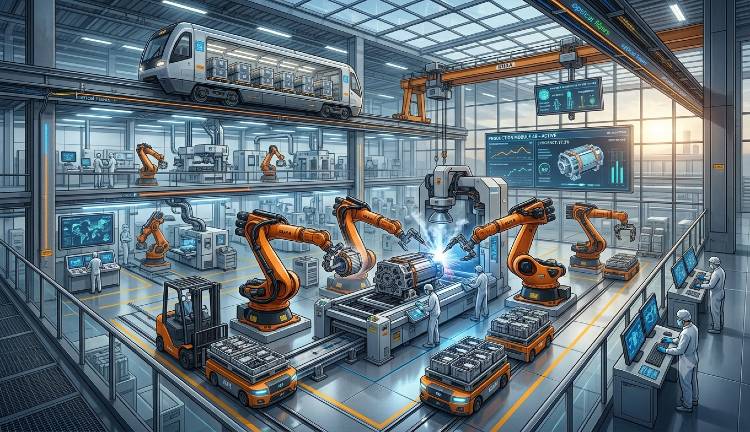

After completing 24 years of operations, PELF Infotech has launched a dedicated Digital Twin and Engineering Intelligence Practice, marking the company’s entry into its 25th year and the next phase of its evolution from engineering software enablement to connected digital engineering.
The new practice brings together multi-physics simulation, artificial intelligence and machine learning, engineering analytics, high-performance computing, design automation and connected product development within a unified offering for manufacturers and engineering-led organisations.
It is designed to help companies connect information that often remains distributed across product design, simulation, validation, manufacturing and operations—and use it to evaluate alternatives, identify risks and make more confident engineering decisions before committing resources to prototypes, tooling, production changes or physical assets.
The launch comes as manufacturers increase investments in smart factories, simulation-led product development and industrial AI. Deloitte’s 2026 Manufacturing Industry Outlook reports that 80% of surveyed manufacturing executives plan to allocate at least 20% of their improvement budgets to smart-manufacturing initiatives.
In India, PwC’s Digital Factory Transformation Survey found that 54% of surveyed companies had demonstrated an upward implementation trend in analytics and AI. At the same time, 38% were yet to establish a digital-transformation roadmap—highlighting the gap between adopting individual technologies and building connected engineering environments capable of delivering sustained value.
Ajinkya Huddar, CEO and Managing Director, PELF Group of Companies said, “A digital twin becomes valuable only when it improves a decision. It must do more than reproduce the appearance of a product, process or asset; it should bring together geometry, physics, engineering knowledge and relevant data to explain what may happen before time, material or capital is committed. That is the purpose around which we have structured this practice.”
Unlike a static three-dimensional model, a digital twin is an evolving virtual representation of a product, manufacturing process, machine or industrial system. Supported by engineering rules, simulation and real or modelled data, it can help organisations examine behaviour, compare operating scenarios, assess the impact of changes and identify performance risks before physical intervention.
PELF’s Digital Twin and Engineering Intelligence Practice will focus on four principal areas:
Digital twins for products and processes
Development of connected engineering models that represent product behaviour, manufacturing processes and industrial systems against clearly defined technical or operational objectives.
Simulation-driven engineering
Application of structural, thermal, fluid, electromagnetic and manufacturing-process simulation to assess performance, improve design confidence and identify risks earlier in the development cycle.
Engineering intelligence and AI/ML
Use of engineering analytics, artificial intelligence, machine learning and high-performance computing to examine complex variables, recognise performance patterns and support evidence-led technical decisions.
Design automation and connected product development
Integration of design rules, simulation, product data and collaborative engineering workflows to reduce repetitive work, improve consistency and retain critical organisational knowledge.
The practice will support applications including virtual product validation, engineering change analysis, manufacturing-process optimisation, design-rule automation, failure investigation, performance assessment and condition-based decision support. Engagements may range from focused engineering studies and proof-of-concept models to broader implementation programmes connecting multiple engineering applications, datasets and decision processes.
The practice builds on PELF Infotech’s established design-to-manufacturing portfolio across CAD, CAM, CAE, product-data collaboration, engineering customisation, design automation, reverse engineering, implementation support and technical services. PELF Engineering complements these capabilities through digital twin solutions, multi-physics simulation, AI/ML, engineering analytics and high-performance computing.
Founded in Pune in 2002, PELF Infotech today serves more than 1,000 businesses across India and has supported 10,000 installations across its commercial and education segments combined. Its experience spans engineering and manufacturing environments across high technology, machine design, energy, medical devices and defence-ancillary industries.
Ajinkya adds, “When PELF began, the immediate transition for many engineering teams was from 2D drawings to 3D product development. The industry is now undergoing an equally important shift—from creating digital models to building engineering intelligence around them. Companies that can test more decisions virtually, reuse knowledge and connect information across functions will be able to innovate faster and with substantially greater confidence.”
The launch positions PELF’s 25th year not simply as a corporate milestone, but as the beginning of its next technology chapter: helping manufacturers move from fragmented engineering applications towards connected systems that can model, analyse and continuously improve physical-world performance.