

Rebuilding finance from first principles: Aditya Birla Capital’s CTO on AI, architecture, and the road to 2030
Over the last decade, the financial services industry has transformed more rapidly than at any point in its history. But what lies ahead is even more profound.

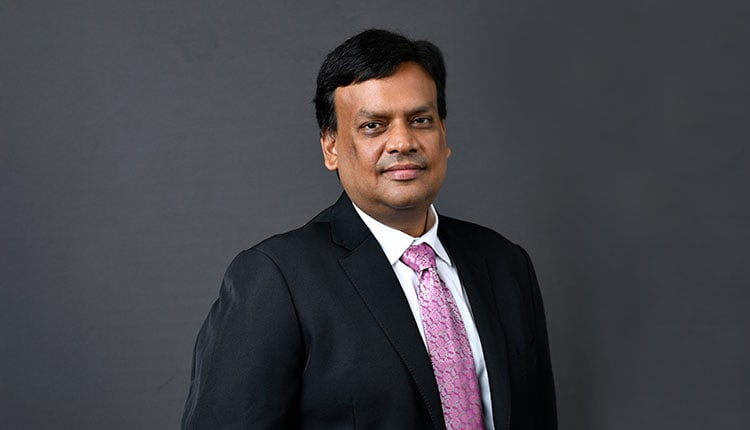

As financial services enter an AI-first era, technology leaders are being challenged to rethink not just systems, but the very foundations on which they are built. In this wide-ranging conversation, Ramesh Narayanaswamy, Chief Technology Officer, Aditya Birla Capital, shares his perspective on how AI, data, cloud, cyber security, and workforce transformation will redefine financial institutions by 2030. From rebuilding core systems and simplifying customer journeys to embedding governance with empowerment, he outlines why the next decade will be less about incremental upgrades and more about starting from first principles.
How do you envision the financial services landscape in 2030, and what core technologies will reshape how institutions operate?
I often tell people to think in days rather than years. Five years sounds long, but it’s barely 1,800 days. When you see it that way, you realise how little time we actually have.
Over the next five years, AI will reach its peak in terms of adoption and impact. The way technology is used and projects are delivered will fundamentally change. A lot of systems built over the last 20–30 years may simply not be fit for an AI-driven world. We will see large-scale rebuilding of systems from first principles.
Customer journeys as we know them – screens, forms, multiple clicks – will no longer exist. If intelligence is embedded into the system, customers should need to provide only minimal information to get a loan, open an account, or apply for a credit card. Journeys will become intent-driven, not screen-driven.
Cyber security will also evolve significantly. Today, most organisations rely heavily on off-the-shelf security solutions. In the future, there will be greater scope to build more customised, in-house security capabilities that reflect each organisation’s unique operating environment.
Finally, cloud and data platforms have matured considerably. Over the next five years, the focus will shift from adoption to value creation, building resilient, always-on systems that deliver consistently. Many of the things we aspired to do over the last decade will finally become reality.
What should be the ultimate architectural vision for a financial organisation by 2030?
From a fundamentals perspective, not everything has changed. Integration remains one of the biggest challenges. AI gives us new ways to think about integration, whether through APIs, agents, or entirely new paradigms.
Testing is another area that still poses challenges despite years of progress. In theory, if you test what you code and deploy what you test, problems shouldn’t arise. In practice, complex ecosystems make this difficult. Simplifying the ecosystem will become critical, and I expect more in-house development as organisations tailor solutions to their specific needs, especially diversified NBFCs like ours.
Data protection regulations will also force a rethink of data architecture. Consent, storage, sharing, and usage boundaries will become central design principles.
At the same time, organisations cannot abandon existing investments overnight. One interesting architectural lever is disaster recovery and business continuity. Instead of mirroring production systems, organisations may experiment with alternative DR architectures, gradually building functionality and eventually flipping the switch. This allows transformation without disrupting a running business.
Cloud, data platforms, real-time streaming, and networks have all matured. With lower latency and better infrastructure, the opportunity now is to integrate these capabilities intelligently while preparing for the future.
How can financial institutions build a unified and ethical data fabric while ensuring privacy and trust?
Financial services operate in a highly regulated environment, and that is actually an advantage. Compliance must be absolute, there can be no gaps. Innovation cannot come at the cost of regulatory discipline.
With better data platforms and the advent of AI, old excuses around fragmented or inconsistent data no longer hold. Institutions must focus on servicing customers better and recovering quickly when something goes wrong.
Today, customers often receive better data-driven experiences from e-commerce companies than from financial institutions. That gap must close. Customers are also becoming more aware of the value of their data and will be more willing to share it if they see tangible benefits.
The future will place customers firmly at the centre. Trust will come from transparency, better service, and ethical use of data and AI.
Where will generative AI and hyper-automation create the most value by 2030?
If systems are built correctly, service interactions should reduce dramatically. Customers typically reach out when something breaks. In an AI-native environment, most routine queries will be resolved automatically. Human intervention will be reserved for complex, high-value situations supported by rich intelligence.
Sales, however, is far more complex. Many customers do not fully understand financial products. AI can play a crucial role in simplifying documentation, explaining fees and conditions, and helping customers make informed choices across providers.
Generative AI can fundamentally change how products are explained and sold. This is especially relevant in insurance, where India remains significantly underpenetrated. As legacy constraints fall away, insurtech will finally deliver on its promise, offering simpler, better-value products for customers.
What governance and ethical frameworks are needed for responsible adoption of emerging technologies?
Every business today is a technology-enabled business. But that doesn’t automatically make every organisation a technology organisation. For technology to work responsibly, everyone must understand its boundaries.
Training becomes critical, not just for technologists, but across the organisation. Governance cannot be centralised alone; empowerment must exist at the edges. When something goes wrong, employees should be empowered to act in the customer’s favour immediately.
Mistakes may still happen, but what matters is how organisations respond. Putting the customer first, admitting errors, and fixing them quickly builds trust. Governance with empowerment, continuous learning, and close collaboration with regulators will define success.
How should organisations address the tech talent challenge and workforce transformation?
The challenge is not just acquiring new skills, it’s redesigning roles, measurement systems, and incentives. Many employees have far more capabilities than their current roles utilise.
Reskilling should focus on redeploying latent skills, not just teaching new tools. Technology is accelerating work, freeing up time. The real question is how organisations use that time productively.
Annual budgeting and planning cycles also need rethinking. Work that once took years can now be completed much faster. Talent constraints are often planning constraints in disguise.
The biggest concern is entry-level roles. As automation increases, we must ensure pathways for new talent to enter the system. This will require industry-wide collaboration with governments and technology providers.
How must cyber security evolve in an AI-driven world?
Bad actors are always a step ahead. Fraud, phishing, and social engineering are at all-time highs. Email and messaging platforms remain the weakest links.
While regulatory compliance is necessary, it is not sufficient. There is an opportunity for organisations to build more software-driven, AI-powered security solutions tailored to their environments.
We are also learning that real-time is not always optimal. Controls such as transaction delays for new payees are effective risk mitigators. Cyber security will increasingly involve a balance between technology, regulation, and legal frameworks.
By 2030, cyber security will look fundamentally different – in implementation, enforcement, and understanding.
How will collaboration between financial institutions, fintechs, and technology providers evolve?
Collaboration models will change significantly. Traditional vendor-client relationships place most responsibility on the end user. In the future, co-creation will become more common.
Large service providers and financial institutions will jointly build solutions, leveraging shared knowledge of processes, compliance, and governance. Many legacy processes will disappear as systems become more intelligent and less screen-dependent.
Joint roadmaps, shared investments, and collaborative reskilling will define successful partnerships. Those who adapt will win; those who don’t will struggle.
One message for business and technology leaders preparing for 2030?
Focus on fundamentals, be it architecture, integration, and reliability. Strive for 100% availability. Even 98% uptime is not good enough.
Most failures today stem from avoidable, trivial errors. These must disappear. When real exceptions occur, customers and regulators will be far more understanding.
As technologists, we should aim to solve problems so thoroughly that when something fails, it is truly unprecedented and not because of basic lapses.
Watch the full insightful interview: