

When AI starts making decisions, pharma has to rethink the operating model


The harder question for pharmaceutical companies is no longer where AI can be deployed. It is where technology can be allowed to influence a decision, how much authority it should have and whether a human can still explain why that decision was made.
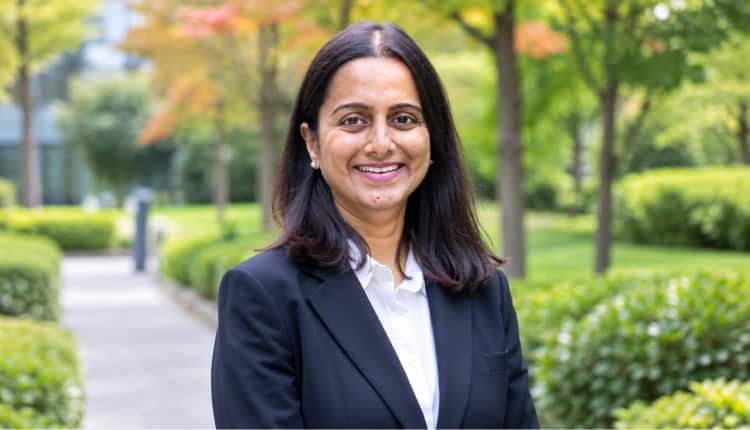
That distinction is becoming increasingly important as AI moves from analysing information to acting on it. For Sowjanya Varma, CIO at HRV Pharma, this marks a fundamental departure from earlier enterprise technology cycles. Previous transformations largely helped people perform existing tasks faster. AI, she argues, is beginning to change the nature of the decision itself.
“All our previous transformations were largely about helping people do what they’ve already done before,” Varma says. “When it comes to AI, it is slightly different because it can actually participate in the decision making process.”
For a pharmaceutical business, that distinction carries particular weight. The industry operates across products, suppliers, markets and regulatory requirements, creating an information environment where the difficulty is often not accessing data but making sense of it quickly enough to act.
“The challenge has always been around how do we make better decisions faster and be more informed,” Varma adds.
At HRV, that thinking has led to a deliberate shift away from treating AI as another automation exercise. The objective is not simply to take an existing process and make it faster, but to use intelligence to make pharmaceutical operations more scalable and resilient.
The end of the automation question
Varma is cautious about describing HRV’s AI journey through the language of automation. In her view, pharmaceuticals already have large volumes of data and numerous automation tools. The more consequential question is what organisations do with that information.
“We’re not going to pick an existing process and automate our way through it just because somebody is doing the same job over and over again,” she says. “The outcome that we are focusing on is how do we make pharmaceutical operations more scalable and resilient.”
That also explains the importance HRV places on keeping people in the decision loop. The company follows a human in the loop framework in which AI can surface intelligence and recommendations, but does not independently make business decisions.
RIKO is an AI-native pharmaceutical operating system launched by HRV Pharma.
“There is no automated decision that is being made by RIKO at this point in time,” she says. “We still wanted to have human intelligence that is augmented with AI. The goal is not to replace entirely with AI.”
The reasoning is particularly relevant in pharmaceuticals, where decisions can span regulatory requirements, suppliers, products and markets. As operations scale, the amount of information that humans need to evaluate can itself become a source of friction.
Varma points out RIKO is intended to address that problem rather than replace human judgement. Information that could once be managed across a smaller operating environment becomes considerably harder to handle when extended across multiple geographies, customers, products and regulatory requirements.
From answering questions to orchestrating workflows
The next stage of this evolution, according to Varma, is agentic AI. For HRV, the significance of agentic systems lies in their ability to move beyond answering questions and orchestrate a pharmaceutical workflow. She described a potential scenario in which a customer inquiry around a particular molecule could trigger an agent to identify relevant products and suppliers, assess qualified suppliers and evaluate regulatory fit, lead times and commercial competitiveness. The system could then surface suitable options and proactive risk signals.
What makes such an approach different is the context in which the agents operate. They are not simply working against generic enterprise data. They are expected to understand pharmaceutical products, suppliers, markets, regulatory requirements and operational outcomes. “The goal was never to build a collection of agents,” Varma notes. “It is to make sure that we build an AI native operating system.”
The distinction is important. Agentic AI, in this model, is not being positioned as a collection of disconnected productivity tools. It is being considered as part of how the organisation coordinates decisions, while humans remain accountable for the outcomes.
ROI cannot be reduced to headcount
The economic case for AI is another area where Varma takes a different view. While cost reduction remains an important consideration, she does not believe AI ROI should be defined purely through headcount reduction.
At HRV, the measures include fewer manual touchpoints, scalability, faster customer responses, better utilisation of teams and earlier identification of risks. The shift is also about changing what employees spend their time doing.
Teams that previously spent significant amounts of time finding, retrieving, consolidating and analysing information can increasingly spend that time evaluating options and exercising judgement.
“Cost efficiency is an important part, but for us I think the bigger opportunity at HRV is doing more business, scaling ourselves without adding the same level of complexity that we were dealing with before,” Varma mentions.
The company is also building baselines around AI enabled workflows rather than relying on anecdotal claims. Measures include the time taken to respond to an inquiry, manual intervention and the quality of recommendations. Varma believes the ROI story ultimately needs to be measurable rather than simply impressive.
Roles will change before they disappear
The impact on jobs is similarly more nuanced than a straightforward replacement narrative. Varma states AI is shaping entry level work, but distinguishes between entire roles becoming obsolete and individual tasks within those roles disappearing. At HRV, the emphasis is on removing repetitive information processing while retaining the business knowledge needed to supervise AI, validate recommendations and manage exceptions.
“I wouldn’t say they’re becoming obsolete. I would say they are evolving and that some of the tasks that they have been repetitively, mundanely doing are disappearing,” she says.
That means the skill profile of employees changes. People who previously spent much of their time gathering information will increasingly be expected to interpret it, challenge recommendations and make decisions.
From periodic reporting to continuous intelligence
The implications extend beyond internal operations. Varma believes pharmaceutical CIOs need much greater visibility into suppliers, manufacturing and distribution networks as supply chains become more vulnerable to disruption.
That requires a shift from periodic reporting to continuous intelligence. Disruptions rarely begin as a single dramatic event. They can start with a supplier’s lead time changing, reduced responsiveness or a small quality issue. Individually, these signals may appear insignificant. Together, they can indicate a developing problem.
“Resilience is really not about buying the business time,” Varma notes. “If you can see it earlier enough, you have more choices in how you respond.”
Autonomy raises the stakes
That increasing autonomy also changes the nature of AI risk. Varma said her concern is less about any particular model and more about what an AI system can access, which decisions it can influence and what actions it is permitted to take. In a regulated industry, an incorrect answer is one problem. An incorrect answer that an autonomous system acts upon at scale is another. “Every decision that is surfaced by AI, we need to make sure that there is traceability towards it,” she says.
Data security therefore cannot be treated as a separate AI problem. HRV continues to apply identity controls, role based access, least privilege, secure integrations and auditability. As agents gain the ability to act as well as read, Varma argues that they cannot become a back door around existing enterprise security controls.
For HRV, that may ultimately be the more consequential AI transition. The question is no longer simply whether machines can do more work. It is whether organisations can build enough intelligence into their operations without surrendering the accountability, context and judgement that remain essential to decisions in a highly regulated business.
