

How India is emerging as a strategic hub in Sodexo’s global digital transformation


In today’s fast-moving digital world, Sodexo is finding new ways to blend purpose with technology. From managing food and facilities across thousands of sites to tackling bigger issues like sustainability and food waste, digital transformation is now central to how they work.
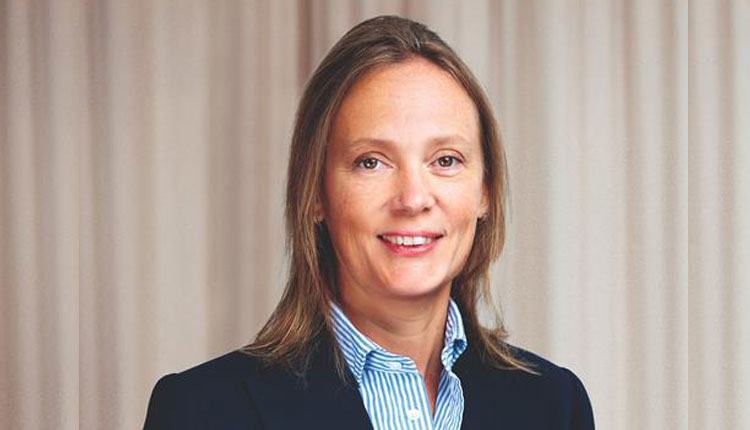
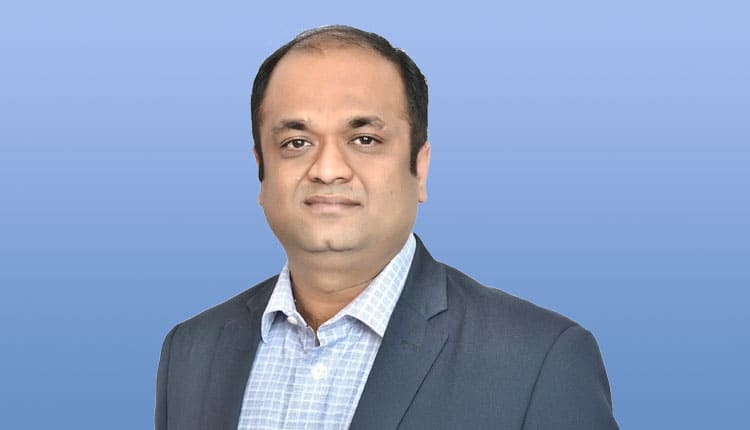
In an exclusive chat with Express Computer, Alice Guéhennec, Group Chief Technology, Data, Digital & Innovation Officer at Sodexo, and Amit Gupta, Head of Digital & IT, APMEA, talk about how AI, IoT, and data are making a real difference on the ground. They also share how India is becoming a key hub in Sodexo’s global digital journey, helping build smart solutions that work at scale.
Alice, as the Group Chief Technology, Data and Digital Officer at Sodexo, what are your key technology priorities for 2025 and 2026, given the rapid pace of change?
Alice Guéhennec: To begin with, it’s important to understand Sodexo’s scale. We are a €24 billion company with 423,000 employees serving 80 million consumers daily across 45 countries. Technology is pivotal in enabling us to connect with our workforce and customers, and in meeting our mission of being a market maker in sustainability offering healthy, low-carbon food that promotes well-being for both people and the planet.
Our top technology priorities revolve around three key areas. First, the consumer touchpoint is now digital. Mobile is the entry point for influencing consumer behaviour, encouraging choices that are both healthy and environmentally sound, this is where AI-driven recommendations become crucial.
Second, we focus on enabling our B2B clients to make data-driven decisions. For instance, decisions around café operating hours, food court layout, and crowd prediction can significantly improve client satisfaction while also reducing waste. AI helps optimise these choices based on predicted footfall.
Third, we aim to improve operational efficiency for our teams. AI and digital tools help us produce the right quantities of food, manage facilities better, and streamline services such as maintenance and cleaning. These pillars form the foundation of our global transformation roadmap.
To accelerate this, we have adopted a decentralised approach—what we call the “glocal model”. We empower regions like APMEA, led by Amit, to lead global initiatives. This allows us to blend global scale with local agility and speed of execution.
Amit, could you elaborate on how India is contributing to Sodexo’s global digital transformation agenda?
Amit Gupta: India is a strategic hub for our transformation—both in terms of talent and innovation. Let me outline four key aspects.
Firstly, we’re building products with a global mindset from India. We leverage local business knowledge and enterprise understanding to create digital solutions that can scale globally. For example, our B2C platform SoEze launched in just five months, originated in India and now has international deployment potential.
Secondly, the quality of tech talent in India is exceptional. When we build digital assets here, we ensure they’re robust and globally deployable. Another example is SoCampus, a facility management solution developed in India to enhance campus operations, which has global application.
Thirdly, our ecosystem is mature—rich in startups, academic institutions, and partners. We’ve established digital, data and backend application “factories” in India that are not only transforming local services but shaping global innovation.
Finally, we are engaging deeply with the startup ecosystem and academia to accelerate our journey. Our strategy here is not just aligned with the global vision and it is helping define it.
Given India’s large digital talent pool, how are you approaching hiring and retention locally? Are there any partnerships with academic institutions?
Amit Gupta: People are at the heart of Sodexo’s transformation. We’ve taken a three-pronged approach. First, we’re hiring aggressively and strategically. In the last year alone, we’ve hired over 100 professionals across India’s top cities—location is not a constraint; talent and mindset are.
Second, we’ve partnered with tier-one and niche technology firms depending on need, be it operations support, backend development, or digital and data solutions. These partnerships have brought our extended team strength to around 700 professionals.
Third, and most exciting, we are now formalising partnerships with leading universities both in India and globally. These will not only support future hiring but also shape collaborative R&D and curriculum development. We recognise that not all future tech leaders will come from traditional engineering backgrounds, so we’re open to interdisciplinary talent as well.
Alice, from a global perspective, how do you view this partnership with academia and the younger generation?
Alice Guéhennec: It’s absolutely vital. Being near top universities is non-negotiable, we want to be close to the next generation of technologists. While we may not attract talent in the same way as pure tech companies, we offer something deeper: purpose.
Our mission of feeding people, promoting well-being, and driving sustainability, resonates strongly with younger professionals. Also, with our global-local model, employees joining Sodexo have the opportunity to make an international impact from day one, which is a key draw for today’s talent.
How does India fit into Sodexo’s overall global digital strategy, and are there innovations from India that have inspired or scaled globally?
Alice Guéhennec: India plays a central role in our digital strategy. To balance global scalability with local relevance, we’ve adopted a “LEGO Box” approach. All our digital modules, whether designed for universities, corporates or healthcare clients are like LEGO blocks. They are standardised globally but assembled locally to create customised experiences.
India is at the heart of this modular approach. For instance, our digital factory in India is responsible for building reusable capabilities like AI-powered forecasting tools, such as the 4-site module, which predicts site traffic to reduce food waste and improve planning.
We’re also working on integrating personalised recommendations into SoEze, our consumer app, where users can select preferences (e.g., gluten-free, low carbon, spice levels), and AI will suggest relevant meals. This is an excellent example of digital and sustainability intersecting and the innovation is being driven out of India.
We have similar innovations coming from other regions like Brazil, the US, and France, but what’s critical is that all these modules work together globally to deliver a unified and consistent experience.
Sustainability seems to be a recurring theme. How are you using data to help clients reduce their carbon footprint?
Alice Guéhennec: That’s a very important part of our proposition. Thanks to AI and data, we gain valuable insights into consumer preferences and highlight the choices that positively impact health and the environment. We consolidate this information to offer real-time dashboards to our B2B clients, showing the carbon footprint reduction achieved via Sodexo’s services.
This data not only helps our clients meet regulatory requirements but also supports their own ESG commitments. One such module called SEA which is dedicated to calculating and showcasing the environmental impact.
Through this, we’re ensuring that sustainability becomes a shared, measurable journey for both Sodexo and our clients while actively engaging consumers in the importance of sustainability.
Sodexo has been a strong advocate of technology-driven personalisation along with sustainable innovation, particularly in the areas of food and facilities management. Could you share how technology is helping you deliver these twin goals across geographies?
Alice Guéhennec: We are using a lot of AI to achieve these goals. But it’s not just about us, it involves our entire supply chain. To understand carbon footprint, we use the term “from farm to fork.” This means we must account for everything: from the raw material producer, through the transformation process, logistics, and eventually the waste. Calculating carbon footprint isn’t straightforward; it’s actually a very scientific process involving multiple components. That’s where AI engines help. When data is available, we calculate it directly, but when it’s not, AI models assist in making smart assumptions and estimations. We also use these tools for predictions. A lot of our emissions stem from food waste, but equally, energy and water consumption play a significant role. Since we also work in facilities management, we use IoT in conjunction with AI to help our clients reduce their building’s energy and water usage.
Amit Gupta: Let me add a couple of real-world examples here. We’re in the business of managing facilities, and that includes remote mining sites in the middle of deserts. These sites rely on HVAC systems and generators. Earlier, if something failed or needed inspection, our engineers would fly out weekly to check the systems; imagine the carbon footprint involved. Now, we’re piloting IoT sensors to monitor the systems remotely. If anything starts to go wrong, the sensors alert us immediately. AI then predicts possible failures, allowing us to fix them before they occur. This eliminates unnecessary travel and drastically cuts down emissions.
That sounds like a prevention-before-cure strategy.
Amit Gupta: Exactly. It’s all about anticipation now. I’d also like to point out another angle—IT. It’s easy to preach sustainability to others, but we need to lead by example. Think of the mammoth IT infrastructure, we run servers, data centres, all of which consume vast amounts of energy and water. We are critically evaluating whether we truly need physical servers or should migrate more to the cloud. Even within the cloud, we assess which model provides more energy efficiency. This is how we are actively contributing to green IT—not just externally, but internally as well.
Food waste is a major concern. Are you doing something specific to tackle that?
Alice Guéhennec: Yes, very much so. Historically, Sodexo has partnered with WWF to survey the environmental impact of our industry. I attended their last session dedicated to the environmental impact of the food industry where they stated that the food system generates around 25% of all greenhouse gas emissions, which is massive.
Of that, a third comes from agriculture, the raw material production. As significant buyers of such produce, we have a responsibility to influence more sustainable, organic farming. Another third comes from the transformation process, so we work hard to reduce energy and water use during cooking in our kitchens. And the final third is from waste. Here, we play a crucial role in minimising it.
Post-COVID, predictability has taken a major hit. People working from home and moving between locations create complexities we can no longer manage manually. AI becomes essential to anticipate how many people will dine at a particular site on any given day. The more accurate the prediction, the better we can prepare food and the less waste we generate.
Now, we have been seeing companies use AI and IoT to monitor perishable food items and prioritise distribution based on shelf life.
Alice Guéhennec: Yes, exactly. In fact, in some countries, our clients ask us to adjust prices depending on the nutritional quality of the food. For example, a pizza might be priced higher than a green salad to nudge students, especially in schools, towards healthier choices. It’s part of client-driven policy and makes perfect sense in educational settings though it might not be as welcomed in corporate offices. We always adapt to our client’s environment.
You’ve mentioned AI, IoT, and data analytics as critical to improving client experience. Could you share a concrete example of how you’re using these technologies to enhance customer experience while also optimising operations?
Alice Guéhennec: A very practical use case is air conditioning. Our goal is to balance service quality with minimal energy consumption. Why should a building be fully air-conditioned when it’s only partially occupied? We use IoT sensors to collect temperature data and track occupancy—such as ID scans at the entrance. That data helps us calculate the occupancy ratio, and then AI adjusts the cooling systems accordingly. It sounds basic, but this is our daily work. Since we operate on client premises, we can’t impose our own devices everywhere. So, we’ve developed a modular platform—a kind of “Lego” system—that’s flexible enough to plug into various client environments worldwide.
Amit Gupta: Let me bring a bit of realism here. Sodexo is a legacy organisation with thousands of sites. We’ve grown both organically and through acquisitions. That means the quality of our data varies significantly. Without clean, reliable data, you can’t expect good AI outcomes. So, over the last 18 months, we’ve made data centricity a key pillar of our digital transformation. Every region is focused on improving data quality. In fact, we now measure data KPIs at the top leadership level. It’s hard work, but it’s fundamental.
Alice Guéhennec: I personally report monthly to our global CEO on improvements in data quality. It’s that critical. Without quality data, we can’t build scalable, intelligent systems.
As you are present across so many countries, leading digital transformation at scale must come with its challenges—especially around change management, employee training, and cybersecurity. What are the key enablers and barriers you encounter while scaling digital innovations globally?
Alice Guéhennec: : Thanks to our global-local approach, we’ve been able to bridge gaps and drive progress across regions. It’s especially helpful in addressing typical challenges like ensuring clear communication, raising awareness, and encouraging collaboration. When we build solutions close to the field, the business owns them more naturally. Amit shared a story with me about a site manager proudly saying, “I’m building an app.” But it was actually our global app, he just felt that ownership. That’s our aim: for digital tools to be seen not as IT projects, but business solutions. We spend a lot of time onsite, involving people right from the design phase. That level of engagement builds appetite for digital, and for AI.
Regarding GenAI, it’s tempting to restrict its use, but we’ve taken the opposite route. We let our teams explore GenAI within reasonable boundaries. That way, they become familiar with AI in daily tasks, and when we introduce more targeted AI tools, adoption becomes much easier.
Amit Gupta: Another common challenge is prioritisation. With the sheer number of initiatives across regions, things can get overwhelming, both financially and in terms of effort. We’ve shifted towards a “build once, deploy many times” strategy. Rather than duplicating efforts, we now focus on centralising development and then customising deployment. We aren’t fully there yet, but that’s the direction we’re heading in.
And to tackle this, we have frequent collaboration calls within the tech community. For instance, if someone in Australia has an idea, we ensure Brazil isn’t developing the same thing. That way, we avoid duplication and consolidate efforts.
With technology becoming smarter and more scalable, it helps organisations reduce manual effort and increase cross-functional efficiency. What technology trends do you foresee having the biggest impact on the food and facilities management industry over the next few years, and how are you preparing?
Alice Guéhennec: One trend I firmly believe in is Agentic AI. It will be a massive game-changer for us because Sodexo is all about people be it B2B, B2C, or operations. Agentic AI can empower different profiles across our organisation. But it will only work if we have the right data foundations in place. Everything we’re doing with data centricity, GenAI, and traditional AI is essentially laying the groundwork for Agentic AI.
Amit Gupta: I’d say edge computing is another key trend. We’re a site-driven business. Today we have thousands of sites; tomorrow, we’ll have more. The challenge is: how do we equip all of them with advanced tech and digital capabilities? That’s where edge computing comes into play. It brings the computing power closer to the site itself essential when you’re dealing with AI and IoT in energy-conscious environments. It’s still early days, but we’re watching this space closely.
