

India’s AI Future Hinges on Closing the Skills Gap Before It Widens

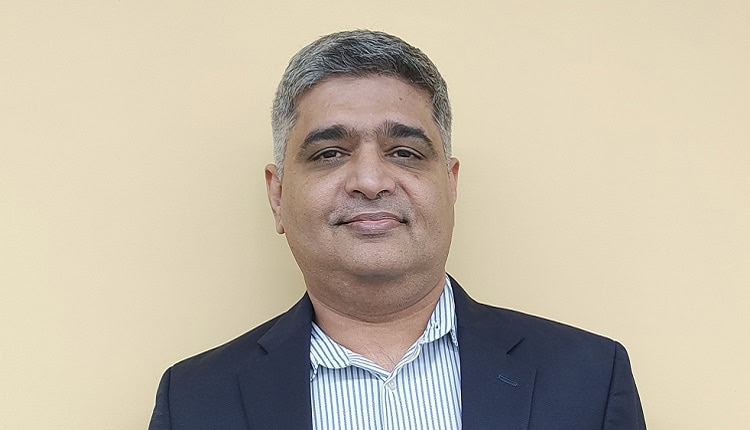

By Bhuvan Nijhawan, Senior Director – Education, SAS Asia Pacific
Artificial Intelligence is transforming India’s economy faster than any prior technology wave. From banks deploying generative AI (GenAI) for customer service to hospitals adopting agentic AI for clinical decision support, the scale of adoption is unprecedented. NASSCOM projects that India’s AI market could surpass USD 17 billion by 2027, growing at over 20% annually. Yet the country’s talent pipeline is struggling to keep pace. According to a Ministry of Electronics and IT (MeitY) report, India will need over 1 million skilled AI professionals by 2026 to meet industry demand. This gap between supply and demand will hurt India’s success in the AI landscape.
The challenge begins at the entry level. Most graduates enter the workforce without practical exposure to GenAI, prompt engineering, or responsible AI. AICTE itself has acknowledged this gap, declaring 2025 as the “Year of AI” and directing engineering colleges to embed AI topics into their core curricula. As a result, companies spend months retraining new hires before they can contribute to AI-enabled workflows. Mid-career professionals face a similar race, requiring major reskilling to remain relevant.
Another aspect to consider is how AI jobs are not only for coders anymore. Decision intelligence, low-code tools, and applied analytics create space for managers, domain experts, and business leaders to leverage AI. But they need to be equipped with the skills to read AI outputs, apply judgment, and ensure fairness. Ethics, compliance, and trust now sit alongside coding as key skills.
In many firms, business teams are now expected to use AI dashboards directly, without waiting for data scientists. This shift means even non-technical staff must understand how AI results are generated and where errors may occur. For example, a banker using an AI credit model must know when to question the result if it looks biased. A doctor using an AI tool must check if the system has missed key patient data. These skills will be extremely important in the future as they demand deep domain knowledge and not just technical skills. The new AI worker, whether in finance, healthcare, or retail, must blend subject expertise with a basic grasp of how AI systems work. Without this mix, decisions risk being automated without accountability.
New roles reflect this change. GenAI workflow developers, AI governance specialists, and agentic AI engineers are now part of job postings. These roles demand a mix of coding, process design, and risk management but current skilling programs don’t match this need. To bridge this gap, initiatives like the SAS Academy for Data & AI Excellence are stepping in as enablers of workforce transformation. With a blend of GenAI, agentic AI and applied analytics, programs are designed to meet the evolving needs of both fresh graduates and mid-career professionals, helping them stay relevant in a rapidly changing AI landscape.
The transition from traditional roles to new-age AI careers can look like this:
Fresh Graduates → Data Analyst → GenAI Workflow Developer / ML Engineer
Business & Domain Professionals → Analyst / Manager → Decision Intelligence Specialist / AI Product Manager
Tech Professionals → ETL / Database Engineer → Data Engineer → Agentic AI Engineer / ModelOps Engineer
Leadership → Senior Manager → AI Governance Lead → Chief AI Officer (CAIO)
India also faces a geographic gap in AI skills. Most AI talent is concentrated in Bengaluru, Hyderabad, and Pune. Smaller cities and rural areas, where around 65% of India’s population lives, have little access to advanced skilling. If this divide is not addressed, AI growth will remain urban-focused, leaving out a large part of the workforce.
Policymakers are also stepping in.
The Government of India has launched the National Programme on AI and set up Centers of Excellence in cities like Bengaluru and Hyderabad. State governments are adding AI courses in technical universities. But the challenge is scale. With more than 40 million students in higher education, only a fraction get meaningful access to AI-focused training today.
A recent report by NITI Aayog says AI alone can potentially add USD 500 billion to India’s GDP by 2035. But this depends on narrowing the talent gap. To achieve this, India must rethink its skilling model, not just in terms of technical depth, but also in ethical judgment, domain fluency, and real-world application. Programs that combine hands-on learning with strategic thinking, like those offered by SAS and other ecosystem players, will be key to building a future-ready workforce.
India’s skilling model must hence shift to match new job demands. AI jobs now need both technical depth and ethical judgment. If India closes this gap, it will not just meet demand, it can grow to become the world’s leading hub for AI talent.