

GCCs in India must move from execution to ownership: Arvind Vaishnav, VP and Head of Philips Innovation Campus

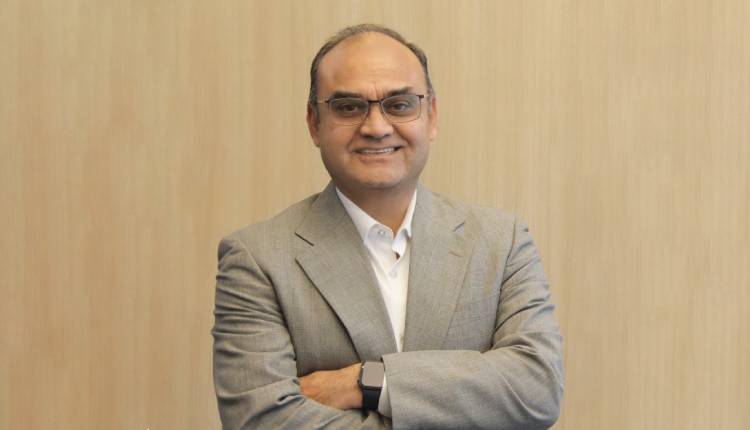

For years, GCCs in India were viewed primarily through the lens of scale and efficiency. Today, that narrative is being fundamentally rewritten. At Philips’ Bengaluru Innovation Campus, the conversation has moved decisively from cost arbitrage to ownership, impact, and IP-led innovation.
“The first question any GCC needs to answer is what value it wants to deliver,” says Arvind Vaishnav, Vice President and Head of Philips Innovation Campus – Bengaluru. “If the centre is set up only because there is a task that someone else doesn’t want to do, or purely for cost reasons, then neither the organisation nor the Indian ecosystem is adding real value.”
That clarity of purpose, Vaishnav believes, is what separates high-performing GCCs from those struggling to demonstrate return on investment—an issue increasingly visible as more Fortune 500 companies expand their presence in India.
Philips’ Bengaluru campus stands out precisely because it was never designed as a back-office or execution-only centre. Instead, it has evolved into a strategic GCC with focused ownership across software, AI, systems engineering, and healthcare domain innovation.
“I don’t look at this centre in terms of percentages anymore,” Vaishnav says. “I look at it in terms of value and impact.”
That impact becomes evident in how advanced technologies such as AI and digital twins are being built and operationalised from India for global healthcare systems.
While manufacturing happens at Philips’ Pune facility, the intelligence behind many of its most complex medical devices originates in Bengaluru. “From a technology standpoint, this is where a lot of the thinking happens,” Vaishnav explains.
One example he cites is the use of digital twins in MRI systems, an area where the Bengaluru centre plays a critical role. MRI machines rely on coils with finite lifespans, and failures can be highly disruptive. “When a coil fails, the customer immediately says, ‘I cannot do a scan,’” Vaishnav notes. “That means loss of revenue and patients getting rescheduled.”
By developing digital twins of these coils, Philips India enables predictive maintenance. “We can now tell users in advance that there is a high probability of a coil or its elements failing after a certain period,” he says. The result is better planning, fewer disruptions, and improved patient care.
This shift—from reactive support to proactive, intelligence-driven solutions—is emblematic of how GCCs in India must evolve, Vaishnav argues. “Are you solving real customer problems? Are you close enough to the end user to understand their pain points?” he asks. “Those questions are fundamental.”
Bengaluru’s emergence as a GCC hub was no accident, he adds. Nearly three decades ago, the city already had the building blocks global companies were looking for. “The technical education ecosystem was scaling up in a very significant way,” he recalls. At the same time, Bengaluru was establishing itself as a centre for IT and engineering services.
For healthcare-focused GCCs, however, another factor was equally decisive: access to clinical collaboration. “Without clinical collaboration, you don’t do anything,” Vaishnav says. The presence of leading hospitals, medical universities, and research institutions made Bengaluru uniquely suited for healthcare innovation.
Once Philips began seeing results, the mandate of the GCC expanded rapidly. “We stopped asking whether we were doing the right things and started building on success,” he says. Over time, the centre took on global ownership across multiple product lines.
Today, the Bengaluru innovation campus is responsible for a substantial portion of Philips’ global software development. “Most of the software work for our products happens here,” Vaishnav says. In some cases, the ownership is absolute. “For MRI systems, 100% of the software is developed here.”
The same holds true across ultrasound, CT, and image-guided therapy systems. Even in personal health products, where hardware manufacturing is distributed globally, the Bengaluru centre owns core software, AI models, and connectivity platforms. “The depth of work we do here cuts across all modalities,” he notes.
Talent, Vaishnav acknowledges, remains one of the biggest differentiators for GCC success—but also one of the biggest challenges. “When we hire fresh talent, we know they may not have the right expertise,” he says. “So we design structured programs to train them along the journey.”
For experienced hires, the bar is even higher. “Healthcare domain knowledge is critical,” he emphasises. “And image acquisition—especially for MRI and ultrasound—is not easy. That skill doesn’t come overnight.”
To address this, Philips Innovation Campus has built long-term partnerships with academia. “We worked closely with the Indian Institute of Science and several IITs when we were building imaging expertise,” Vaishnav recalls. Internships, he adds, are a key part of the strategy. “We bring in B.Tech and M.Tech students, train them, and gradually absorb them into the organisation.”
This sustained investment in talent and domain depth is what allows the GCC to contribute meaningfully to India-specific healthcare challenges—areas where Philips is increasingly driving IP-led innovation from within the country.
“The technologies we sell globally are available in India,” Vaishnav says. “We don’t differentiate by market.” What does change is how those technologies are contextualised. “Sometimes the interface or workflow needs to be tweaked for Indian users,” he explains. “We do that in collaboration with clinicians.”
SmartSpeed MRI is a case in point. “In most parts of the world, you don’t see 30 MRI exams a day,” Vaishnav says. “In India, because of population scale, it’s common.” The solution, he notes, was conceptualised and developed in India. “You can see the pride when clinicians say, ‘This was built here because the problem exists here.’”
For Vaishnav, this is exactly where GCCs in India must head next—towards ownership of problem statements, not just execution. “Are you bringing the right leaders? Do they have a vision? Are they connected to customers?” he asks. “If those pieces are missing, the GCC will struggle to deliver value.”
As India’s GCC ecosystem matures, Philips’ Bengaluru centre offers a clear lesson. Success is not defined by scale alone, but by the ability to move up the value chain—from cost centres to innovation engines with global relevance.
“This is an opportunity for India,” Vaishnav says. “If we get it right, we can show the world what Indian GCCs are truly capable of.”
