



As businesses increasingly operate in complex digital ecosystems, traditional security models are no longer enough to counter today’s intertwined financial, operational, and reputational risks.
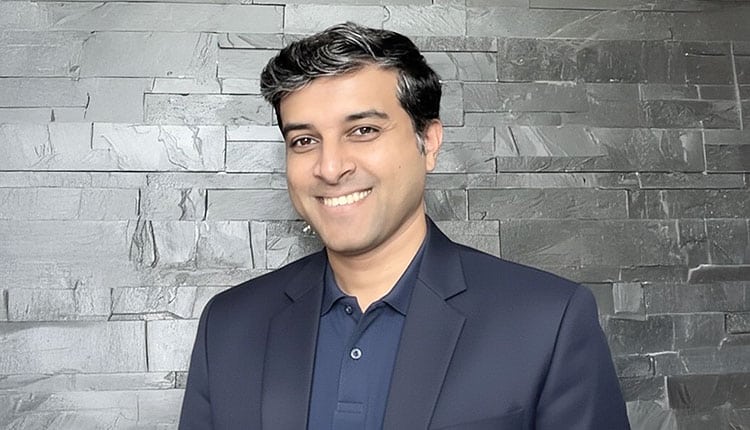
According to Rajesh Kumar S. A., CEO of Phronetic.AI, the AI company which is a subsidiary of Infibeam Avenues Ltd, the answer lies in deep integration of security and risk functions—powered by the intelligence and autonomy of modern AI systems.
“Agentic AI is not just another technology shift—it’s a new way of thinking about how organisations secure themselves,” says Rajesh. “It’s about creating systems that can detect, decide, and act faster than traditional models ever could.”
From reactive security to predictive resilience
Rajesh believes that organisations must evolve from reactive postures to proactive, AI-driven risk prediction. “Cybersecurity can’t be isolated from business operations anymore,” he explains. “Every financial, operational, or reputational exposure must be viewed through a unified risk lens.”
By using agentic AI — intelligent systems capable of acting autonomously — Phronetic.AI enables organisations to detect anomalies, evaluate risk levels in real time, and trigger automated containment responses.
“These agents can analyse transactional data, detect fraud-like patterns, monitor compliance breaches, and even predict potential reputational risks before they occur,” he notes.
Human oversight meets AI autonomy
While agentic AI brings speed and intelligence, Rajesh emphasises that human accountability remains central.
“Every AI agent should have a designated human owner responsible for its behaviour and outcomes,” he says. “Technology can assist decision-making, but governance ensures trust.”
Phronetic.AI promotes a framework where every autonomous agent operates under human-supervised policies — ensuring transparency, traceability, and ethical guardrails.
“Think of it as a digital nervous system where humans and AI continuously learn from each other,” Rajesh adds.
Integrating security and risk functions
In most enterprises, risk management and cybersecurity are often handled by separate teams—leading to communication gaps and delayed responses. Rajesh’s vision is to merge these functions into a single, AI-augmented ecosystem.
“When AI agents operate across both domains—security and risk—they provide unified visibility,” he explains. “That’s how you prevent not just data breaches, but also downstream financial and reputational damage.”
The integration also allows for cross-domain intelligence sharing: operational anomalies can trigger security reviews, and financial deviations can flag potential insider threats.
“This kind of convergence is the future of enterprise defense,” Rajesh asserts.
Continuous evaluation and safe experimentation
Agentic AI systems operate probabilistically — they learn and adapt continuously, making it vital to evaluate and sandbox their actions.
Rajesh recommends controlled environments for testing, monitoring, and validating AI behaviour before full-scale deployment.
“Like autonomous vehicles tested in safe zones, AI agents should evolve in monitored environments before operating across production systems,” he says.
This approach helps businesses balance innovation with safety, minimising exposure while accelerating learning.
A new era of AI governance
As AI becomes more embedded across industries, Rajesh sees governance as the new competitive differentiator.
“Companies that master responsible AI adoption will gain market trust faster,” he explains. “Governance, fairness, and explainability are no longer optional — they’re essential for brand reputation.”
At Phronetic.AI, these principles are embedded within every product and platform. Rajesh envisions an era where businesses quantify and audit AI risks just as they do financial audits today.
Balancing innovation and trust
Agentic AI represents both a technological leap and a governance challenge. Rajesh’s approach reflects a pragmatic balance—embracing automation without surrendering accountability.
“When security and risk functions operate as one, supported by intelligent agents, organisations can predict, prevent, and protect simultaneously,” he concludes.
In the rapidly evolving digital landscape, that integration may very well be the cornerstone of resilient, trustworthy, AI-driven enterprises.
