


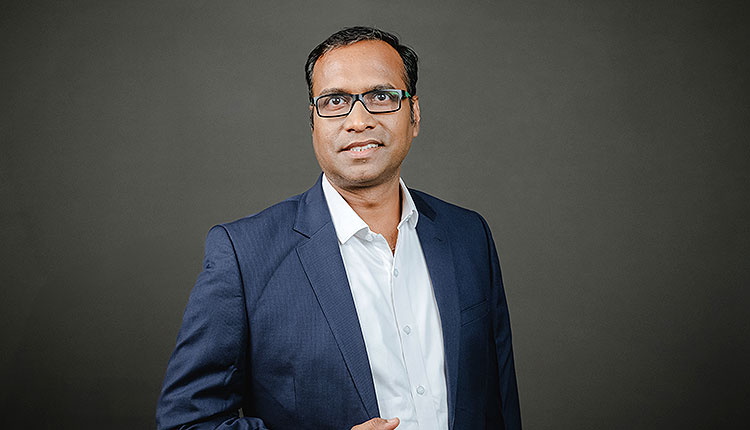

With incidences of fraud becoming more organised, intelligent and systematic in the Indian financial market, there is a noticeable shift in fraud prevention strategies. Anil Sinha, Chief Technology Officer, Fibe, shares why digital lending platforms, therefore, have to reconsider their strategies and adapt to new changes for the betterment of the overall system.
While interacting with Express Computer, Sinha highlights various facets of the changes that have occurred recently, including the evolving nature of fraud, the failure of existing detection mechanisms and what the next stage of fintech security would look like.
Fraud is now organised, systematic and intelligent
As we speak, one of the biggest changes that have taken place in the last few years is that of fraud transitioning from being something isolated and individual in nature to becoming organised and intelligent. Fraudsters no longer work alone but use sophisticated techniques such as mule networks.
In addition, there is an emergence of synthetic identities and social engineering through artificial intelligence. Criminals are combining both authentic and fake identities to circumvent detection and, at the same time, leverage artificial intelligence to commit impersonation attacks and trick users into divulging personal information.
“Synthetic identities have become far more sophisticated, and fraudsters are using AI to scale social engineering tactics, from impersonating customer support to creating urgency-led scams that trick users into sharing OTPs,” says Sinha.
What makes detection even more challenging is that fraudulent behaviour is now designed to closely mimic genuine users. Static rules and predefined thresholds are no longer sufficient. “Rule-based detection simply cannot keep up, we are also seeing document tampering and emerging risks like deepfake-led identity spoofing during KYC, which is fast becoming a next-generation risk,” he adds
Moving beyond rules: Embedding intelligence into the architecture
In high-velocity fintech environments, reactive fraud detection is no longer viable. The shift is towards embedding intelligence directly into the system so that risk can be identified and acted upon in real time.
At Fibe, this transition is being driven by graph-based machine learning and adaptive data pipelines that enable a connected view of risk rather than isolated signals. Sinha explains, “With our graph ML engine, we are able to uncover hidden relationships across devices, IPs, geolocations, and transaction patterns in real time. This moves us beyond isolated signals to a connected view of risk.”
This is complemented by continuously evolving machine learning models and real-time decisioning capabilities that allow fraud to be stopped at the point of entry—rather than after damage has occurred. “The focus is on real-time decisioning, where risks are identified and blocked at the onboarding stage itself rather than being addressed later.”
A multi-layered approach, combining behavioural signals, device intelligence, and document verification, ensures that fraud detection is both comprehensive and adaptive.
Behaviour: The new signal
As fraudsters continue to improve their ability to forge identities and documents, behavioural analysis is now one of the most trusted ways of early identification of risks.
Rather than analysing only the data that users provide, the focus has shifted toward looking at the behaviour of such users.
Sinha points out, “Behavioural anomaly detection involves analysing how users act and not necessarily what they submit. Device fingerprinting issues, geolocation anomalies, and speed anomalies have proven to be quite successful.”
Another way of identifying fraud networks has been enabled by graph analysis. “Graph-based link analysis helps us uncover connections across users and identify organised syndicates much earlier,” says Sinha.
At the same time, scalability remains critical. Detection systems must operate in real time without slowing down the user experience. “We prioritise high-signal, low-latency features that enable real-time processing while maintaining a seamless experience for genuine users.”
Designing security without compromising experience
One of the biggest challenges in digital lending is balancing fraud prevention with frictionless onboarding. However, users will want immediate approval and smooth experiences, without compromising on security.
The solution comes in risk-based and adaptive security models that add friction only when required. “At Fibe, our AI-powered risk-based authentication model works in such a way that extra validation steps are triggered only when the level of risk is high. In fact, for most users who have nothing to hide, the process of security happens behind the scenes,” he points out.
Automation is another critical component that helps eliminate manual processes and speed up decision-making. “Fibe’s underwriting is automated through AI risk models, which allows for immediate credit approval in less than a minute; only extreme cases require human oversight.”
Emerging markets, emerging threats: Reassessing models for Bharat
As digital lending ventures into the second and third tiers of the market, there are new issues that need to be addressed. The type of fraud seen in such areas may depend on how users behave, what they know, and the limitations of their physical environment.
“We are observing more social engineering-based fraud… and assisted fraud schemes where intermediaries take advantage of first-time borrowers,” says Sinha, adding that the lack of credit history, the use of common devices, and poor documentation can render conventional risk models ineffective.
He believes risk models need to become far more adaptive and context-aware, moving towards persona-based models that rely on alternative and behavioural data.
Localisation is also becoming critical, not just in risk detection but also in how platforms interact with users. “We are building AI-led conversational interfaces that interact in local languages and adapt questions in real time, making the journey more inclusive.”
Building trust beyond technology
While advanced technologies are critical, fraud prevention is no longer just a technical problem; it is an ecosystem challenge.
Fibe’s approach includes a strong focus on user education, awareness campaigns, and collaboration with partners to build long-term resilience. “Fraud prevention today is as much about building awareness as it is about building technology. We invest in multi-channel education to reinforce simple messages like ‘Pause. Think. Act.’”
By addressing both human behaviour and technological vulnerabilities, fintechs can create a more secure and trustworthy environment for users. “We see fraud prevention as a combination of strong technology, informed users, and active collaboration; this integrated approach helps build trust over time,” he asserts.
The road ahead: Intelligence, adaptability, and trust
As fraud continues to evolve, the future of digital lending security will depend on how effectively organisations can shift from reactive defence to predictive resilience.
Static systems will give way to adaptive architectures. Identity checks will be complemented by behavioural intelligence. And trust will not be developed by relying on technology alone; it will need to be achieved through awareness, transparency, and collaboration within the ecosystem.
The lesson for fintechs in all this is straightforward: fraud is not some secondary consideration; it must become a primary design concern. And overcoming it may demand that we rethink our entire approach to creating digital lending systems.
