

AI isn’t about scale for me, it’s about precision: Rahul Tomar, CTO, Shriram Life Insurance

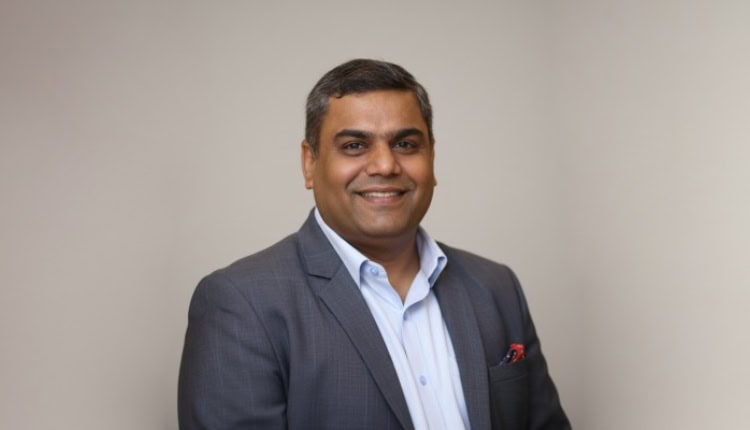

In the fast-evolving intersection of food, technology, and consumer behaviour, Rahul Tomar, CTO of Shriram Life Insurance, frames a compelling narrative around what it truly means to build a modern, resilient, and intelligent digital platform. His perspective is not rooted in theory, it is forged in the operational intensity of real-time consumer businesses, where every second of delay translates into lost revenue and eroded trust.
“It’s almost 18 years since we built the brand,” he reflects, pointing to the accumulated complexity that comes with scale. “Since then, there have been a lot of legacy systems and integrations. The fundamental goal when I came in was how do we build unification?”
That idea of unification sits at the heart of Tomar’s philosophy, creating a single, scalable platform capable of supporting multiple brands, geographies, and business models. What began as a single-product journey has evolved into a multi-brand, omni-channel ecosystem spanning QSR, FMCG, and HoReCa. But with expansion came fragmentation, and with fragmentation came the need for a cohesive digital backbone.
“We need to build a platform which is multi-country, multi-tenant, and multi-brand supported,” he explains. “So that I can build a system once, and other brands can be easily integrated.”
The real battleground is experience, seamless, predictive, and deeply personalised. Tomar is clear that digital transformation in consumer businesses is not just about transactions; it is about orchestrating experiences across every touchpoint.
“For me, a consumer transacting in-store, on a POS, or on an app, it’s all the same consumer experience,” he says. “You can’t leave any part of that experience apart.”
AI: From buzzword to business lever
This is where AI begins to move from buzzword to business lever. Tomar is pragmatic about its adoption. “I’m not in a rush to try multiple things,” he says. “I need to pick one or two use cases and get them right.”
The first of these is personalisation, but with restraint. “You need to build AI with UX in mind,” he explains. “If I only show you spicy food because that’s your preference, I might lose you when you’re ordering for your family.”
The second is predictive intelligence, particularly in logistics and fulfillment. In a business where delivery timelines define customer satisfaction, Tomar’s team is building systems that anticipate delays before they occur.
“If an SLA is about to be breached, we notify the consumer,” he says. “In some cases, it’s better to cancel the order proactively and issue an instant refund than keep the customer waiting and frustrated.”
This emphasis on transparency and proactive communication reflects a deeper shift, from reactive service to predictive engagement. It extends into how estimated delivery times are calculated, combining kitchen prep time, rider availability, traffic conditions, and real-time variables into a dynamic ETA engine.
“Consumers just need one line, how long it will take,” he says. “That decides whether they order or not.”
Yet, for all the sophistication in backend systems, Tomar believes the real differentiator lies in owning the customer relationship. This is driving a strong push toward direct-to-consumer platforms.
“Working with partners will not make us a food-tech company,” he states. “You need to build in-house, own the data, and go deeper into insights.”
Privacy, control, and compliance
Owning data, however, comes with responsibility, especially in an era of tightening regulations like India’s Digital Personal Data Protection (DPDP) framework. Tomar emphasises a privacy-first approach.
“We only take minimal data, primarily phone numbers for login,” he says. “Consumers have full control. If they want to delete their data, we do a hard delete.”
At the same time, all sensitive data is encrypted, both at rest and in transit, ensuring that even in adverse scenarios, it remains unusable.
Preparing for an agentic future
Beyond the immediate horizon, Tomar is already thinking about what comes next as a world where interfaces themselves may disappear. With the rise of agentic AI, consumers may no longer browse apps or menus, they may simply instruct an AI to place orders on their behalf.
“Why browse a menu for two minutes if I know exactly what I want?” he asks. “We need to make our systems compatible with that future.”
This forward-looking mindset extends to platform strategy as well. What begins as an internal capability could eventually become a product offering in itself.
“Once we build for our ecosystem and get it right, we can extend it to other QSRs or FMCG players,” he says.
In many ways, Tomar’s journey reflects a broader shift in how businesses are redefining themselves, not as product companies, but as technology platforms that happen to deliver products. It is a shift that demands not just new tools, but new thinking.
“You always need a product mindset,” he concludes. “Don’t just build for today, think about what the future will need.”