

The GCC story is expanding beyond IT and industrial giants are following the playbook

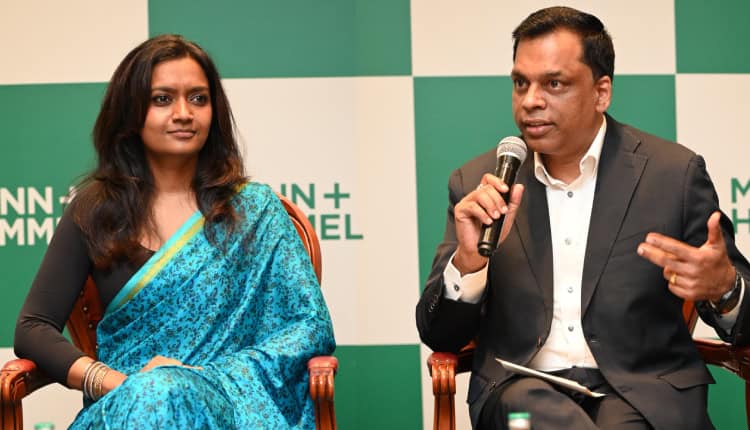

For years, global industrial companies largely viewed India through the lens of manufacturing, localisation, and cost efficiency while core engineering, product development, and strategic decision-making typically remained concentrated in headquarters across Europe or North America.
It is quite fair to argue that the model is steadily evolving.
As product cycles compress, supply chains regionalise, and customer expectations become more market-specific, global industrial enterprises are increasingly moving engineering, validation, digital operations, and innovation functions closer to key growth markets. In the process, India is once again being positioned as more than just a cost-efficient destination, this time as a globally integrated engineering and technology hub, in rhetoric strikingly similar to the now-familiar evolution story of Global Capability Centres (GCCs) in the country.
At MANN+HUMMEL, as their senior executives informed, that transformation has unfolded over more than two decades.
“What began as a localisation requirement linked to Maruti Suzuki has gradually evolved into a wider expansion of engineering, validation, and digital capabilities in India,” shares Sudeesh Karimbingal, Managing Director, MANN+HUMMEL India. The German filtration giant recently expanded its footprint further with the launch of a Global Technology & Innovation Center in Tumkur, Karnataka.
According to Karimbingal, the shift was driven by operational realities as much as long-term strategy. “Customers started becoming very aggressive in shortening development cycles,” he says.
Why industrial companies are decentralising engineering
For industrial manufacturers, the challenge today extends far beyond production efficiency. Increasingly, the pressure lies in reducing the time between design, validation, testing, and deployment while simultaneously adapting products for local operating environments.
“The product available in Germany most of the time cannot be applied in Indian conditions as it is,” Karimbingal says. “We need to customise and adapt it to meet local customer demands.”
That need for proximity is forcing many industrial enterprises to rethink highly centralised operating models that traditionally depended on headquarters-led engineering. Instead, organisations are building regionally distributed engineering and technology capabilities that function closer to customers and markets, arguably at a cheaper cost and at scale.
In many ways, the evolution resembles the broader GCC transformation underway in India, where centres that initially focused on support functions are increasingly handling strategic engineering, R&D, digital operations, and product responsibilities for global organisations. At MANN+HUMMEL, as the executives shared, that has involved building engineering and validation infrastructure in India aligned with global standards.
“Whenever we install equipment in India, we make sure the standards match what is installed in Germany, China, Korea, or North America,” Karimbingal says. “A product tested and released in India should give the same result anywhere in the world.”
The rise of region-led operating models
The senior executives also shared that the company’s operating structure reflects a larger shift underway across multinational organisations toward decentralised, region-led execution models. “The way we work today is increasingly ‘in the region, for the region’,” Karimbingal says.
While sourcing and operational decisions are becoming more localised, these companies are simultaneously trying to maintain globally consistent engineering and quality benchmarks. “In terms of sourcing strategy, we are completely independent because otherwise we cannot be competitive in this marketplace,” he adds. “But the quality and fingerprint of MANN+HUMMEL has to remain consistent globally.”
According to Hasmeet Kaur, President Transportation Division, MANN+HUMMEL Group, the decentralisation is visible in leadership structures as well. She says, “MANN+HUMMEL operates in a very non-concentrated way. It is not like leadership is sitting in Germany and everything is channelled through Germany.”
She also mentioned that the company’s passenger car business, despite the company’s roots as a traditional German industrial giant, is led from China by a Chinese executive, reflecting how multinational firms are increasingly dispersing operational and strategic leadership across geographies.
GCCs are expanding beyond IT into industrial engineering
India’s GCC ecosystem has long been defined by software, enterprise technology, business-process operations, and now industrial companies are also beginning to follow a similar playbook by expanding engineering, validation, digital manufacturing, and innovation capabilities from India.
At the same time, AI, all across the globe, is beginning to reshape industrial operating models, particularly across manufacturing and supply chains. “The biggest cost and efficiency impact we will see with AI is in manufacturing and supply chain,” Kaur says. “How does data talk to each other? How do we link customer demand to internal processes? AI will play a big role.”
Although widely associated with automotive filtration systems,Kaur also mentioned that MANN+HUMMEL today operates across sectors including mining, aviation, construction, defence, water purification, and healthcare among others.
India’s environmental and infrastructure constraints are increasingly becoming areas of industrial and engineering opportunity. The executives, when asked about their efforts in this front if any, pointed to the company’s collaborations with the Indian Institute of Technology Delhi on clean-air initiatives and with Ion Exchange on water-filtration technologies as examples of that shift.
India’s engineering talent is becoming globally integrated
As global organisations expand engineering mandates in India, talent development is becoming increasingly important. India-based teams are already contributing across areas such as electrification, hydrogen systems, fuel-cell technologies, validation engineering, and digital operations.
“There is no dearth of talent in India,” Karimbingal says. “But we need to develop them.”
That evolution increasingly relies on international exposure and cross-regional collaboration as Indian teams become more deeply embedded in global product-development cycles. Speaking during the media briefing at the launch of the Global Technology & Innovation Center, Karimbingal recalled how they selected a group of the brightest students from an Indian institution and sent them to Germany for further training and skill development, a relatively uncommon investment model among multinational organisations that typically view India through the lens of its already mature talent pool.
For industrial enterprises, the shift reflects a broader structural transition. India is no longer being viewed only as a manufacturing destination or back-office support market. Increasingly, it is becoming part of globally distributed engineering and innovation networks, a role that closely mirrors the next phase of GCC evolution in the country.
