

CMO Chronicles: SAS’s Kunal Aman on Brand, Trust and the Stories Worth Telling

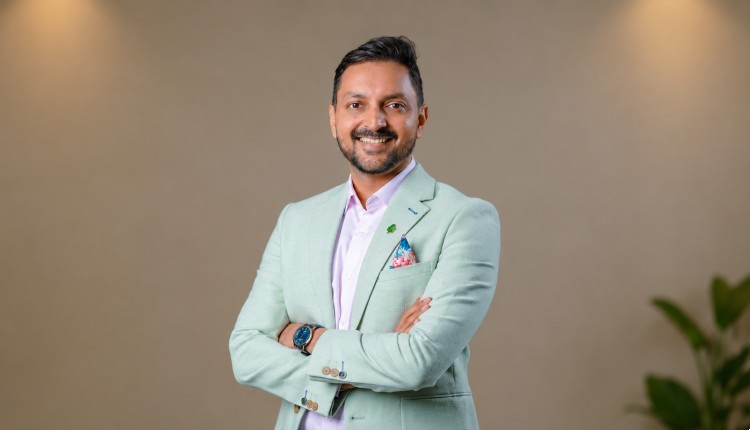

Some careers are planned. Kunal Aman‘s began with an iPhone launch.
Seventeen years ago, Kunal was an engineer at Amdocs, working with telecom clients such as AT&T, when he watched Apple build months of anticipation for a phone and turn launch day into a queue around the block. The experience changed how he saw products, stories and markets, and set him on the road from engineering to an MBA in Marketing at SP Jain.
Today, Kunal is Director and Head of Marketing for India, the Middle East, Turkiye and Africa at SAS. Along the way, he has marketed to the US and European markets, then India, Japan and APAC, and most recently the Middle East and Africa. He has played roles across corporate strategy, partner marketing, analyst relations, field marketing and communications. He built the marketing function for SAS India from the ground up, starting as its only full-time employee.
In this edition of CMO Chronicles, Kunal reflects on why enterprise marketing is a long game, how he defends brand investment in the boardroom, and why the best marketing stories are the ones with something real behind them.
Here is Kunal Aman in his own words:
The Path to the Corner Office
Marketing happened to me quite by accident, and thank God for that. I started my career as an engineer at Amdocs, working with telecom clients like AT&T back in 2007. While the tech exposure was great, I found myself getting increasingly interested in customer segmentation, number portability, voice and data bundling, and the thinking that went into building pricing plans.
The moment that truly changed things for me was being part of the global team supporting AT&T around the launch of the iPhone. Until then, most phone launches followed a familiar pattern: announce the device and put it on sale almost immediately. Apple built anticipation for months, and on launch day people queued for hours outside stores. What amazed me most was seeing the data and price plans shift in real time. The iPhone was presented as an internet device, an iPod and a phone all in one, and that encouraged customers to adopt richer, data-inclusive plans. We could see the effect on the telecom business almost immediately.
It gave me an idea of how a product, a story and a market strategy could completely change customer behaviour. That left me itching to learn more, and a couple of years later I pursued an MBA in Marketing at SP Jain. I have spent the rest of my career at the intersection of enterprise technology and marketing, which, for me, has been the perfect combination of analytical thinking, creativity and business impact.
Early influences
My career wasn’t shaped by one defining campaign or a single failure. It was shaped by a series of experiences, experiments and the privilege of working with some exceptional leaders, particularly at SAS: Alastair Sim, Bhupesh Lall, Patrick Xhonneux and Sameer Thakkar. They trusted me with responsibility and showed me how leadership can create the space, confidence and clarity for people to do their best work.
The one lesson that has stayed with me is the importance of looking beyond the immediate outcome. In enterprise technology, decisions are rarely made overnight. Customers take time to build confidence, gather perspectives and align stakeholders. That taught me patience, consistency and earning trust over time. It’s still how I approach marketing today: stay curious, stay humble, be collaborative, and never lose sight of the customer.
The Ever-Changing Stack
Our focus is less on the number of tools and more on the value they create. Every platform in our stack must help us better understand customers, improve decision-making or deliver more relevant experiences. Platforms that don’t integrate well, duplicate capabilities or aren’t used much by the team are candidates for consolidation or retirement.
Every platform we add brings cost, complexity, training, vendor dependency and another set of data to manage. So I prefer a smaller number of tools that work well together over a large stack that nobody fully uses. We’re prioritising integrated platforms that provide a unified view of the customer and support orchestration across the journey, such as our in-house SAS Customer Intelligence 360. With the rise of agentic AI, marketers need connected ecosystems rather than isolated point solutions.
Impact of Generative AI
What has changed most is how quickly teams can move from idea to execution. By automating repetitive tasks and helping with content creation and research, AI lets marketers spend more time on strategy, creativity and customer understanding. It’s almost as if each of my team members has an intern at their disposal who is ready when you are.
At the same time, human judgment remains essential. AI can generate possibilities, but we need people to provide context, oversight and decision-making to ensure relevance and trust. I see AI as an accelerator, not a replacement for human creativity and judgment.
Data, Privacy & the New Rules
These changes are encouraging marketers to build stronger first-party data strategies and customer relationships based on transparency and trust. I see that as a positive development for both organisations and consumers. Rather than relying on third-party signals, the focus is on creating value exchanges that encourage customers to share information willingly and confidently.
Measurement is evolving too. Traditional attribution remains important, but there is greater emphasis on understanding customer journeys holistically and evaluating long-term engagement alongside immediate performance. Trust has become a business asset, and organisations that approach privacy, governance and data stewardship responsibly will build the most sustainable customer relationships.
Pace of Technology
Earlier, new technologies emerged over several years and organisations had time to adapt. Today, entire categories can evolve within months, particularly with advances in AI. What hasn’t changed is the importance of understanding customer needs and delivering meaningful value. Technologies come and go, but those fundamentals remain constant. Keeping up is less about mastering every new tool and more about understanding which innovations will have a meaningful impact on customers and businesses.
Brand, Boardroom & the Bottom Line
Customers rarely buy from a company they’ve just discovered. Long before they’re evaluating solutions, they’re forming perceptions through industry conversations, thought leadership, customer stories, analyst perspectives and peer recommendations. That taught me the importance of mental availability.
We’re not only competing for today’s opportunities; we’re competing for a place in customers’ minds, months and sometimes years before they enter a buying cycle. When that moment arrives, the brands that are familiar and trusted often have a significant advantage.
That’s why I believe the best marketing balances building the brand with driving demand. They reinforce each other. In the boardroom, I try to be very clear about what each investment is expected to achieve, how we’ll measure it and over what timeframe. Some investments drive near-term pipeline; others strengthen awareness, preference and long-term growth. The goal is a portfolio that delivers both immediate impact and sustained competitive advantage.
Hardest thing to prove to the board
One of the boons I have is that I work for a Data & AI leader that has been in the business for 50 years, so everything we do is measured, and telling a business story around the data is second nature at SAS. Executives are less interested in activity metrics and more interested in how marketing builds pipeline, accelerates growth and strengthens customer relationships.
Having said that, the hardest thing to prove is the value of brand awareness. It’s relatively easy to measure leads, pipeline and revenue, but much harder to quantify the impact of being known, trusted and considered before customers are ready to buy. I make that case by connecting brand measures with business outcomes and looking at them over time rather than campaign by campaign, combining performance metrics with customer engagement, pipeline contribution, share of voice, brand preference and retention. Good marketing has to deliver today, but it also has to build the preference and trust that make tomorrow’s business possible.
Sustaining the Career
I’m one of the few lucky people who really enjoy what I do. I’ve played diverse roles, from corporate strategy, partner marketing and analyst relations to field marketing and communications. I started off marketing to the US and European markets, then shifted focus to India, Japan, APAC and, more recently, MEA. So there was always something new to immerse myself in. Building businesses from scratch, growing teams and developing markets has kept me engaged.
Personally, I’ve learned to accept that careers are rarely linear. Some phases are about growth, others about learning and sometimes simply about finding your balance. Keeping perspective, working with great teams, a good support system and enjoying the journey have helped me through the changes.
Single most important lesson
Relationships compound over time. Whether it’s with customers, colleagues or your own team, the principle is the same. Skills and roles will change, but the trust you build with people stays with you. Having led teams across MEA, India and Japan, I can confidently say: treat people well, create space for them to flourish and deliver on your commitments. You never know when someone you worked with years ago will become a colleague, a mentor, a customer or simply someone who opens a new door for you.
Reflections
There are a couple of moments I keep returning to. One is the work we did with the Government of Odisha during COVID, where SAS analytics helped bring together data on cases, testing, hospital capacity and resources so the government could make faster, more informed decisions during an incredibly difficult time. Another was our work with Rajasthan’s tiger reserves, where AI helped combat poaching and human-animal conflict.
They were very different problems, but they showed me what marketing can be at its best. We weren’t simply talking about technology. We were telling stories about how technology was being used to solve problems that genuinely mattered. Those experiences reminded me why I chose marketing in the first place: the best stories are the ones with something real behind them.
Accomplishment from career I am proud of
I’m probably proudest of building the marketing function for SAS in India from the ground up, along with setting up multiple verticals from scratch. I was the only full-time employee when I started, and seeing it grow into a formidable team and a significant partner to the business was incredibly gratifying.
We massively expanded our presence in Public Sector, started Healthcare and Life Sciences as a vertical, and grew each into a multi-million-dollar business. Along the way we won several prestigious recognitions, from ET’s Corporate Storytelling award and Most Promising Tech Marketers to The Drum B2B Award.
That journey led to expanded roles leading marketing and communications across multiple markets, from the Indian subcontinent to Japan and, more recently, the Middle East, Turkiye and Africa.
What makes me prouder is that almost everyone I brought into the team over the years is still part of it, and many across India and META have grown into bigger roles themselves. For me, that is the most rewarding measure of what I have built.