


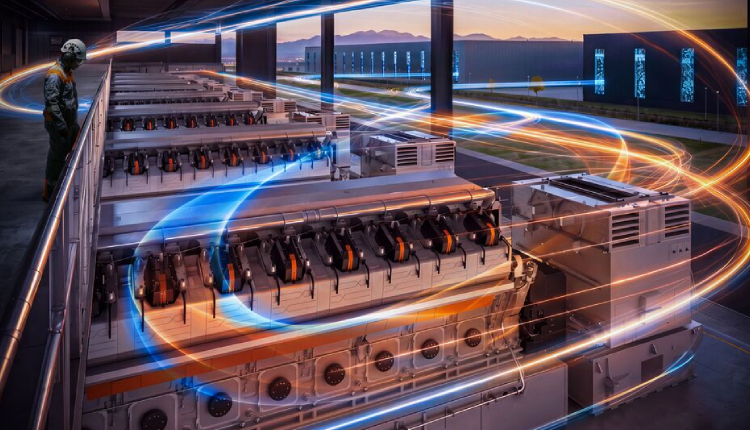

Flexible engine-based power systems could save up to €196 billion over 20 years while sharply reducing water and land use as data centre capacity expands, according to a new study by Wärtsilä.
The report, Unlock power. Unleash growth: How data centres can create tomorrow’s power system flexibility, models a scenario in which global off-grid data centre capacity reaches 55 GW by 2035. It finds that using flexible engines instead of combined-cycle gas turbines (CCGTs) could reduce water use by 99.97% and require land equivalent to 2,200 fewer football pitches.
With global data centre capacity projected to nearly triple by 2035, onsite power is gaining traction as developers seek to avoid lengthy grid connection queues. Wärtsilä says flexible engines could also provide backup power and, once facilities connect to the grid, help balance fluctuations in wind and solar generation.
The study argues that investing in flexible generation and energy storage alongside renewables could reduce the cost of balancing the power system and support a transition towards a fully renewable energy future. The projected savings, however, depend on suitable grid and market arrangements.
“Data centres are making headlines for the power they consume, but far less attention is being paid to what their energy infrastructure could give back,” said Anders Lindberg, President of Wärtsilä Energy and Executive Vice President of Wärtsilä.
The report also points to the potential to recover data centre waste heat for homes and businesses through district heating networks. Citing an International Energy Agency estimate, it says recovered heat could meet around 10% of Europe’s space-heating demand and generate €180 billion in net economic value over 20 years.