

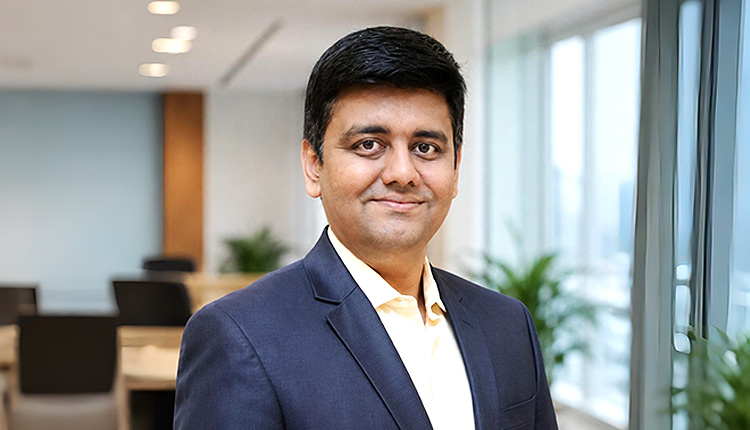
AI, data and trust driving MSME financing: Dhaval Kulkarni, CTO, RXIL


India’s MSME sector is increasingly becoming the backbone of the country’s digital credit ecosystem. As financing volumes grow and supply chains become more interconnected, platforms facilitating MSME financing are evolving beyond transaction processing engines into intelligent financial infrastructure layers built on trust, transparency and data-driven decision-making.
According to Dhaval Kulkarni, CTO, RXIL, technology today plays a far more strategic role than simply enabling transactions. It is becoming the foundation that allows multiple stakeholders, including MSMEs, buyers, financiers and regulators, to operate within a trusted and transparent ecosystem.
Building trust at scale
One of the biggest challenges in MSME financing is creating confidence among all participants while ensuring compliance with regulatory requirements. Unlike consumer lending ecosystems, trade finance involves multiple parties, large transaction volumes and complex verification processes.
“Technology is the foundation that enables trust and transparency within the TReDS ecosystem. Given the multiple stakeholders involved – including MSMEs, buyers, financiers, and regulators, it is essential to ensure that every transaction is transparent, traceable, and compliant,” says Kulkarni.
Digital onboarding, automated workflows, API-led integrations and real-time transaction visibility are helping create a more accountable financing ecosystem. However, technology alone is not enough. Governance frameworks, transaction audits and regulatory reporting continue to play a critical role in maintaining stakeholder confidence.
As adoption of digital financing platforms grows, the ability to scale without compromising transparency will become increasingly important.
Fraud prevention becomes a strategic priority
As financial ecosystems digitise, fraud risk remains one of the biggest concerns for both lenders and platform operators. The challenge is no longer limited to cybersecurity alone; it also extends to transaction authenticity, identity validation and duplicate financing risks.
According to Kulkarni, fraud prevention requires a combination of technology, operational controls and governance. “Fraud prevention requires a combination of technology, processes, and governance.”
Financial platforms are increasingly implementing layered validation frameworks that combine digital onboarding, video KYC, document verification, transaction monitoring and maker-checker controls.
Emerging technologies are also strengthening trust architecture. Distributed ledger technologies, for example, are helping address the long-standing issue of duplicate invoice financing, while early warning systems are enabling institutions to identify suspicious patterns before risks materialise.
As transaction volumes continue to rise, proactive monitoring and risk intelligence are becoming as important as transaction processing itself.
From transaction platforms to intelligent marketplaces
The next phase of evolution is being driven by data.
Financial platforms today generate large volumes of transactional information that can be used to improve risk visibility, customer experience and operational efficiency. Rather than acting as passive processing systems, modern platforms are increasingly becoming intelligence engines that support ecosystem-wide decision-making.
“Data is increasingly becoming a strategic asset within financial ecosystems”, says Kulkarni.
Advanced analytics and AI are beginning to help identify transaction patterns, strengthen risk assessment models and improve operational effectiveness. As adoption matures, these capabilities are expected to play a larger role in supporting business growth while enabling more informed decisions across participants.
For MSME financing specifically, better data visibility could help reduce information asymmetry, improve credit access and create more efficient financing outcomes.
Engineering for resilience and scale
While innovation often attracts the spotlight, infrastructure remains the foundation of every successful financial platform.
With transaction volumes growing rapidly across India’s digital economy, resilience, scalability and business continuity are becoming boardroom priorities. Financial platforms must be capable of handling increasing transaction flows while maintaining security, performance and regulatory compliance.
Kulkarni notes that future-ready architectures require a combination of cloud infrastructure, strong disaster recovery capabilities, API-led connectivity and continuous optimisation.
Beyond infrastructure, observability and governance are emerging as equally important considerations. As digital financial ecosystems become more interconnected, organisations need real-time visibility into platform performance, security posture and operational risks.
The focus is shifting from merely keeping systems available to ensuring that they remain secure, resilient and adaptable under rapidly changing business conditions.
The next chapter of MSME financing
Looking ahead, Kulkarni believes, “the future of MSME financing will be driven by interconnected digital ecosystems.”
APIs are expected to create deeper integration between banks, fintechs, government platforms and digital infrastructure providers. At the same time, AI will increasingly support automation, risk management and customer engagement.
However, technology alone will not determine success.
As digital credit ecosystems mature, organisations will need to balance innovation with governance, regulatory compliance and domain expertise. The institutions that successfully combine these elements will be best positioned to create trusted, scalable and efficient financing infrastructure for India’s growing MSME economy.
In that sense, the future of digital credit may not be defined by lending alone but by the strength of the technology and trust frameworks that support it.
