


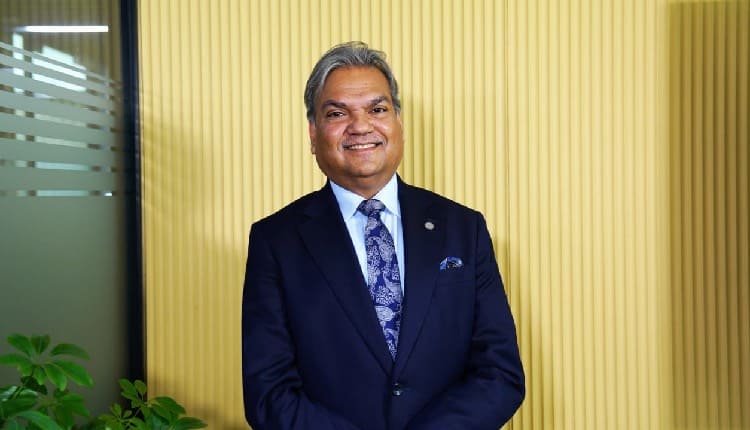

As the lines between work, gaming and content creation continue to blur, display technology is evolving into a far more specialised category. From esports players and creative professionals to enterprise users and Mac creators, different audiences now expect displays tailored to their specific workflows and experiences. In an interaction, Rajeev Singh, MD, BenQ India & South Asia and Jefferey Liang, President, BenQ Asia Pacific, discuss how the company is building focused solutions across gaming, enterprise, education and the creator ecosystem. The conversation also explores the growing importance of colour accuracy, the impact of hybrid working, the rise of AI PCs and why BenQ believes specialised displays will define the future of the industry.
What does BenQ’s current ‘Make in India’ strategy look like for the monitor business?
Rajeev Singh: Our ‘Make in India’ initiative is moving ahead step by step. We started with products that contribute a large share of our overall sales volume, such as our 21.5-inch monitors, which are already being sold in India. Over time, we plan to expand local manufacturing into more categories, but the focus will remain on products with larger market demand.
Premium products are a different category. The MA Series is a high-end monitor range for us, so there are currently no plans to manufacture these models in India. However, as volumes grow in the future, that could change.
Why has BenQ focused so strongly on Mac-compatible monitors?
Jefferey Liang: Around three years ago, we noticed a major gap in the market for Mac users. Many people using Macs struggled to find external monitors that could deliver accurate and consistent colours. Most users had to compromise in some way.
At BenQ, display technology and colour accuracy are among our biggest strengths. That is why we launched the first MA monitors around one and a half years ago. We started with two models designed to give Mac users a seamless experience. The response was very positive across markets, especially in India.
We also listened carefully to customer feedback. Some users wanted glossy displays, some wanted 5K monitors, and others were looking for higher refresh rates. That is why we expanded the range further, and we will soon introduce 120Hz monitors designed for Mac users as well.
This shows that there is strong demand in the Mac ecosystem.
How is BenQ approaching the gaming and creator markets?
Rajeev Singh: We are not repositioning ourselves in gaming or creator categories. We are simply going deeper into them.
Gaming itself is a very broad segment. Competitive esports players have completely different needs compared to people who play graphically rich AAA games. Esports players mainly care about speed and refresh rates, especially for first-person shooter games. Other gamers focus more on colour quality, graphics and immersion.
That is why we continue to offer specialised TN-panel monitors for esports users, even though many brands no longer focus on them. We believe every type of gamer deserves the right monitor for their specific needs.
The same thinking applies to creative professionals. We have dedicated monitors for YouTubers, Instagram creators, graphic designers, professional video editors and VFX artists.
India has become an important hub for VFX work, including projects for both Indian and Hollywood films. These professionals need highly accurate colours and reliable display performance, so we create products specifically for those workflows.
Why is colour accuracy such an important area for BenQ?
Rajeev Singh: Colour accuracy has always been one of BenQ’s biggest strengths. Today, creators use many different Mac devices such as MacBook Air, MacBook Pro, Mac Studio and Mac Mini systems. Each device has its own display characteristics and colour profile. The challenge comes when users connect them to external monitors because colours often look different.
Our MA monitors are designed to recognise the connected Mac device automatically. The monitor can identify the model, processor generation and colour profile, then adjust itself accordingly.
The goal is very simple. Whatever colours you see on your MacBook should look the same on the monitor. That consistency is extremely important for creative professionals.
BenQ has also built a strong position in education. What has helped the company grow there?
Jefferey Liang: Our growth in education comes from two things: innovation and deep understanding of users. BenQ is one of the leading brands in private K-12 education in India and several other countries. Schools invest heavily in technology, so it is important for us to understand how teachers and students actually use these products in classrooms.
We focus closely on user behaviour, what works well, what problems exist and how technology can improve learning experiences. Then our R&D teams turn those insights into practical products.
This approach applies across every category we work in.
How has hybrid working changed enterprise display requirements?
Rajeev Singh: Hybrid working has changed workplace expectations completely. Employees now want the same experience whether they are working from the office or from home. Earlier, companies mainly provided laptops, but working for long hours on a laptop screen is not ideal. So organisations started providing monitors both at offices and at employees’ homes.
What started during the Covid period has now become a long-term working model. Many companies now provide identical setups in both places so employees can move between home and office without any disruption. Consistency of experience has become very important.
Are you seeing similar trends globally?
Jefferey Liang: Yes, we are seeing this across many countries. For companies, it ultimately comes down to productivity. Working ten hours a day on a 13-inch laptop screen is not efficient. Businesses now understand that investing in proper monitor setups improves employee productivity.
We are also seeing companies become more flexible with remote and hybrid work because of changing business needs and operating costs.
For employees who already understand company processes and workflows, hybrid work can be very effective.
What role will enterprise business play in BenQ’s future growth?
Rajeev Singh: Enterprise is becoming a very important focus area for us.
We are working closely with specialised value-added reseller partners and system integrators across different industries. One major focus area is India’s growing Global Capability Centres, or GCCs.
These centres are expected to become one of the country’s largest sources of employment over the next few years. They require complete workplace ecosystems including workstation monitors, dual-monitor setups, conference room displays, interactive flat panels, wireless presentation systems and collaboration solutions.
This is an area where BenQ can play a strong role because we already have specialised products across these categories.
How do you see AI PCs changing enterprise workflows?
Rajeev Singh: Earlier, AI applications depended heavily on cloud processing, which meant slower performance and greater dependence on internet connectivity.
Now, AI PCs with dedicated NPUs are allowing more AI processing to happen directly on the device itself. This improves speed, reduces dependence on networks and increases productivity.
While monitors are not directly processing AI workloads, AI-driven workflows naturally require better displays and richer visual experiences. So the importance of high-quality monitors will continue to grow as AI adoption increases across enterprises.
What is the long-term vision BenQ is working towards?
Rajeev Singh: Our goal is to become a true display expert brand. We do not believe in creating one product for everyone. Instead, we divide our customer base into specialised segments and build solutions for their specific workflows and requirements.
Whether it is esports players, content creators, VFX professionals, enterprise users, educators or Mac users, every group expects something different from a display. Our focus is to provide solutions that genuinely improve the user experience.
That specialisation is where we believe BenQ’s long-term strength lies.
