

Digital twins help us validate AI before scale: Anil Menon, CIO, Lulu Group India

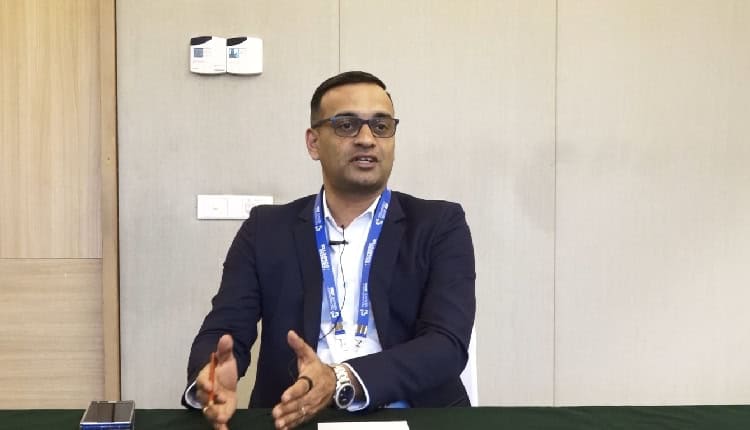

For enterprises operating at scale, technology is no longer just an enabler, it is a moving target. For Anil Menon, CIO, Lulu Group India, the challenge is not about chasing every emerging trend, but about making deliberate, culturally aligned choices in an increasingly complex digital landscape.
“Technology today is so vast that you simply cannot be everywhere at once,” Menon says. Instead of reacting to buzzwords, Lulu Group has adopted a pain-point-first approach. The organisation identifies its most pressing challenges, prioritises them, and then evaluates which technologies can meaningfully address those gaps. While access to information is easier than ever, Menon believes the real work lies in curation, adapting technology to the organisation’s environment and culture.
“That is where we spend most of our time today,” he explains. “How do you curate technology to fit your culture? That’s the difficult part.”
This philosophy extends to experimentation as well. Rather than making large, upfront investments, Lulu Group relies heavily on pilots and POCs. With cloud platforms lowering entry barriers, Menon sees value in testing ideas at a small scale before committing to full deployments. “The investments are minuscule, and the results are visible almost immediately. Then you can take a bold decision on whether to move forward.”
Managing complexity across a distributed infrastructure
Operating across India brings its own set of challenges, particularly in infrastructure management. Lulu Group runs its own data centres while simultaneously leveraging multiple public cloud platforms, including AWS, Azure, GCP and OCI. Workloads are distributed based on their nature, performance requirements and commercial viability.
The idea of a “single plane” of operations still exists, Menon says, but its definition is constantly evolving. “The challenge today is optimisation,” he notes, pointing to cost as a key concern. A workload that makes sense on the public cloud at one stage may later need to be reassessed for a hybrid or on-prem deployment.
Product architecture adds another layer of complexity. Many modern applications are tightly coupled with specific cloud services, making migration difficult. “If you want to move to a hybrid model, you really have to rethink how much of that product can be brought back and what migrations are required,” Menon explains.
Shadow IT remains a persistent issue as well, with teams sometimes spinning up services independently. “You don’t always know what has been pulled up on the cloud,” he says. Integrating such systems into a unified IT framework requires continuous governance and engagement.
Interestingly, legacy systems are no longer the primary concern. Menon views their phase-out as a strategic CXO decision already in motion. The bigger challenge now lies in cloud optimisation, deciding which data should reside on the cloud, for how long, and when it should be archived or moved back on-premises. “Data swelling will eventually create a commercial challenge if you don’t address it early,” he cautions.
AI adoption: Slow is the new fast
When it comes to AI, Lulu Group has deliberately resisted the urge to move too fast. “Slow is the new fast,” Menon says candidly. Acknowledging the high failure rates associated with AI initiatives, he believes organisations must be realistic about experimentation and learning curves.
“Use cases are coming up, but when you run them at scale, you really need to question whether they make sense,” he explains. To mitigate risk, Lulu Group relies heavily on digital twins, simulated environments where AI-driven interventions can be tested before being deployed in real-world scenarios.
Digital twins allow the organisation to identify false positives, false negatives and operational guardrails well in advance. “You can’t just dump AI into stores,” Menon says. “There’s a learning curve, and users need to understand how to work with it.”
From a retail perspective, digital twins also help balance customer experience with cost efficiency. AI initiatives span supply chain optimisation, inventory planning, assortment management and customer engagement. What began as business intelligence has now evolved into more advanced AI-driven insights that surface opportunity costs and hidden efficiencies.
Cultural transformation as the foundation
Technology transformation at Lulu Group has been underway for the past few years, but Menon is clear that cultural change is just as critical as technical capability. “We’ve spent a lot of time educating users, why we are doing this, what the gains are, and also what the risks might be,” he says.
The organisation has invested in future-ready skill sets and brought in younger talent with fresh mindsets, while also re-evaluating long-standing processes to improve agility. Automation has played a key role, particularly in routine, repetitive tasks, but Menon is careful not to overstate its impact. “This didn’t happen overnight. It happened because users were educated well.”
Despite these changes, Lulu Group’s core pillars remain intact. Customers, inventory, product quality, store experience and an employee-first mindset continue to anchor all technology decisions. “Technology is a journey,” Menon reflects. “You may not have the best outcome immediately, but as long as you are moving in the right direction, you are doing well.”
Measuring impact beyond numbers
For Menon, impact measurement starts with clarity. Every initiative begins with a clearly defined baseline. “Once you write down your problem statement and your numbers, you know what the real requirement is,” he says. Progress is then measured against agreed benchmarks over time.
In supply chain operations, for instance, moving efficiency from 40–50% to 70–75% is a tangible and visible improvement. But Menon is quick to point out that intangible benefits often outweigh measurable metrics. Enhanced customer experience, stronger loyalty programs and increased sales momentum are all outcomes driven by better use of data and technology.
“Analytics will throw out a lot of possibilities,” he says. “Your job is to pick what fits best.”
Navigating data protection and trust
As a customer-facing organisation, data protection is a non-negotiable priority for Lulu Group. With the role out of India’s DPDP framework, Menon acknowledges the presence of grey areas. However, he believes intent matters as much as compliance.
“From day one, we’ve put guardrails in place,” he says. Lulu Group works closely with partners and vendors to address gaps, even when architectural limitations exist. “It’s a collaborative effort. The ecosystem has to come together.”
For Menon, the guiding principle is simple: if something benefits the customer and safeguards their interests, it must be implemented, regardless of whether it is explicitly mandated yet. “As a brand, we have to be there for the customer,” he asserts.
As regulations mature and clarity emerges, Lulu Group will continue to adapt. But the underlying philosophy remains unchanged, technology must serve trust, relevance and long-term value, not just speed or scale.
