

Digitalisation is now core to manufacturing competitiveness: Swapnil Deosthali, Head – Digital Industries, Siemens

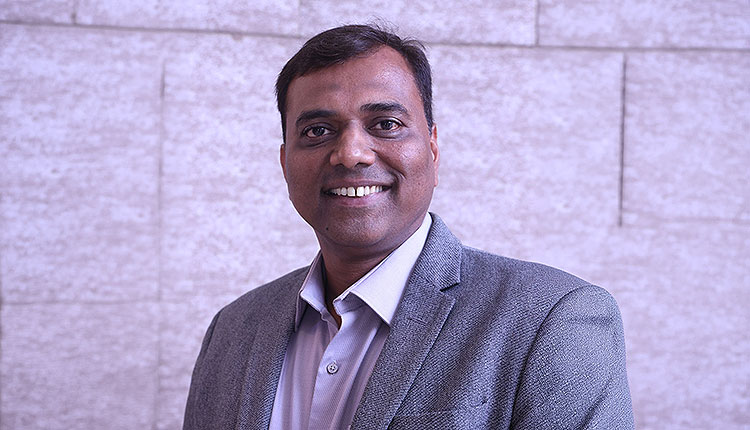

India’s manufacturing sector is entering a decisive phase. The pressure is no longer just to scale—it is to compete globally, respond faster, and operate sustainably. Across automotive, pharmaceuticals, FMCG, chemicals and engineering, manufacturers are rethinking how they design, produce and deliver. Digitalisation and automation are moving from incremental improvements to becoming the core drivers of transformation.
At the centre of this shift is the growing need for connected, data-led operations—where decisions are not based on hindsight, but on real-time insight. From digital twins and simulation to integrated software platforms and intelligent automation, technology is reshaping the factory floor as well as the boardroom agenda. The focus is clear: reduce time-to-market, improve quality, build resilience, and meet increasingly stringent sustainability and compliance requirements. Siemens Limited is working closely with Indian companies to enable this transition through its Digital Industries portfolio—bringing together automation, software and data to create end-to-end digital continuity, says Swapnil Deosthali Head – Digital Industries, Siemens
Swapnil shares a grounded perspective on how Indian manufacturers are adopting digital technologies to enhance competitiveness, improve operational agility and advance sustainability goals—and what it takes to scale these efforts across diverse sectors and complex operating environments.
Some edited excerpts:
Indian manufacturing is under pressure to improve productivity, quality, and sustainability—often simultaneously. From Siemens’ vantage point, what has fundamentally changed in how Indian manufacturers now view digitalisation compared to even five years ago?
Indian manufacturers have shifted from trial‑based adoption to viewing digitalisation as core to competitiveness and export readiness. They now prioritize integrating real and digital worlds to improve resilience, quality, and speed at scale. India’s rapid growth in automotive, electronics, and process industries is accelerating demand for Industrial AI, digital twins, and platform‑based transformation. Siemens Xcelerator helps manufacturers adopt these capabilities faster and at scale, making digitalisation a strategic growth driver.
Many Indian manufacturers are global suppliers but struggle with consistency across quality, cost, and compliance. How is digital adoption helping them bridge this gap and compete more effectively on the global stage?
Digital Twins and Industrial AI enable manufacturers to simulate, validate, and standardize processes, reducing variability across suppliers and multi‑plant networks. Real‑time transparency strengthens compliance and traceability required for global OEMs. Indian exporters in sectors like auto components, electronics, and pharma increasingly use Siemens digital tools to achieve first‑time‑right quality and competitive cost structures. This helps Indian plants match global benchmarks consistently.
Digital twins are often discussed in theory. Where are you seeing them deliver the most tangible value today—in reducing time-to-market, improving first-time-right quality, or de-risking complex engineering decisions?
Digital Twins dramatically cut engineering time by enabling virtual prototyping and reducing physical trials. Manufacturers use them to de‑risk complex decisions. For example, in EVs, electronics assembly, and chemical processing before committing capital. They also help improve first‑time‑right quality through integrated mechanical, electrical, and software simulation. In India’s brownfield‑heavy landscape, this reduces downtime and accelerates modernization.
In sectors like automotive and engineering, product lifecycles are shrinking rapidly. How are simulation and virtual commissioning changing the way manufacturers validate designs before anything is physically built?
Virtual commissioning allows testing automation logic and production flows digitally, reducing on‑site commissioning time by up to 60–70%. This is crucial as Indian automotive and machinery players face shorter model cycles and high customization demands. These tools help eliminate late‑stage errors and enable faster SOPs with fewer disruptions. Teams can train and validate processes without taking physical assets offline.
Siemens positions Siemens Xcelerator as an open digital business platform. How important is platform thinking in ensuring that digital initiatives don’t remain fragmented or pilot-bound? Can you give us some examples?
Most Indian factories operate with mixed legacy and modern systems, making integration the biggest barrier to scaling digitalisation. Siemens Xcelerator provides an interoperable foundation that unifies software, automation, edge, and cloud environments. Its partner ecosystem accelerates solution deployment and ensures digital initiatives don’t remain siloed pilots. For India’s fast‑growing manufacturers, this platform approach ensures modular, scalable transformation.
Manufacturers today need flexibility as much as efficiency. How is real-time data from automation systems helping plants respond faster to demand shifts, supply disruptions, or quality deviations?
Real‑time IT-OT data flow enables dynamic scheduling, rapid response to material or quality deviations, and predictive maintenance. Indian plants across discrete, hybrid and process industries use this to operate with higher agility in volatile market conditions. Siemens’ Industrial Operations X and TIA portfolios create high‑quality contextualized data that allows plants to adapt quickly. This reduces downtime and improves decision‑making speed on the shop floor.
Sustainability is increasingly a business imperative, not just a regulatory one. How are digital tools helping Indian manufacturers reduce energy consumption, material waste, and emissions – while still improving throughput?
Digital Twins, AI, and energy‑monitoring tools help manufacturers reduce energy consumption, scrap, and emissions across product and plant lifecycles. Predictive control enhances furnace efficiency, drivetrain energy use, and process stability, critical in India’s energy‑intensive sectors. Over 90% of Siemens’ portfolio already contributes to customer sustainability outcomes. These methods help manufacturers achieve compliance while improving throughput
Technology is only one part of transformation. What skills gaps do you see most often in Indian manufacturing organisations, and how should leaders think about workforce readiness alongside digital investments?
Common gaps include data literacy, multidisciplinary engineering, and readiness for AI‑powered workflows. Generative AI and software‑defined automation reduce routine engineering work, helping smaller teams achieve higher productivity. Leaders must invest in continuous reskilling and provide intuitive tools, like Siemens’ Industrial Copilots to simplify complex engineering and operations tasks. Workforce transformation must move in parallel with technology adoption for full value realization.
Many manufacturers struggle to move beyond pilots.
Based on Siemens’ experience, what separates companies that successfully scale Industry 4.0 initiatives from those that stall after proof-of-concept?
Companies that scale tie digitalisation to strategic KPIs, not isolated technology projects. They adopt platform‑based architectures, invest in change management, and ensure data continuity across the value chain. Siemens’ experience shows that cross‑functional ownership and ecosystem partnerships are critical enablers. Firms that stall typically stop at pilots due to fragmented systems and lack of people‑readiness.
Looking ahead, what capabilities will define the next generation of competitive Indian manufacturers and how central will digital continuity and automation be to that vision?
Leaders will build digital continuity from design to production to service, enabling rapid innovation. Software‑defined and AI‑driven automation will help overcome skilled‑labor shortages while boosting quality and resilience. Industrial AI, comprehensive Digital Twins, and immersive metaverse‑ready collaboration will underpin India’s global competitiveness. These capabilities will form the backbone of India’s evolution into a top‑tier manufacturing powerhouse.