

When fintech becomes infrastructure: A deep dive with PhonePe’s Rahul Chari on AI, trust, and the next phase of India’s digital economy


India’s fintech story is usually told through scale. Billions of UPI transactions. Millions of merchants. QR codes are now so deeply woven into everyday commerce that even the country’s smallest roadside stalls have become endpoints in a real-time financial network.
But scale alone does not explain what is really happening. Somewhere during the last decade, digital payments in India stopped being a consumer convenience and started becoming infrastructure. Quietly, almost invisibly, fintech platforms moved from the edge of economic life to its centre. And with that transition comes a far more consequential question: What happens when private technology platforms begin functioning like public utilities?
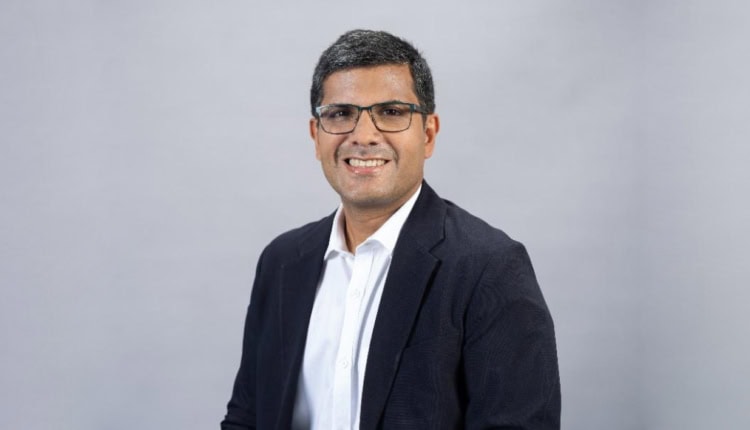
That question hangs subtly underneath every conversation with Rahul Chari, co-founder and CTO of PhonePe. Chari did not speak about fintech with the triumphalism common in the startup ecosystem. There is little rhetoric about disruption or growth-at-all-costs. Instead, he speaks like someone acutely aware that India’s digital economy is entering a phase where resilience may matter more than expansion.
“In India, financial transactions are deeply emotional,” Chari says. “A transaction failure is never just a software bug, it is an immediate loss of consumer trust.”
The statement captures how deeply India has reorganised itself around real-time digital payments. UPI did more than digitise transactions; it changed behavioural expectations. Instant settlement is now assumed across merchants, consumers, and services at a scale few countries have experienced.
But according to Chari, the first phase of Indian fintech is already over.
“The first decade of Indian fintech was about building a highly reliable, mobile-first, real-time transaction layer at a population scale,” he says. “Now that we have achieved massive transaction growth, the next decade will belong to the structural monetisation and value creation built on top of that.”
Beyond payments: The rise of financial intelligence
For fintech companies, payments are increasingly becoming the entry point rather than the destination.
Every recharge, merchant payment, peer transfer, or utility bill creates behavioural signals that can eventually shape lending, insurance, underwriting, and wealth products. At PhonePe, this transition is internally framed as moving users from “Send” and “Spend” toward “Manage” and “Grow.”
“The explosion of payment touchpoints gives us rich, granular data signals,” Chari says. “Over the next ten years, fintechs will differentiate themselves by converting these transaction footprints into alternative credit, risk, and underwriting scores.”
Historically, formal finance depended on salary slips, collateral, and traditional credit histories. But millions of Indians remain outside those frameworks despite actively participating in the economy. Fintech platforms now believe behavioural transaction data can bridge that gap.
“Transaction volume is no longer the final goal,” Chari says. “It is the trust foundation and distribution funnel for comprehensive financial service adoption.”
Yet the shift carries larger implications. As payment platforms evolve into behavioural intelligence systems, they accumulate unprecedented visibility into how consumers spend, transact, and manage financial risk. India may have digitised payments rapidly, but it is now beginning to digitise financial identity itself.
Engineering trust at population scale
PhonePe today processes billions of transactions every month across more than 70 crore registered users. At that scale, operational reliability stops being an engineering metric and becomes a public expectation.
“The biggest engineering challenge is decoupling business scale from infrastructure complexity and headcount,” Chari says.
The challenge is amplified by India’s interconnected banking ecosystem, where fintech platforms depend on legacy banking infrastructure operating under hyper-growth transaction loads.
To reduce failure risks, PhonePe has built predictive systems designed to anticipate instability before users experience it. Chari points to the company’s “Kill Switch” architecture, which analyses banking latency patterns and proactively stops transactions if downstream failure probability rises.
“It runs predictive logic to stop transactions before money leaves a user’s account if the likelihood of downstream failure is high,” he explains.
The philosophy reflects a broader shift in fintech engineering: systems are no longer designed merely to process transactions efficiently, but to self-heal, predict friction, and preserve consumer trust in real time.
AI-native fintech and the new operating model
Artificial intelligence is accelerating that transition. But Chari draws a sharp distinction between companies merely adding AI features and those fundamentally redesigning themselves around intelligence-driven systems.
“The fundamental differentiator lies in whether AI is treated as a core architectural building block or merely a superficial UI feature,” he says.
In his view, AI-native fintech companies embed machine learning directly into transaction systems, fraud detection, operational support, and backend decision-making rather than simply layering chatbots onto legacy platforms.
At PhonePe, AI is already being used to autonomously resolve customer queries, predict transaction friction, detect anomalies, and optimise support operations. The company claims over 92% of customer support queries are now resolved autonomously.
“AI-native platforms do not wait for a user to report an issue or search for a product,” Chari says. “They use real-time event streams to predict transaction friction, detect systemic fraud at ingestion, and build operational support logic directly from natural language procedures.”
The larger implication is that fintech systems are becoming predictive rather than reactive. The most powerful infrastructure increasingly operates invisibly in the background while continuously shaping user experience.
Cybersecurity, deepfakes, and the new definition of trust
As fintech platforms become deeply embedded into economic life, cybersecurity is evolving from a technical issue into a boardroom priority.
“Historically, trust in financial services was static,” Chari says. “In an era of always-on digital ecosystems, trust has become dynamic, real-time, and conversational.”
The threat landscape is also changing rapidly. AI-generated fraud, deepfakes, phishing automation, and synthetic identities are forcing fintech companies to move beyond reactive security models. “Trust today means that the platform must actively protect the user,” he adds.
For companies operating at PhonePe’s scale, operational resilience now carries systemic significance. Once digital payments become embedded into everyday commerce, outages and failures stop being isolated technology incidents and begin resembling infrastructure risks.
India stack and the future of digital public infrastructure
Chari believes India’s Digital Public Infrastructure ecosystem, UPI, Aadhaar, Account Aggregator, and ONDC, fundamentally changed how innovation scales in the country.
“What India got fundamentally right was treating Digital Public Infrastructure like an open internet protocol rather than a closed proprietary financial network,” he says.
That openness allowed private players to innovate on top of public rails rather than compete through closed ecosystems.
Still, Chari believes important gaps remain. Formal credit access remains limited despite payment digitisation, and deeper integration between Account Aggregator systems and lending infrastructure will become essential for expanding cash-flow-based underwriting.
At the same time, as India pushes UPI internationally, operational resilience and real-time cross-border settlements will become critical challenges.
The larger questions, however, remain unresolved. As fintech platforms increasingly function like invisible utilities, who governs behavioural underwriting? How much economic visibility should private platforms possess? And what happens when everyday commerce becomes dependent on systems most consumers never fully see?
India’s next fintech chapter may ultimately depend on how those questions are answered. Because the future of fintech will not simply be decided by transaction growth. It will be decided by who can build the most trusted, intelligent, and resilient infrastructure underneath the digital economy itself.
